
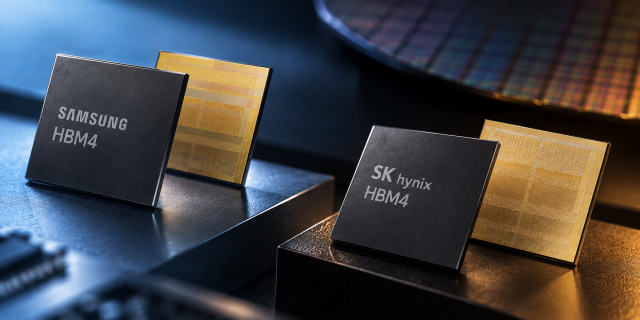
SEOUL, September 15 (AJP) - Shares of South Korea's chip bellwethers Samsung Electronics and SK hynix turned sharply lower this week amid a growing chorus among Big Tech companies and AI developers to moderate the pace of AI advances since that could mean less work for the memory giants.
The two for the time being have less to worry about as multiyear contracts could keep them busy well into 2028.
Samsung said during its second-quarter earnings call in July that it expects the global memory shortage to persist through 2028, with supply constraints becoming even more severe next year.
The company has signed long-term agreements with the world's five largest data center operators and was nearing agreements with another five major customers. Samsung said the contracts are generally structured on a rolling five-year basis, with an additional year added annually.
Samsung ultimately aims to cover about 60 to 70 percent of its memory production capacity through long-term contracts, giving the chipmaker greater protection against short-term fluctuations in demand.
SK hynix also confirmed in July that it had completed long-term agreements with around 10 key customers and was holding additional discussions with other major clients. It described the agreements as multiyear contracts designed to secure mid- to long-term supply stability.
The agreements come as AI companies and cloud operators continue to demand more memory than chipmakers can readily supply.
SK hynix said additional supply requests from major technology companies continued to increase as AI infrastructure spending expanded, adding that revenue generated from AI services was increasingly supporting those investments.
The distinction between developing new AI models and operating existing ones could also prove important.
Slowing the development of more powerful frontier models does not necessarily mean slowing the deployment of existing AI services, which require enormous computing resources for inference — the process of generating answers from already trained models.
SK Group Chairman Chey Tae-won has often likened the current state of AI technology to a "four-year-old child" that needs constant care, attention and training. A break in its schooling, by that analogy, would not mean unplugging the child altogether or eliminating its need for memory.
Recent AI accelerators designed specifically for inference illustrate the trend.
Google's TPU 8i, optimized for inference workloads, is equipped with 288 gigabytes of HBM3E, compared with 216 GB in its training-oriented TPU 8t, according to Mirae Asset Securities.
The brokerage expects expanding inference workloads to broaden demand for both high-bandwidth memory, or HBM, and conventional server memory.
That suggests even a moderation in the race to train ever-larger AI models may not translate directly into weaker memory consumption if the deployment and use of AI services continue to expand.
Lee Byung-hoon, a professor of electrical engineering at Pohang University of Science and Technology, said the debate over slowing AI development should be separated from the industry's need to expand computing hardware.
"Even if there is a slowdown now, I don't think it is something that would immediately have a sensitive impact," Lee said.
Lee said the current debate was primarily about how quickly software and AI models should be developed rather than a fundamental change in the need for hardware infrastructure.
The longer-term risk nevertheless remains.
If a slowdown in frontier AI development eventually leads hyperscalers to cut capital expenditure or reduce orders for AI accelerators, weaker demand could ultimately filter through to HBM suppliers.
But the combination of multiyear supply contracts, existing memory shortages and growing inference demand means any such impact could take time to reach Samsung and SK hynix.
The immediate question for the Korean chipmakers, therefore, may be less whether AI development slows and more whether the billions of dollars being spent to deploy AI infrastructure begin to slow with it.
AJP Takeaways
- Calls to slow AI development could weigh on Samsung Electronics and SK hynix, but multiyear supply contracts are expected to cushion the Korean memory giants from an immediate hit to demand.
- Samsung expects the global memory shortage to persist through 2028 and is expanding long-term agreements, while SK hynix has secured multiyear deals with around 10 key customers.
- Growing inference workloads could continue to support HBM demand even if the development of increasingly powerful frontier AI models slows.

Copyright ⓒ Aju Press All rights reserved.
