Editor's Note: The following opinion article is contributed by Choe Chong-dae, a longstanding member of the Royal Asiatic Society Korea and enthusiast of international cultural and historical affairs.
The relationship between Spain and South Korea has a surprisingly long history. It dates back to 1593, when Gregorio de Céspedes, a Spanish Jesuit priest, arrived on the Korean Peninsula. What began as a modest cultural encounter has evolved over more than four centuries into a broad and increasingly dynamic partnership.
Today, Barcelona—and Catalonia in Spain more broadly plays an important role in that relationship. As one of Europe's most internationally connected regions and a major center of industry, technology, culture, education, and tourism, Catalonia has emerged as an important European partner for Korea. Barcelona, in particular, offers a strategic platform for Korean companies and institutions seeking to expand their presence in Europe.
The institutional ties between Catalonia and Korea have developed steadily since the late 1970s, supported by the growth of the Korean community in Catalonia and a shared commitment to international engagement. Several milestones illustrate the depth of this connection. Barcelona and Busan established a sister-city relationship in 1983, while the Korean Consulate General in Barcelona opened in 1988. In 1999, Catalonia and Gyeonggi Province established a regional partnership, further strengthening links between the two societies.
Cultural and academic exchanges have developed alongside these institutional connections. The Korean Cultural Week in Catalonia in 1996 and the Gaudí exhibition in Korea in 1997 introduced each society more deeply to the other's cultural heritage. Academic cooperation has since expanded, with more than 20 agreements linking Catalan universities with leading Korean institutions, including Seoul National University, Korea University, and KAIST.
A further step came in 2023, when the Government of Catalonia officially inaugurated its delegation in Korea. In October 2024, Bekiu Kim Jung was appointed as the head of the delegation. Its presence in Seoul represents more than an administrative development. It reflects Catalonia's intention to expand cooperation with Korea across a wide range of fields, such as business, technology, education, and culture.
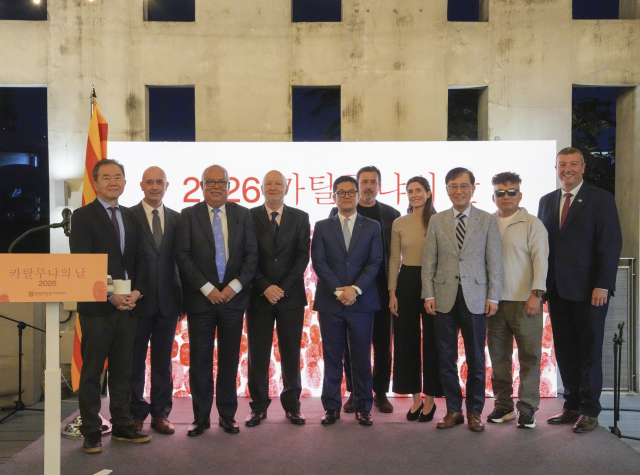
Against this backdrop, my enthusiasm for Catalonia led me to attend the celebration of Catalonia's National Day, La Diada, in Seoul on September 11, 2026, at Rezero Seoul. Attending the event, I was struck by the diversity of the guests, including diplomats, corporate executives, academics, and artists—such as Dr. Seong Keun Kim, president of Pohang University of Science & Technology, and Hwang Young-cho, the legendary Korean marathoner best known for winning the gold medal at the 1992 Summer Olympics in Barcelona. Their presence spoke volumes about the strength and breadth of the Catalonia–Korea partnership.
It is hard to think about Catalonia without mentioning Pau Casals, the legendary musician. This year's event carried particular significance as part of the Pau Casals Year, commemorating the 150th anniversary of the birth of the internationally acclaimed Catalan cellist, conductor, and humanist.
Casals represented far more than musical excellence. His life showed how art can become a language of peace, dignity, and human solidarity. His artistic career and moral convictions made him a cultural figure whose influence extended far beyond Catalonia and Spain.
The Seoul celebration offered a meaningful expression of that legacy. The Government of Catalonia's Delegation in Seoul welcomed cellist Taeguk Mun, recipient of the Pau Casals Prize in Hungary, for a special performance. His music brought Catalan heritage into dialogue with Korean artistic achievement.
There was a particular power in this encounter: a Korean musician honoring a great Catalan artist in Seoul. It showed how international relationships can grow not only through government agreements or trade, but also through people, shared values, and artistic expression.
Running from 2026 to 2027, the Pau Casals Year has been officially recognised by the Generalitat de Catalunya and declared an Event of Exceptional Public Interest by the Spanish government. Bringing the commemoration to Seoul demonstrates the continuing international reach of Casals's ideals—and the enduring ability of music to connect cultures.
Remarkably, in 2026, the region is commemorating several major cultural milestones, including the centenary of Antoni Gaudí's passing. The completion of the Sagrada Família's principal architectural vision and the June 2026 papal blessing of the Tower of Jesus Christ have further drawn international attention to Barcelona and Catalonia's distinctive cultural heritage.
Gaudí's architecture and Casals's music represent very different forms of creativity, yet both reveal a remarkable Catalan capacity to produce artists whose work transcends geographical and historical boundaries. One shaped stone and space; the other transformed music into an expression of conscience and humanity.
Those areas remain essential to the Korea-Catalonia relationship, but the greater potential lies in a broader partnership across technology, education, and cultural exchange.
Barcelona is particularly well positioned to support this ambition. Its international reputation, universities, industries, cultural assets, and direct connectivity with Incheon make it a natural bridge between Korea and Europe. While Korean businesses already recognise Catalonia's strategic value, there remains significant potential for deeper cooperation in innovation, education, the arts, sustainability, and emerging industries.
The relationship between Catalonia and Korea is therefore more than a history of diplomatic milestones. It is an evolving partnership between two societies united by creativity, education, innovation, and international engagement.
As emphasized by Mr. Bekiu Kim Jung, Government Delegate of Catalonia to the Republic of Korea, during the 2026 Catalonia Day celebration in Seoul, the future of Catalonia-Korea relations depends not only on institutions but also on people. Students, researchers, artists, business leaders, and members of the Catalan community in Korea continue to act as bridges between the two societies, helping to keep cultural exchange alive and creating new opportunities for cooperation.
As Catalonia and Korea continue to deepen their partnership, their friendship can serve as a powerful example of global connection and mutual understanding, opening new opportunities and fostering shared prosperity for both societies.
[About the Columnist: Choe Chong-dae is a prominent columnist and a longstanding member of the Royal Asiatic Society Korea. An enthusiast of international cultural and historical affairs, he has contributed regular opinion columns to The Korea Times for more than four decades. He also serves on the editorial board of the Newsletter of the Korea-America Association and is the founding director of the Korea–Swedish Association. In 2010, he was awarded Sweden's Royal Order of the Polar Star, one of the country's most prestigious honors.]
The views and opinions expressed in this article are solely those of the contributor and do not necessarily reflect the editorial position, analysis, or views of AJP, its editors, or its parent organization. AJP publishes contributed opinion pieces from governments, diplomatic missions, experts, and other external contributors as part of its commitment to presenting diverse international perspectives. Publication does not constitute endorsement of the opinions or factual claims contained in the article.
Copyright ⓒ Aju Press All rights reserved.