
Chuseok, Korea’s autumn harvest holiday, is also known as Hangawi. In the old Korean name, han means “big” or “great” — fitting for one of the country’s biggest holidays and one of its biggest annual family gatherings.
Celebrated on the 15th day of the eighth lunar month, Chuseok is a time to give thanks for the year’s harvest and abundance and to reunite with family. Along with Lunar New Year, it is one of South Korea’s two most important traditional holidays.
This year, Chuseok falls on Sept. 25.
For many families, however, the holiday begins well before then — with grocery shopping.
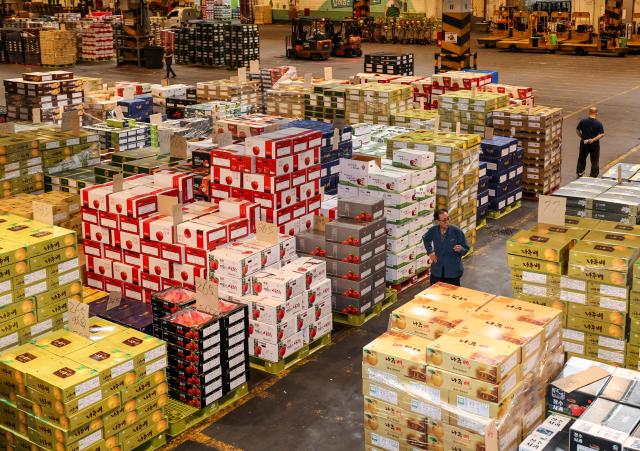
At Garak Market in Seoul’s Songpa district on Sept. 10, boxes of apples and pears rose in colorful stacks alongside vegetables, seafood and other seasonal produce.
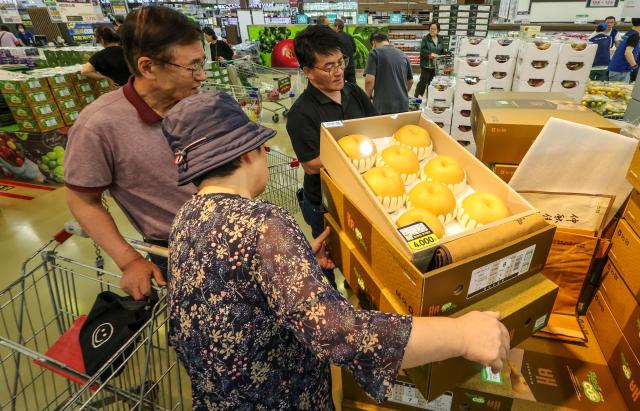
Merchants moved briskly between stalls preparing for customers, while shoppers made their way through the sprawling market looking for ingredients for holiday tables and gifts to take to family and relatives.
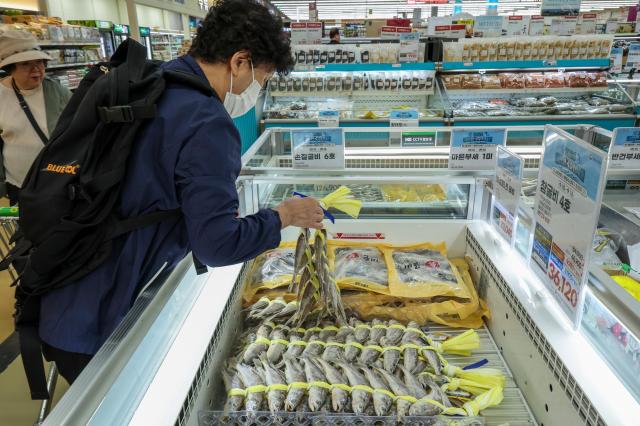
The same preparations were under way at a Nonghyup Hanaro Mart in Seoul’s Seocho district, where gift boxes and seasonal foods filled the aisles and shoppers began stocking up for family gatherings.
Chuseok shopping is one of the most familiar signs that the holiday is approaching.
With relatives gathering under one roof, families often prepare more food than usual, buying fruit, meat, vegetables and other ingredients to share over several days.
The growing abundance reflects the meaning traditionally associated with Chuseok itself: gratitude for the harvest and hopes for plenty. But preparations do not stop at the market.
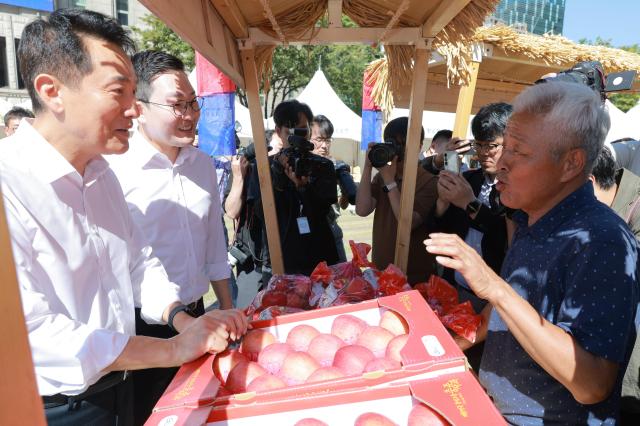
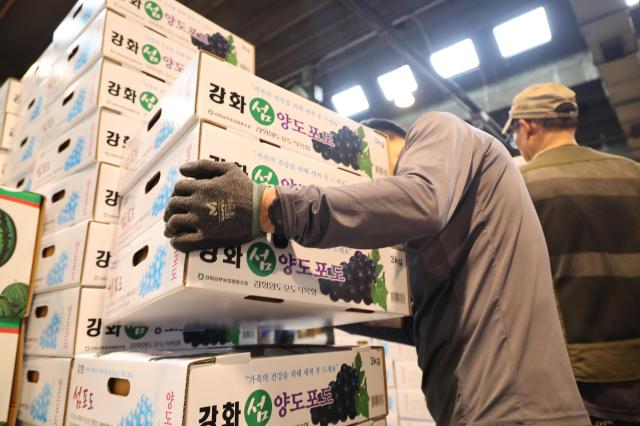
Apples and pears are among the most visible fixtures of the season.
The fruit appears on holiday tables and is also widely exchanged as a gift. Native-breed hanwoo beef, seafood, agricultural products and household goods are likewise bundled into gift sets, filling supermarket shelves and market stalls as the holiday draws closer.
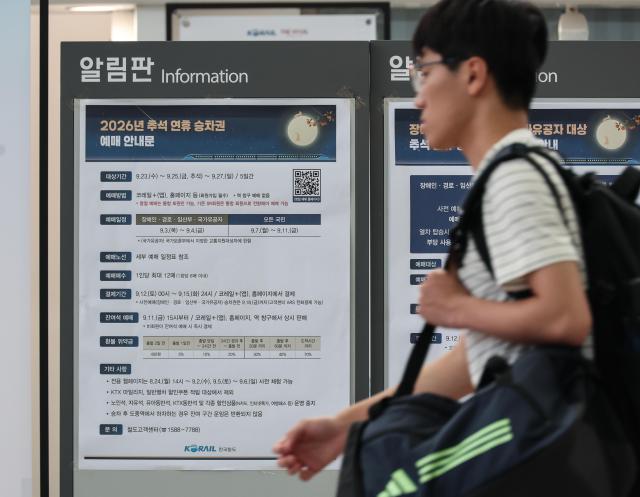
As Chuseok nears, another familiar movement begins as people living in Seoul and other large cities prepare to return to their hometowns. For many, the journey starts with securing a train ticket.
Reservations for popular routes draw heavy demand ahead of the holiday, especially for departure times that allow travelers to reach home before family gatherings begin. A single ticket can carry more than a seat assignment.
It can mean seeing parents again, meeting siblings after months apart and returning to a table where the family is finally gathered in one place.
When Chuseok arrives, families scattered across the country reunite at parents’ homes or return to their hometowns to eat, talk and spend time together.
One of the holiday’s best-known foods is songpyeon, a half-moon-shaped rice cake traditionally prepared and shared among family members.
Some households also hold charye, a memorial rite in which food is offered to ancestors, while others observe the holiday more simply through a family meal.
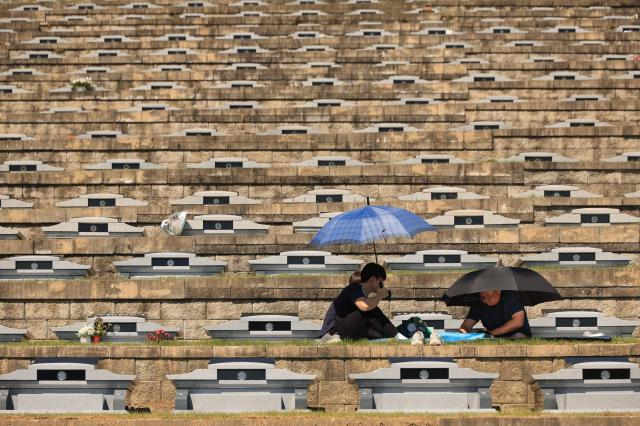
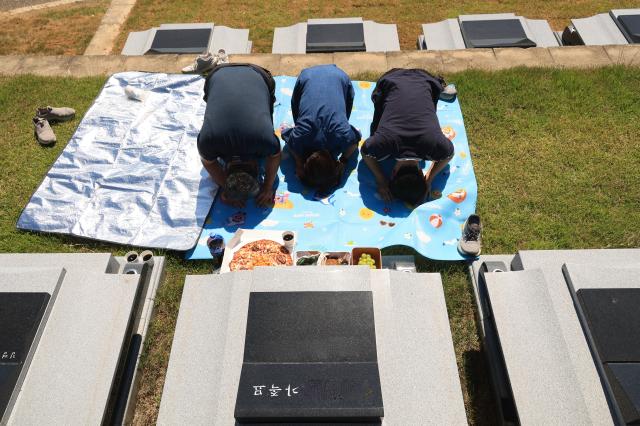
Visiting ancestral graves, known as seongmyo, is another long-standing Chuseok tradition. Families travel together to burial sites, pay respects to ancestors and tidy the surrounding grounds.
The way Koreans spend the holiday has changed over time. Some families travel abroad. Others gather for shorter periods or skip ancestral rites altogether.
But reunion remains at the heart of Chuseok. That is perhaps why han — “big” — still feels fitting.
Chuseok means big tables, big journeys and big gatherings. It brings crowded markets, packed trains and families moving back toward one another.
As Hangawi draws closer, the piles of fruit grow higher, gift sets occupy more shelves and the movement toward hometowns begins to gather pace.
Every box selected for a relative, every ingredient placed in a shopping basket and every train ticket booked carries its own sense of anticipation.
Between the stacked apples and pears, the busy supermarket aisles and the journeys still ahead, another kind of abundance is quietly building — the expectation of seeing family again.
Copyright ⓒ Aju Press All rights reserved.
