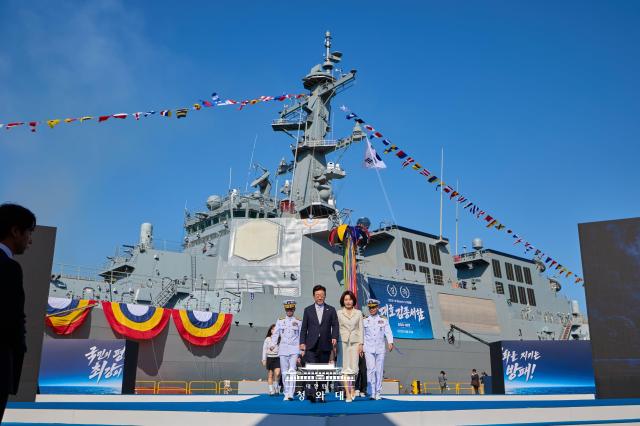
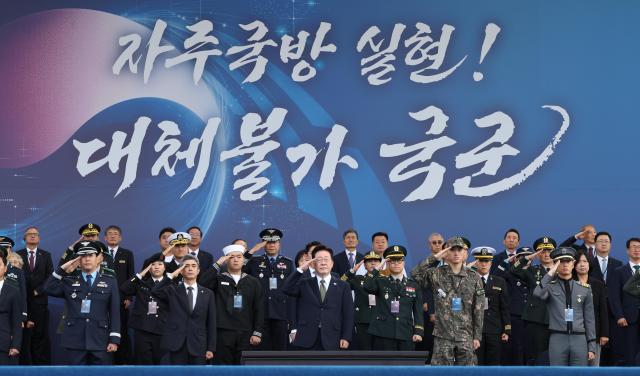
South Korea marks its 78th Armed Forces Day with grand ambitions for its military and three servicemen recovering from a mine explosion in the Demilitarized Zone.
Between the promise of a stronger defense and the ordeal of those wounded in its service lies an obligation the country has yet to fully meet.
Artificial intelligence, automation and advanced weapons are reshaping warfare. Yet someone must still walk the uncertain ground. Behind every technological advance remains a person who carries out the mission and bears its consequences — somebody’s child, sibling, spouse or friend.
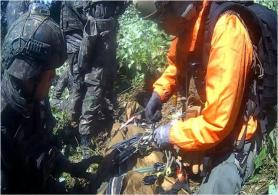
The Sept. 21 explosions wounded three South Korean military personnel, two seriously. The United Nations Command determined that North Korean mines found south of the Military Demarcation Line violated the armistice. Pyongyang denied responsibility and threatened retaliation against firing along the border.
The exchange is familiar. For the injured servicemen and their families, the consequences will be anything but routine.
Establishing responsibility is essential. So is examining whether every reasonable precaution was taken to protect those sent into the area. The investigation must address the operation’s risk assessment, available intelligence, protective equipment and evacuation arrangements. A military confident in its professionalism should welcome that scrutiny.
The government’s pursuit of dialogue with Pyongyang cannot soften its assessment of dangers on the ground. Nor should pressure to demonstrate resolve override the judgment of those responsible for bringing their troops home. Soldiers must be able to trust that operational decisions reflect military necessity and a sober assessment of risk, whatever the prevailing political mood.
President Lee Jae Myung’s Sept. 30 visit to the injured servicemen was an acknowledgment of this responsibility. He promised support for their treatment, rehabilitation and continued military service.
Respecting the families’ concerns about their children, the visit proceeded without photography.
The discretion mattered, and more importantly the durability of the commitment.
The measure of the government’s concern will emerge after the hospital visit recedes from public memory, when rehabilitation becomes a prolonged routine and families begin to confront the practical consequences of injury.
The assurances offered by a president should be dependable features of the system, available equally to those whose suffering never attracts national attention.
At the Seoul Center for Young Injured Veterans, a four-person team handles roughly 1,000 consultations and cases a year. Its legal assistance budget was exhausted in the first half of this year.
These are modest institutional details beside the vast sums devoted to national defense. They are also revealing ones. A country that plans weapons programs decades ahead should be able to provide continuity of care for those injured in its service.
The Defense Ministry is seeking 73.27 trillion won for 2027, an increase of 8.2 percent. Modernization and preparations for the transfer of wartime operational control are major priorities. North Korea’s military threat and South Korea’s shrinking pool of recruits make investment in more capable forces necessary.
But military strength also rests on the confidence of those who serve: confidence in their equipment, their commanders and the support awaiting them if something goes wrong.
Better mine detection, safer transport, reliable communications and rapid evacuation deserve the same seriousness of purpose as advanced missiles and fighter jets. Sustained rehabilitation, psychological care and assistance for families must be treated as enduring defense obligations.
Successive governments have made higher conscript pay a prominent expression of concern for young soldiers. A sergeant’s monthly basic pay reached 1.5 million won in 2025 and remains at that level this year. The increases were justified for young men required to interrupt their education and working lives.
Having raised pay substantially, the government should now bring comparable determination to protection and welfare.
Before competing over another headline pay pledge, politicians should establish where safety and care remain inadequate and commit the resources to remedy them. A larger monthly deposit offers little reassurance to a family wondering whether treatment will remain accessible years after an injury.
An injured serviceman should have someone responsible for coordinating care and benefits across military and veterans agencies. The state should help retrieve the records it holds. Discharge should bring an orderly transition in support, with rehabilitation and assistance for education, employment and housing arranged around the individual’s needs.
The same respect for those who serve should inform institutional reform.
The proposed merger of the military academies has met overwhelming resistance from their cadets. A Korea Institute for Defense Analyses survey found that 91.3 percent of 1,791 cadets opposed integration, as did 60.9 percent of the officers surveyed. The public was more receptive, with 49.1 percent supporting a merger and 21 percent opposing it.
Cadets cannot have a veto over defense policy. Civilian leaders are responsible for reforming institutions when national needs require it. Yet resistance on this scale calls for persuasion grounded in evidence: how integration would improve education, preserve service expertise and produce better officers.
An instruction to rally behind reform cannot substitute for those answers. Listening may expose weaknesses in a proposal, improve its design or establish a stronger case for proceeding. Each is a better outcome than treating the concerns of future officers as an impediment to a political timetable.
On this Armed Forces Day, the country should look beyond the capabilities it hopes to acquire and consider the people to whom it entrusts them. Their willingness to serve carries a reciprocal promise of protection, fair treatment and lasting care.
For a commander-in-chief, honoring that promise is among the most consequential exercises of command.
It begins with listening to those in uniform and endures long after they take it off.
*The author is the managing editor of AJP.
Copyright ⓒ Aju Press All rights reserved.