ZURICH, November 09 (AJP) -Switzerland’s power companies face pressure to defend nuclear plants and dams against drones and armed attacks after the defense ministry rejected calls to give the army primary responsibility for protecting them.
The dispute exposes a gap between responsibility and authority: operators must secure their facilities but lack the powers to intercept drones or detain suspects.
First reported by Swiss newspaper Blick, the disagreement shows how concerns over drone incursions and sabotage are spreading to neutral Switzerland as European countries reassess the vulnerability of their energy infrastructure.
The Swiss government has identified sabotage and air attacks on critical infrastructure, including power plants and dams, as the country’s most likely security threat.
Internal documents obtained by Blick show that the Swiss Federal Office of Energy has listed drones, anti-tank weapons and arson among the risks facing energy facilities.
Officials working under Energy Minister Albert Rösti told the defense ministry that some power companies believe the army should at least protect their sites against drones and aircraft.
The defense ministry, led by Martin Pfister, rejected that position. Operators remain responsible for their own security, it said, with military assistance available only after civilian resources have been exhausted.
Under defense ministry guidelines, the army could protect a region or selected facilities for weeks or months. It cannot provide the same high level of protection to every energy site simultaneously.
Power companies can reinforce buildings, install drone detection systems and erect nets or screens. They can also stock spare parts to restore operations after an attack.
But they cannot shoot down drones or detain suspects. They must call the police, whose response may come too late to prevent damage.
The energy office is drafting legislation that would require operators to take “appropriate protective measures” against physical and electronic threats. No timetable or cost estimate has been made public.
Some lawmakers argue that stronger obligations must come with greater authority.
Thomas Hurter, a lawmaker from the right-wing Swiss People’s Party (SVP), wants operators to be allowed to deploy signal jammers and interceptor drones, or shoot down drones in an emergency.
Parliament’s security committee has also called for a national office to collect reports of drone sightings near critical sites.
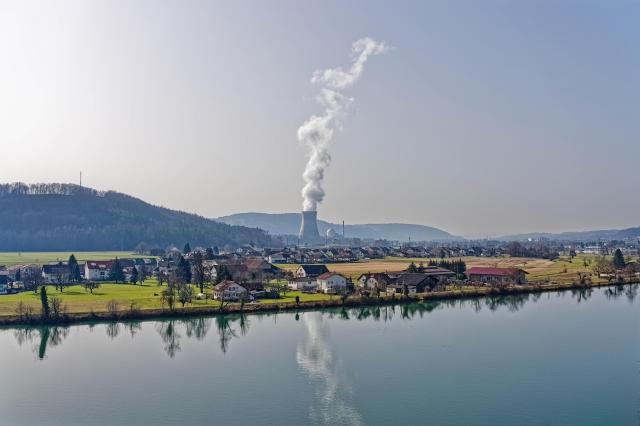
The stakes are substantial for Switzerland’s electricity supply. Nuclear power generates about a third of the country’s electricity, with four reactors operating at three plants, including Leibstadt near the German border.
Drone sightings around Swiss airports, military installations and energy facilities have increased, Blick reported. Elsewhere in Europe, unidentified drones have disrupted airports in Denmark, Germany and Belgium. Officials have linked several incidents to Russia.
Russia’s repeated attacks on Ukraine’s power infrastructure have demonstrated the consequences of disabling electricity generation and distribution, leaving civilians without power and heating during winter.
For South Korea, the Swiss dispute raises a familiar question about how to protect critical facilities against small aircraft that can evade conventional defenses.
In December 2022, five North Korean drones crossed into South Korean airspace, with one entering the no-fly zone around the presidential office in Seoul. The military failed to shoot down any of them, prompting efforts to strengthen anti-drone defenses.
The Swiss debate adds another dimension: deciding who can act when a drone approaches an essential civilian facility, and who bears the cost of keeping it secure.
- Tags: Switzerland, Swiss army, Federal Council, Swiss Federal Office of Energy, Martin Pfister, Albert Rösti, Thomas Hurter, Swiss People’s Party, Leibstadt, nuclear power, drones, critical infrastructure, Blick, South Korea, North Korea
Copyright ⓒ Aju Press All rights reserved.