The IMF's October World Economic Outlook raised the forecast by 0.7 percentage points for the second consecutive time, bringing the total increase since April to 1.4 percentage points from 1.9 percent.
The IMF also raised its growth forecast for the country next year to 2.8 percent from 2.5 percent.
The revision came as the IMF raised its global growth forecast for 2026 to 3.1 percent from 3.0 percent in July. It kept its 2027 projection unchanged at 3.4 percent.
It said growth paths across countries are increasingly diverging depending on their exposure to the Middle East conflict and their position in the global AI value chain.
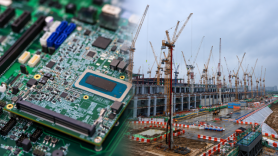
Continued investment in AI infrastructure has supported economies supplying technology hardware including South Korea, Malaysia, Mexico and Thailand, even as higher energy costs weigh on other economies.
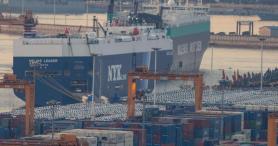
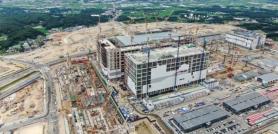
For South Korea, strong external demand for semiconductors had already prompted the IMF to raise its 2026 forecast to 2.6 percent in July from 1.9 percent in April, with the fund saying at the time that the boost from chip exports outweighed the negative impact of the conflict.
The latest IMF projection matches the Bank of Korea's forecast for this year.
The central bank raised its 2026 growth forecast to 3.3 percent in August from 2.6 percent, citing a stronger-than-expected semiconductor upcycle and broader spillovers to exports, investment and consumption. It expects growth of 2.9 percent in 2027.
The IMF cautioned, however, that both the Middle East conflict and the AI investment cycle remain major sources of uncertainty.
Its baseline assumes oil prices averaging US$96 a barrel in 2026 and $87 in 2027, with the Strait of Hormuz reopening in March next year and shipping conditions broadly returning to prewar levels by October.
Under an adverse scenario in which a worsening conflict pushes oil prices to $130 a barrel through the first quarter of 2027, global growth would be 0.2 percentage point lower this year and 0.5 percentage point lower next year, the IMF estimated.
Inflation in 2027 would rise by an additional 1.1 percentage points under that scenario.
The IMF also warned that a reassessment of expected returns from AI investment could hit economies tied closely to the technology supply chain.
If expected productivity gains fail to materialize and AI investment drops sharply, spillovers to Asian technology exporters could have a direct GDP impact of as much as 0.4 percent by 2028, according to the IMF.
AJP Takeaways
- IMF raises Korea growth forecast to 3.3 percent: The IMF lifted its 2026 outlook by 0.7 percentage point from July, its second consecutive upgrade of that size.
- Semiconductor demand drives the revision: Korea is benefiting from sustained AI investment and strong chip exports despite higher energy costs.
- Oil and AI remain key risks: A renewed energy shock or a sharp pullback in AI investment could weaken the outlook for Korea and other Asian technology exporters.

Copyright ⓒ Aju Press All rights reserved.