
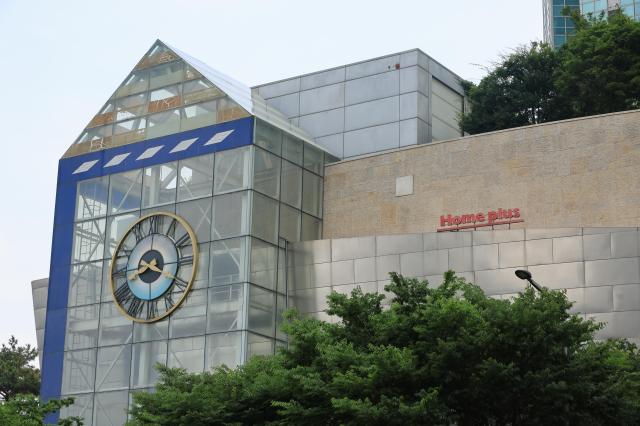
SEOUL, October 14 (AJP) - A daylight knife attack that injured eight people at a shopping complex in Incheon has renewed concern over South Korea’s drug problem as the number of drug offenders has stayed above 20,000 for three consecutive years despite expanded enforcement and rehabilitation efforts.
The 59-year-old suspect in Tuesday’s attack was carrying a large quantity of medication, but a preliminary drug screening came back negative. Police have not established that drugs played any role, and on Wednesday they assigned three criminal profilers to examine his motive.
"Depending on the type of drug, a person may become aggressive or violent, while others can cause hallucinations, anxiety or sleep disorders,” said Lee Bum-jin, a professor at Ajou University’s College of Pharmacy and a longtime drug prevention researcher.
Lee said certain psychoactive substances disrupt the brain’s neurotransmitter systems, including dopamine, potentially impairing judgment, self-control and behavior.
Prolonged use can lead to dependence, he said. Some substances may also trigger hallucinations, paranoia and other psychological disturbances that impair a person’s ability to read situations and control impulses.
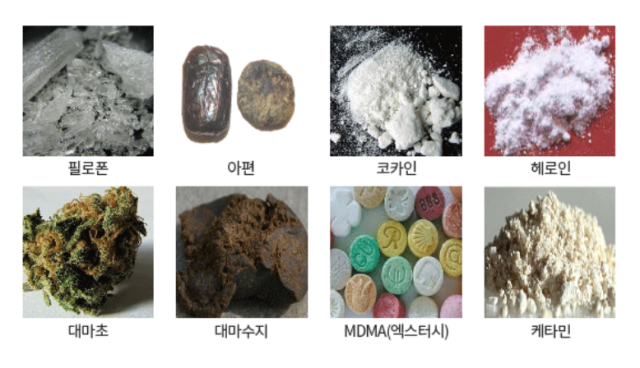
The concerns come as South Korea grapples with a drug problem that has grown substantially in recent years.
According to the Supreme Prosecutors’ Office, 23,403 drug offenders were apprehended in 2025, up 1.7 percent from 23,022 a year earlier.
That was nearly 30 percent above the 18,050 recorded in 2020, though still below the record 27,611 in 2023.
The number dipped to 16,153 in 2021, rose to 18,395 in 2022 and then jumped more than 50 percent in 2023. It has stayed above 20,000 since.
The figures count people apprehended, not the total number of drug users, and they are shaped by changes in policing and detection.
Younger people make up a large share. In 2025, 14,573 offenders, or 62.3 percent, were in their 30s or younger. Teenage offenders rose 3.9 percent to 674 from 649 in 2024.
Online distribution has become another challenge.
Police apprehended 5,341 people for online drug offenses in 2025, up 25 percent from 4,274 a year earlier and more than double the 2,545 recorded in 2021.
Online offenders made up about 40 percent of all drug offenders apprehended by police in 2025, up from 24 percent four years earlier.
The shift reflects the growing role of social media, encrypted messaging apps and other digital channels, where deals can be arranged without face-to-face contact.
Forensic data also point to a broader mix of substances in circulation.
The National Forensic Service recorded 140,775 drug-related testing items in 2025, a record and about 10 percent above the previous peak in 2023. The total included 78,432 items involving seized materials, 35,993 involving hair and 26,350 involving urine.
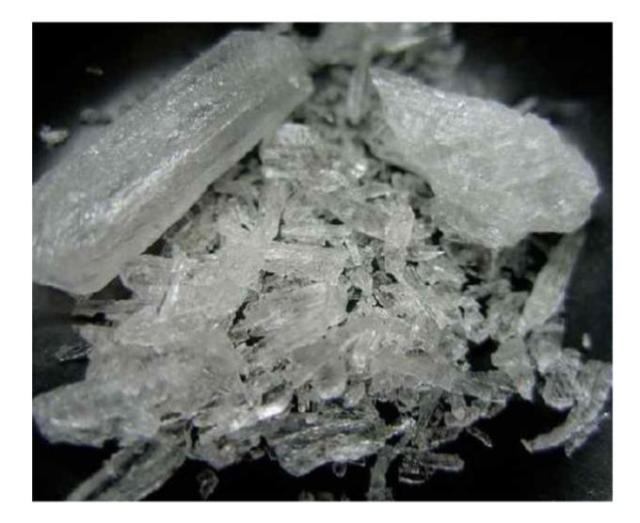
Methamphetamine, known in Korea as philopon, accounted for 52.7 percent of seized-material results, while new psychoactive substances accounted for 31.5 percent.
Among the newer substances, synthetic cannabinoids made up 15.1 percent and ketamine 10.6 percent.
The agency also reported 364 synthetic cannabinoid findings involving teenagers. Some of the substances were sold as liquids in cartridges resembling ordinary e-cigarettes, raising concern about how easily young people can obtain them.
Researchers have also examined whether repeated use raises the risk of violence.
A 2014 Australian study published in the journal Addiction followed 278 people with methamphetamine dependence, comparing their behavior during periods of use and nonuse.
The odds of violent behavior were 2.8 times higher in months when participants used methamphetamine on one to 15 days than in months when they did not use it. For those using it on 16 days or more, the odds were 9.5 times higher.
Psychotic symptoms were associated with an additional doubling of the odds of violence, while heavy drinking was linked to a 3.1-fold increase.
The study defined violent behavior as severe hostility involving assault or property damage, not homicide. Its findings cannot be applied directly to South Korea’s general population.

Lee said drug-related behavioral changes are especially hard to manage once dependence impairs judgment and self-control.
“When someone is addicted, their ability to control themselves or make judgments can become severely impaired,” he said.
But a link between drug use and aggression does not mean every drug user becomes violent.
Nor do South Korea’s headline drug crime figures show whether murders or assaults involving intoxication are rising.
Annual offender statistics track drug use, possession, trafficking and smuggling. They do not identify how many violent crimes were caused or aggravated by intoxication.
The Incheon case shows how hard that distinction is to draw. Investigators have yet to link the violence to intoxication.
Experts point out many offenders are struggling with dependence, sometimes alongside unemployment, family conflict or other social difficulties.
“If we simply arrest them and put them in prison, they may come out and repeat the same behavior because their addiction has not been treated,” Lee said.
South Korea has expanded its prevention and rehabilitation efforts in recent years.
Under the government’s 2026 drug control implementation plan, participation in treatment and rehabilitation programs among drug-use offenders rose in 2025, reaching 18.7 percent and 24.0 percent, respectively. The government also said it provided drug prevention education to about 2.08 million people in 2025.
Its latest measures include tighter monitoring of online drug deals, expanded screening of international mail and improved treatment and rehabilitation services.

Copyright ⓒ Aju Press All rights reserved.
