
SEOUL, October 20 (AJP) - The South Korean government will withdraw part of its embassy staff from Ukraine, the foreign ministry said Tuesday. The move deepens a monthlong dispute with Kyiv over Ukraine's public disclosure that two captured North Korean soldiers had been sent to South Korea.
Seoul announced on Oct. 8 that it was recalling its ambassador to Ukraine, Park Ki-chang. It was the first time South Korea had called an ambassador home from a host country since 2008, when it recalled its envoy to Tokyo over Japan's claim to the Dokdo islets in a school textbook guide.
The partial withdrawal leaves the embassy in Kyiv open. Diplomatic contact with Ukraine will continue through the Chargé d'Affaires, and all consular staff will remain to look after South Korean nationals in the country.
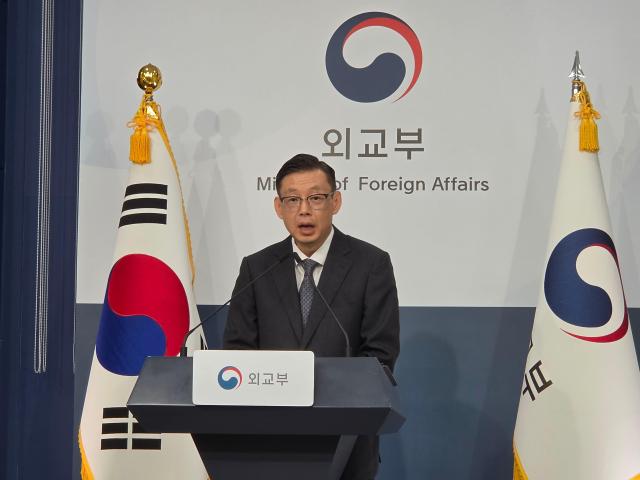
Ministry of Foreign Affairs (MOFA) spokesperson Park Doo-soon announced the decision at a regular briefing on Oct. 20. He said Ukraine had taken no "forward-looking action" since the ambassador's recall. He added that the threat of air strikes across Ukraine made it hard to keep the staff safe.
About half of the embassy's diplomats will leave, according to a foreign ministry official. MOFA does not disclose how many diplomats it has at the post, saying the figure is classified.
Seoul had already conveyed its position to Kyiv "through various means," Park said, and the government had concluded that no forward-looking action was coming. He called the withdrawal a step judged necessary "for the smooth resolution of the matter and the restoration of trust between the two countries."
Park said Seoul's demands were laid out in the position it had already put to Ukraine. President Lee Jae Myung has publicly demanded that Ukraine acknowledge a confidentiality agreement and apologize.
There are 84 South Korean nationals in Ukraine, the official said. The embassy will stay in contact with them, issue safety notices, run daily safety checks and help anyone who wants to leave, Park said. He stressed that residents' own wishes came first.
The dispute began at the UN General Assembly in New York on Sept. 23. In his address there, Ukrainian President Volodymyr Zelenskyy said, "Recently, we sent two North Korean prisoners of war to the Republic of Korea," using South Korea's official name. He gave no details of the transfer.
Ukrainian forces captured the two men in Russia's Kursk region in January 2025. They were among the troops North Korea sent in 2024 to help Russia fight Ukraine, and both later said they wanted to resettle in South Korea. In February 2025, MOFA said it had told Kyiv that Seoul would protect and support any North Korean prisoner who freely chose to come to the South.
Seoul had treated the transfer as confidential. On the day of the speech, MOFA declined to confirm the soldiers' status, the timing or route of their transfer, or the content of its talks with Kyiv. It said the matter was sensitive for the safety of the men and their families.
The next day, Lee said Ukraine had broken an agreement to keep the transfer secret. On Sept. 26, Dmytro Lytvyn, a communications adviser to President Zelenskyy, said no such agreement existed. First Vice Foreign Minister Park Yoon-joo summoned Ukraine's chargé d'affaires in Seoul on Sept. 28 to protest.
Lee raised the stakes on Oct. 2 in a post on X. He wrote that Seoul had agreed to keep the transfer confidential at Ukraine's request, only for Kyiv to disclose it unilaterally. When he expressed regret with every courtesy, he wrote, Ukraine denied that any agreement existed and so "made the other country's head of state a liar." He warned that Seoul would take further measures if Ukraine kept refusing to acknowledge the facts and apologize publicly.
President Zelenskyy addressed the transfer again on Oct. 4 without mentioning Lee's demand. He told reporters that South Korea had asked for the soldiers and that, under South Korea's constitution, they were South Korean citizens.
Foreign Minister Cho Hyun told a parliamentary audit on Oct. 6 that his Ukrainian counterpart had sent a message containing words of apology, but that it fell short of the level Seoul had in mind. He said the government would take firm action. Ukraine's foreign ministry said on Oct. 7 that the two sides had interpreted their confidentiality arrangement differently. The recall was announced the following day.
Ukrainian Foreign Minister Andrii Sybiha said on Oct. 12 that he considered the matter closed.
Minister-Counselor Yoon Ji-wan, who has led the embassy in Kyiv as Chargé d'Affaires since the recall, told a parliamentary audit held in Warsaw on Oct. 18 that the two governments had never discussed when the transfer would be made public. He said the two sides broadly agreed it should stay confidential for as long as possible. He also said that putting a diplomatic agreement in writing would in effect make it a treaty.
Yoon said the embassy had not known in advance that President Zelenskyy would announce the transfer at the UN, and that Ukraine had yet to explain why he did.
Copyright ⓒ Aju Press All rights reserved.
