
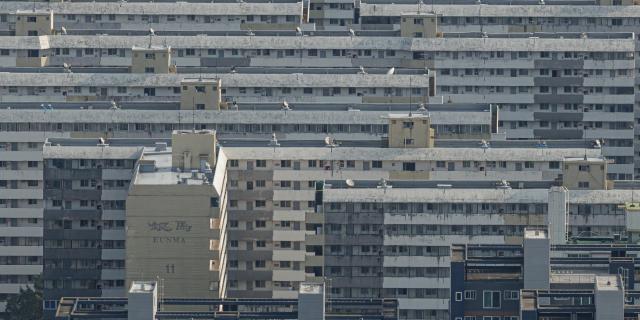
The growing burden could pose another test for President Lee Jae Myung’s administration as his approval ratings slide, adding to discontent among traditionally conservative homeowners in Seoul’s affluent districts.
The number of taxpayers assessed more than 5 million won ($3,773) in annual residential property tax surpassed 100,000 for the first time this year, according to Seoul Metropolitan Government data obtained by Rep. Choi Eun-seok of the People Power Party.
A total of 106,799 taxpayers crossed that threshold, up 46.7 percent from 72,782 last year and exceeding the previous high of 87,462 in 2021. The number had fallen to 48,315 by 2023 before returning to growth in 2024.
The figures cover apartments, detached houses, low-rise multiunit homes and residential officetels. The number of owners of homes with officially assessed values above 3 billion won also more than doubled from a year earlier.
Yet the graying tax base suggests that rising bills could force some longtime owners to sell the only home they have known for decades.
Seoul had 235,808 property taxpayers aged 80 or older this year, up 343 percent from 53,237 in 2012 and 18,009 more than last year. Over the same period, the number aged under 40 fell 23 percent to 306,079 from 396,328.
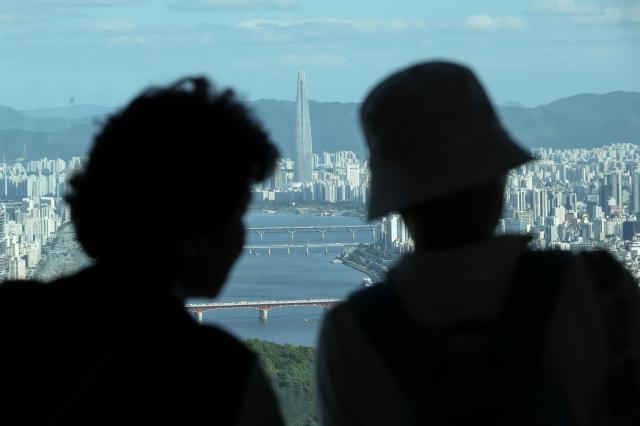
The number of taxpayers increased 30.4 percent over those 14 years, from 2.36 million to 3.08 million. The average assessment per taxpayer doubled to 1.22 million won from 610,000 won.
Apartments alone accounted for 3.27 trillion won in assessments this year, up 17.1 percent from 2025, with the burden heavily concentrated in Seoul’s affluent southern districts.
Gangnam, Seocho and Songpa accounted for 1.56 trillion won, or 47.5 percent of apartment property tax assessments, despite representing just 23.5 percent of apartment property taxpayers.
The average taxpayer in those three districts was assessed 3.34 million won, compared with 1.65 million won citywide. That was 6.7 times the 499,000 won average in Nowon, Dobong and Gangbuk in northern Seoul.
Yet even in Gangnam, long synonymous with South Korea’s property wealth, a valuable address does not necessarily come with a comfortable cash balance.
Some of its most coveted properties are worn, decades-old apartments awaiting reconstruction. Their prices reflect prized locations and
the promise of new homes, while longtime owners still contend with aging infrastructure and mounting holding costs.
For those who bought long before the neighborhood became so expensive, the windfall may have required nothing more than staying put. Paying the bills requires cash.
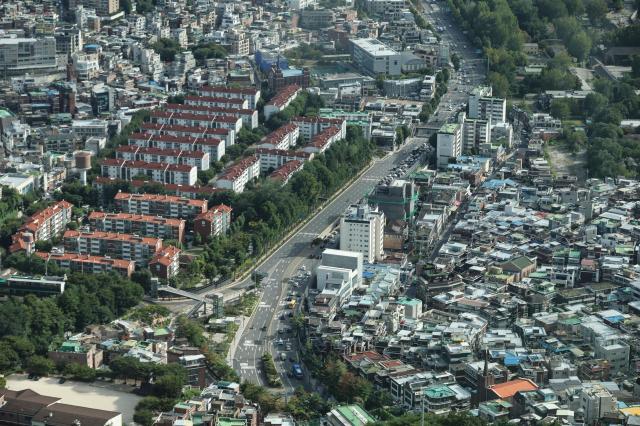
Kim bought his apartment in the late 1990s, when South Korea was grappling with the Asian financial crisis. He now estimates its value at roughly 3.5 billion won.
“People ask me, ‘You live in Eunma? You must be rich,’” Kim said. “But I am anything but.”
He declined to disclose his annual tax bill but said the combined burden of property taxes and the comprehensive real estate holding tax, an additional levy on high-value property holdings, had become a growing concern.
Selling would unlock that wealth. It would also mean leaving the neighborhood he has called home for much of his adult life.
“I’ve thought about selling, but once I leave, where would I go?” he said.
Life inside the complex offers little of the luxury its price tag might suggest. Kim pointed to aging infrastructure, inadequate parking and heavy evening traffic around Daechi-dong, one of Seoul’s busiest private tutoring districts.
Built in 1979, Eunma received reconstruction project implementation approval in July, clearing a major administrative hurdle after decades of delays. Plans call for 5,850 new apartments, with existing owners required to make additional contributions toward their new homes.
Kim said the prospect of further payments had surprised him and prompted his family to reconsider whether to stay.
Reconstruction has renewed interest in Eunma, but that attention has not consistently translated into purchases or higher prices.
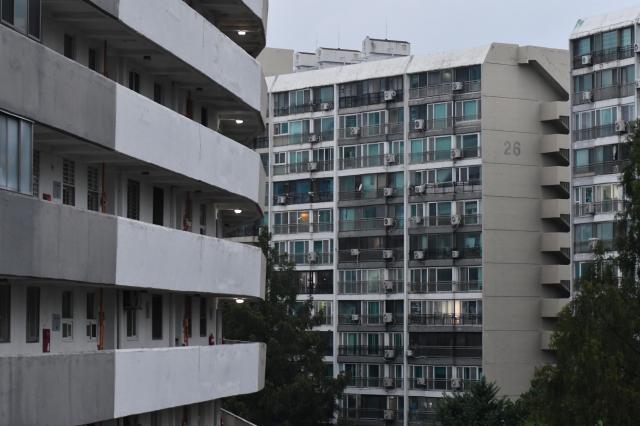
Kim Kyung-hwan, a real estate agent near the complex, said its location in Daechi-dong’s sought-after school district continued to draw inquiries.
“Many people are interested in Eunma, and some want to live here,” he said. “But when it comes to people actually buying, there aren’t that many.”
The complex primarily consists of apartments with about 76 or 84 square meters of exclusive floor space. Individual renovations have left considerable differences in their interiors, giving prospective buyers another factor to weigh.
Asking prices for smaller apartments were generally in the low 3 billion won range, the agent said. Prices for larger units varied according to their characteristics.
Overall activity had increased as reconstruction plans advanced, but that included leases as well as purchases.
“When you put sales, jeonse and monthly rentals together, transactions have increased,” he said. “But prices are similar to before, and some are even lower.”
Jeonse is South Korea’s rental system in which tenants provide a large refundable deposit instead of paying monthly rent. More rental transactions do not necessarily signal stronger demand to buy.
Across Seoul, the rise in property taxes has been uneven.
Dongdaemun recorded the sharpest increase in apartment property tax assessments at 27.4 percent, followed by Seocho at 25.7 percent and Songpa at 24.6 percent. Geumcheon’s increase was just 3.8 percent.
Officially assessed values of apartments and other multiunit housing rose 18.6 percent across Seoul this year, according to the Ministry of Land, Infrastructure and Transport. The increase reached 25.83 percent in Gangnam but only 2.01 percent in Dobong.
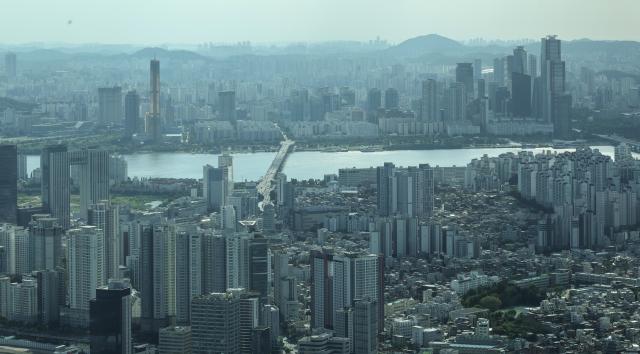
For longtime residents, selling can turn decades of appreciation into cash — but at the cost of leaving the only home they have known for much of their lives.
At Eunma, potential rebuilding contributions add another expense before the promise of a new apartment becomes reality.
For the government, the political difficulty lies in finding ways to contain housing prices and levy property wealth without making longtime owners feel they are being priced out of their own homes.
Those figures show where the capital’s property wealth is growing. They say less about the incomes of the people living there — or whether residents own any of that wealth at all.
Copyright ⓒ Aju Press All rights reserved.
