SEOUL, October 22 (AJP) - Chipmakers in South Korea and Taiwan keep a civil distance despite cutthroat competition to advance chip technology and recruit talent.
But the extraordinary AI chip windfall has turned heads in Taiwan’s cleanrooms as workers watch their Korean counterparts collect lavish rewards from the industry’s newfound riches.
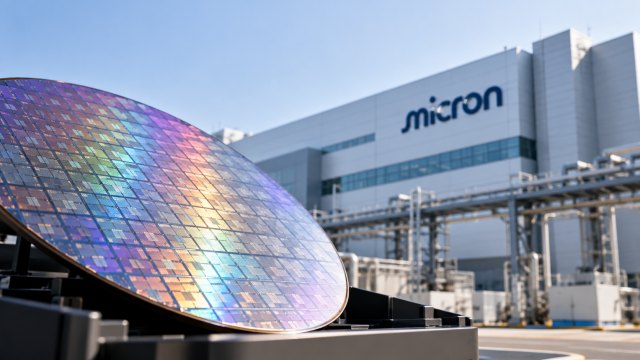
Union officials at U.S. memory chipmaker Micron Technology’s Taoyuan operation began a 24-hour warning strike Thursday, pressing for a permanent share of profits and drawing inspiration from compensation deals at Samsung Electronics and SK hynix.
Eleven union officials began the action outside the plant at 9 a.m. after negotiations on Wednesday failed to resolve the dispute, Taiwan’s Liberty Times reported. The limited action should not be confused with a walkout by the plant’s entire workforce.
The dispute adds another dimension to the rivalry among the world’s three leading memory chipmakers. Beyond technology and market share, the rewards negotiated by Korean workers are becoming benchmarks for employees at their American competitor.
Micron’s Taoyuan union has demanded that the company allocate 15 percent of operating profit to employee bonuses under a permanent profit-sharing system.
The union argues that Micron’s existing Incentive Pay Plan lacks transparency and gives employees too little certainty over how the company’s growing profits are distributed.
Its demands draw directly on arrangements secured at the two Korean memory giants.
Samsung Electronics agreed in May to establish a special bonus pool equivalent to 10.5 percent of its semiconductor division’s operating profit, subject to profitability conditions, averting a planned strike. SK hynix agreed to allocate 10 percent of annual operating profit to its employee profit-sharing program and removed a cap on payouts.
Micron’s Taiwanese unions contend that those arrangements have widened the compensation gap among employees doing comparable work across the three companies.
The dispute has persisted despite Micron’s announcement in September of what it described as its largest-ever employee reward package.
The company said its fiscal 2026 compensation package for production workers in Taiwan would be equivalent to 35 to 68 months of base pay. The rewards included a NT$1 million cash bonus, worth about $31,600, for employees who met the service requirement, alongside other compensation and stock awards.
For the Taoyuan union, however, the size of a single payout does not settle the question of how future profits will be shared.
It wants a predictable formula linking compensation to operating profit, as well as concrete terms for this year’s one-time bonus.
Negotiations failed to produce an agreement in September, prompting a strike authorization vote earlier this month. Of 2,258 eligible union members, 2,012 cast ballots and 1,994 supported strike action.
The union proceeded with Thursday’s warning strike after Wednesday’s talks failed to yield an acceptable proposal. Union chairman Jerry Lin said negotiations would continue Friday and urged management to present specific terms.
The dispute has taken a different course at Micron’s larger Taichung operation.
Micron and the Taichung union announced Wednesday that they had signed a labor-management agreement covering several issues and withdrawn from a mediation session scheduled for Thursday. Neither side disclosed the terms.
The agreement did not resolve the separate Taoyuan dispute. Micron said it hoped other outstanding labor-management issues could also be addressed through cooperation.
Micron has said it respects employees’ legal rights and remains committed to negotiating in good faith with its Taiwanese unions.
The company employs about 15,000 people in Taiwan, a major manufacturing base for its DRAM memory and high-bandwidth memory, or HBM, used in AI servers.
The concentration of production there makes the course of negotiations important to customers already competing for memory supplies. But the scale of Thursday’s action matters: a one-day strike by union officials does not by itself establish that chip output has been disrupted.
A broader or prolonged stoppage would raise greater supply concerns. No significant production disruption from Thursday’s action has been independently confirmed.
Taiwan Semiconductor Manufacturing Co., the world’s largest contract chipmaker, moved fast before employees complained. It distributed NT$36 billion ($1.14 billion) in second-quarter employee bonuses on Aug. 28, an increase of more than 50 percent from a year earlier, according to its disclosure.

Copyright ⓒ Aju Press All rights reserved.