
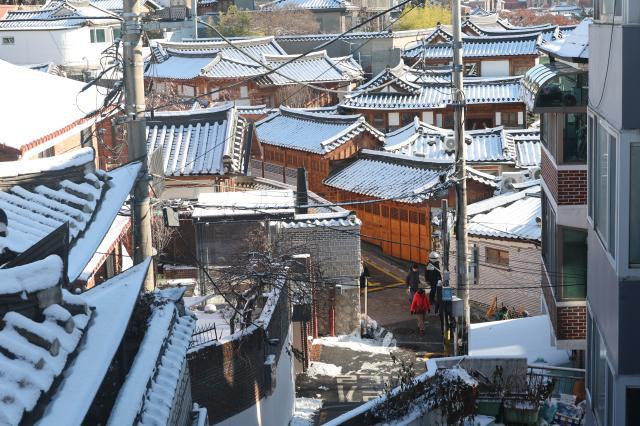
SEOUL, November 06 (AJP) - South Korea is expected to experience a warmer and wetter winter as an unusually powerful El Niño event intensifies toward what could become the strongest on record, the Korea Meteorological Administration (KMA) said Friday.
The weather agency said the El Niño event, which began in May, is expected to surpass the extreme episodes recorded in 1997 and 2015, potentially becoming the most powerful since systematic observations began in 1950.
The phenomenon is forecast to reach its peak in December, raising the likelihood of above-average temperatures and increased rainfall and snowfall across the Korean Peninsula.
According to the KMA, sea surface temperatures in the tropical Pacific monitoring region reached 30 degrees Celsius between Oct. 11 and 17, approximately 3.3 degrees above the historical average.
An El Niño event is classified as strong when the temperature anomaly reaches at least 1.5 degrees. The anomaly averaged 2.6 degrees in October, while the three-month average from August through October stood at 2.4 degrees, exceeding levels observed during previous major events.
El Niño is a naturally occurring climate phenomenon characterized by unusually warm sea surface temperatures in the central and eastern tropical Pacific Ocean. It typically develops when easterly trade winds weaken, allowing warm surface waters that normally accumulate in the western Pacific to spread eastward.
Although El Niño is not itself caused by climate change, it can influence weather patterns worldwide and contribute to higher global temperatures.
In South Korea, a strong El Niño tends to weaken atmospheric convection over the western tropical Pacific while promoting high-pressure circulation over the Philippine Sea and areas east of the Korean Peninsula.
These atmospheric changes can bring warm, moisture-laden southerly winds into the country, increasing both temperatures and precipitation during the winter months.
The KMA's three-month outlook, released on Oct. 23, projected above-average temperatures and precipitation in November and December. Temperatures in January are also expected to remain higher than normal, although precipitation is forecast to stay near average levels.
The agency cautioned, however, that El Niño is not the only factor determining winter weather conditions.
Sea surface temperatures in the Indian and Atlantic oceans, Arctic sea ice conditions and snow cover across the Eurasian continent can also influence atmospheric circulation and temperatures over South Korea.
The KMA advised the public to monitor updated forecasts as these interacting climate factors could alter the severity and distribution of winter precipitation.
Copyright ⓒ Aju Press All rights reserved.
