ZURICH, November 09 (AJP) -South Korea will reaffirm its roadmap for moving away from fossil fuels at the United Nations climate summit in Türkiye as Seoul eyes hosting the talks in 2028.
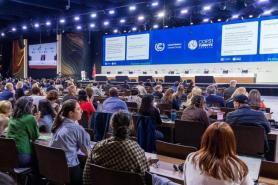
The absence of a U.S. government delegation hangs over COP31 in Antalya, where disputes over climate finance and the pace of the energy transition are testing countries’ willingness to act together.
The summit runs until November 20 and marks 10 years since the Paris Agreement came into force. Under that deal, nearly every country agreed to hold global warming well below 2 degrees Celsius above pre-industrial levels and pursue efforts to limit it to 1.5 degrees.
South Korea’s delegation is led by Kim Sung-whan, the minister of climate, energy and environment. He will present the country’s green transition strategy, known as K-GX, during high-level talks from November 16 to 18.
The strategy includes expanding renewable energy and cutting emissions from heavy industries such as steel, placing Korea’s industrial transition at the center of its climate diplomacy.
Seoul also plans to join a voluntary pledge to raise electricity’s share of global energy use from about 20 percent today to 35 percent by 2035. The proposal aims to replace direct use of fossil fuels in cars, homes and factories with electric power.
The European Union wants the pledge to specify “clean” electricity, a distinction that could open another dispute over the future of coal, oil and gas.
For South Korea, cooperation with Australia will be a focus. The two countries plan to sign an agreement on cutting carbon emissions, including work on low-carbon steel. Australia is a major supplier of the iron ore and coal used by Korean steelmakers.
Kim’s delegation will also hold talks with Britain, Kenya and the EU. The South Korean pavilion will host 51 side events and an exhibition of carbon-neutral technology.
The diplomatic push comes amid a difficult start to the summit.
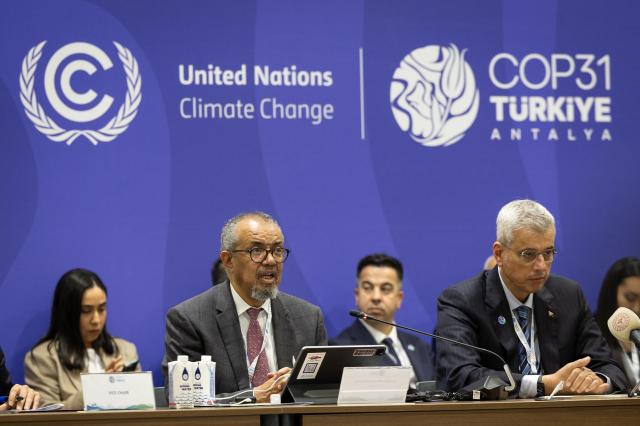
The opening ceremony began about 90 minutes late after overnight arguments over the agenda. Developing countries sought additional talks on climate finance — money richer nations have promised to help poorer countries cut emissions and cope with floods, droughts and heat waves.
“We know that delay carries one of the heaviest costs in climate action,” said Murat Kurum, Türkiye’s environment minister and president of COP31.
UN Secretary-General Antonio Guterres warned that the world has “entered a new age of climate extremes.”
Yet a senior EU official said there was “no political will” for new funding promises at this year’s summit. The United States, which has withdrawn from the Paris Agreement, sent no government officials, although a group of U.S. lawmakers is attending.
COP31 also has an unusual division of responsibilities: Türkiye hosts the summit and holds the presidency, while Australian Climate Minister Chris Bowen leads the negotiations.
For Seoul, the gathering offers an opportunity to build support for hosting COP33 in 2028. India withdrew its bid earlier this year, and the southern port city of Yeosu has campaigned to host the event with President Lee Jae Myung’s backing.
- Tags: COP31, United Nations, Antalya, Türkiye, Murat Kurum, Antonio Guterres, Chris Bowen, Australia, South Korea, Kim Sung-hwan, Ministry of Climate Energy and Environment, K-GX, Paris Agreement, European Union, COP33, Yeosu
Copyright ⓒ Aju Press All rights reserved.