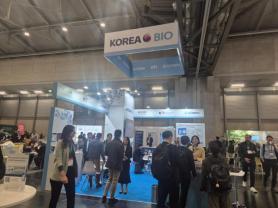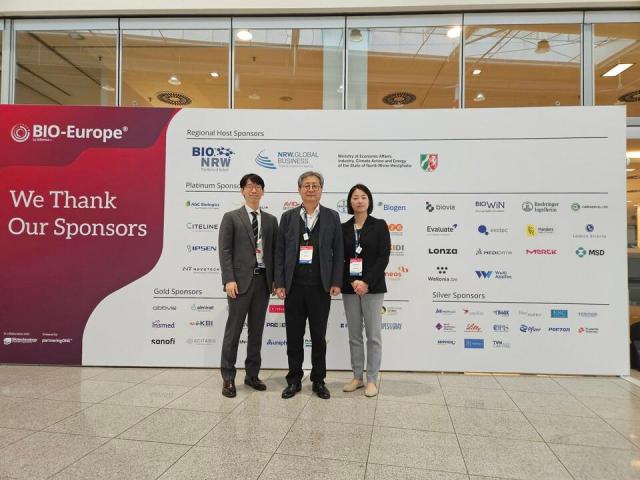
ZURICH, November 10 (AJP) - South Korean biotech firms are pitching cancer treatments, liver disease drugs and drug-delivery technologies to global pharmaceutical companies at BIO-Europe in Cologne, seeking partners to finance development and reach overseas markets.
Licensing, joint development and investment discussions continued Tuesday as the three-day event entered its second day. No Korean company had announced a signed agreement by then, according to the Korean media reports cited, though negotiations typically extend well beyond the initial meetings.
Cellbion is presenting clinical results for Lu-177-DGUL, an experimental radiopharmaceutical for advanced prostate cancer. The treatment delivers radiation to cancer cells using an approach similar to that of Pluvicto, developed by Swiss drugmaker Novartis.
The company reported an objective response rate — the proportion of patients whose tumors shrank sufficiently to meet specified criteria — of 35.9 percent in a South Korean phase two trial. The rate was 47.4 percent among patients with measurable lesions.
South Korea’s Ministry of Food and Drug Safety approved a phase three trial in September.
Cellbion is also studying the treatment in combination with Keytruda, the cancer immunotherapy made by U.S. drugmaker Merck, known as MSD outside the United States and Canada.
The company said it was following up on contacts made at BIO-Japan in October and hoped to “expand practical global business development opportunities, including technology transfers and co-development.”
D&D Pharmatech is pursuing discussions on DD01, a once-weekly injection being developed for metabolic dysfunction-associated steatohepatitis (MASH), a liver disease involving fat buildup, inflammation and damage.
In its U.S. phase two trial, 62.5 percent of DD01 recipients achieved MASH resolution without worsening liver scarring after 48 weeks, compared with 5.3 percent of placebo recipients. Those results came from an analysis of 35 patients who followed the trial protocol and completed both required biopsies, including 16 who received DD01, according to the company.
LigaChem Biosciences is discussing partnerships for its antibody-drug conjugates (ADCs), which pair antibodies that recognize cancer cells with potent anticancer drugs. The company also plans to attend an investment conference in London next week.
ABL Bio is exploring the application of its brain drug-delivery technology to medicines based on short strands of genetic material. Alteogen and its subsidiary Alteogen Biologics are seeking partners for ALTS-OP01, an experimental treatment for retinal disease.
Other Korean participants include Pharos iBio, which is presenting two cancer drug candidates, and Aptabio, which is seeking partners for a treatment intended to prevent kidney injury associated with contrast agents used in medical imaging.
KoBioLabs is promoting technology that uses microbes to deliver therapeutic substances inside the body. In March, it signed a licensing agreement with Celltrion worth up to 205.2 billion won, including payments contingent on development and commercial milestones.
For Korean biotech firms, international partnerships can provide funding for expensive late-stage trials and access to regulatory expertise and overseas sales networks. ABL Bio’s licensing agreements with Britain’s GSK and U.S. drugmaker Eli Lilly in 2025 illustrate the potential commercial value of drug-delivery platforms alongside individual medicines.
BIO-Europe concludes Wednesday. The longer test for participating companies will be whether contacts made in Cologne progress through scientific review and commercial negotiations into development partnerships.
- Tags: BIO-Europe, South Korea, biotech, Cellbion, Lu-177-DGUL, Novartis, Merck, Keytruda, D&D Pharmatech, LigaChem Biosciences, ABL Bio, Alteogen, Pharos iBio, Aptabio, KoBioLabs, Celltrion, Cologne, licensing
Copyright ⓒ Aju Press All rights reserved.