SEOUL, November 11 (AJP) — A six-country Asian payment network aims to begin operations in late 2027, offering faster international transfers as the Bank of Korea examines how digital finance could reshape settlement systems.
The Nexus project, designed to connect existing national payment networks, is targeting a fourth-quarter 2027 launch, according to material presented by Andrew McCormack, chief executive of Nexus Global Payments (NGP), at a Bank of Korea (BOK) conference Wednesday.
The network is intended to link instant payment systems in India, Indonesia, Malaysia, the Philippines, Singapore and Thailand, allowing banks and payment providers to process international transfers through a common platform.
While domestic transfers can be completed within seconds, international payments often involve intermediary banks, currency conversion and different regulatory requirements, making them slower and more expensive.
Nexus aims to address those problems by allowing participating countries to connect through a single network rather than establishing separate payment arrangements with each foreign counterpart.
The project aims to meet a Group of 20 target of completing cross-border transfers within 60 seconds, with fees and exchange rates disclosed before transactions are made.
The system could benefit migrant workers sending money home, consumers making overseas payments and small businesses paying foreign suppliers. Banks and foreign exchange providers would still handle currency conversion and settlement, while the shared platform coordinates transactions.
South Korea is not among the six participating countries, and the BOK has not announced plans to join the operational network.
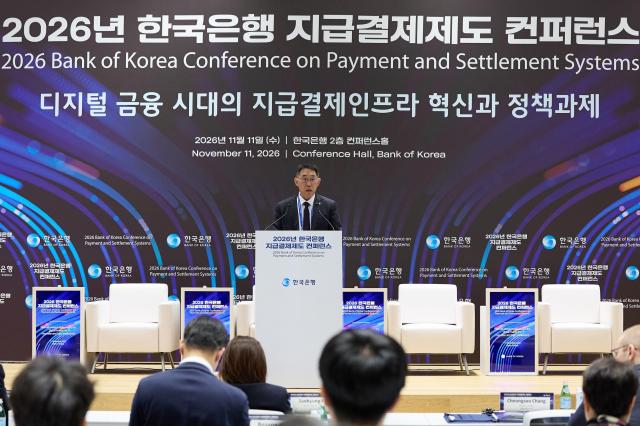
The central bank hosted Wednesday's conference to examine how payment infrastructure should evolve as artificial intelligence, digital assets and demand for around-the-clock financial services reshape transactions.
Another major initiative presented at the event was the Bank of England's plan to introduce a new settlement service by 2028 for tokenized assets — digital representations of securities and other financial instruments.
Andrei Pustelnikov, a Bank of England official, outlined a system that would connect existing central bank payment infrastructure with external digital asset platforms, allowing money and assets to change hands simultaneously.
The approach is intended to reduce settlement risk, which arises when one party delivers money or an asset without receiving the corresponding payment.
The Bank of England is testing the technology with 18 institutions, including the London Stock Exchange, and plans to release further operational and regulatory guidance in 2027.
It is also participating in Project Agorá alongside the BOK and other central banks, exploring international payments using digital versions of commercial bank deposits and central bank money.
BOK Deputy Governor Chang Cheong-soo emphasized the need to preserve trust in central bank money while modernizing payment systems, warning that faster and more automated transactions could create additional cybersecurity risks.
The initiatives highlight a common challenge for central banks: making domestic and international payments faster and more accessible without weakening the safeguards that keep financial transactions secure.

Copyright ⓒ Aju Press All rights reserved.