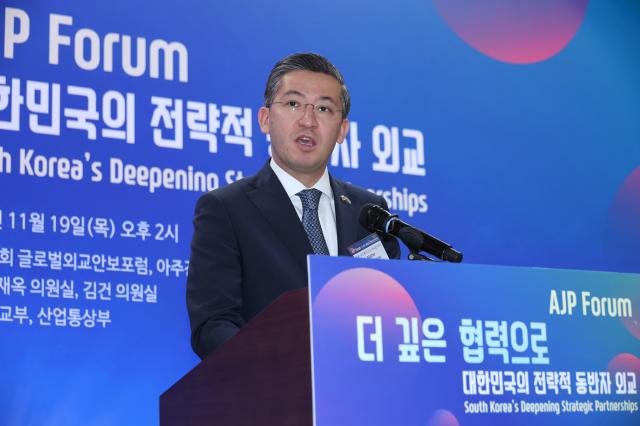
Speaking at the AJP Forum at the National Assembly in Seoul, Abdusalomov outlined Uzbekistan's priorities for 2027, focusing on expanding industrial cooperation, attracting greater South Korean investment and turning agreements reached during the September summit between the two countries into concrete projects.
The forum, titled "Beyond the Summit: From Agreement to Action," brought together ambassadors from seven countries — Brazil, India, Türkiye, Tajikistan, Uzbekistan, Kazakhstan and Kyrgyzstan — that held summit-level talks with South Korea this year.
"Our goal is not just supplying the raw materials," Abdusalomov said, emphasizing the importance of establishing a full value chain from extraction to processing within Uzbekistan.
"Korea is ideally suited for this role with its advanced technologies," he added.
The ambassador also called for South Korea's Ministry of Trade, Industry and Resources to take a more proactive and leading role in coordinating joint industrial projects.
Despite the opportunities for closer cooperation, Abdusalomov warned that South Korea's economic presence in Uzbekistan was losing ground to other countries.
According to the ambassador, Uzbekistan has attracted approximately $110 billion in foreign direct investment over the past five years and expects nearly $50 billion this year alone. Cumulative South Korean investment in the country stands at around $8 billion.
South Korea, once among the top three countries by the number of foreign companies operating in Uzbekistan, now ranks sixth, with around 740 companies.
The ambassador explained that South Korea's declining position was driven not by a decrease in Korean investment but by the rapid expansion of investment from other countries.
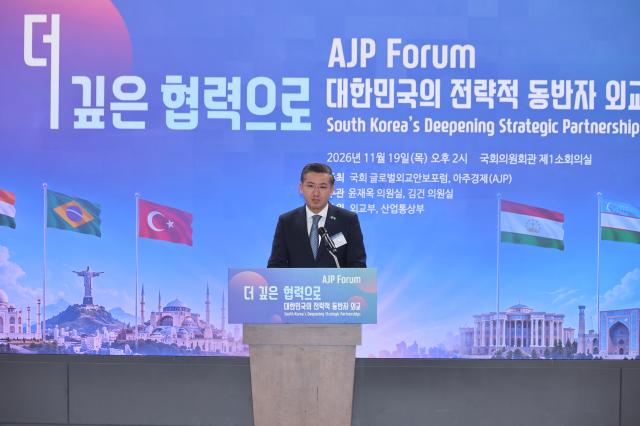
Abdusalomov also called for greater government support to encourage South Korean companies to participate in major investment and business events across Central Asia.
On trade, the ambassador stressed the need for a more balanced economic relationship. Although South Korea ranked among Uzbekistan's five largest trading partners at the end of 2025, bilateral trade accounted for only 2 percent of Uzbekistan's total foreign trade, he said.
Rather than reducing Korean exports to Uzbekistan, he proposed expanding Uzbek exports to South Korea.
"Uzbekistan is fully open and ready to diversify its exports," he said, calling for "very concrete steps and real actions from both sides in expanding our access to our markets."
He also expressed hopes that Uzbekistan's accession to the World Trade Organization would accelerate bilateral free trade agreement negotiations.
He also emphasized the need to facilitate travel between the two countries.
"Given that medical tourism is rapidly developing in Korea, we see a strong need for visa-free entry for Uzbek citizens visiting for medical purposes," he said, also calling for simplified visa requirements for Uzbek businesspeople.
With the two countries marking the 35th anniversary of diplomatic relations in 2027, Abdusalomov stressed that their special strategic partnership must move beyond signing agreements and deliver tangible results.
"Our nations, our people are waiting for these results," he said.
"I call upon the Korean partners to be a little more aggressive in working in Central Asia because the competition is very high."

Kim Hee-su
Kim Hee-su is a bilingual reporter at AJU Press, covering defense and foreign affairs. Before joining AJP in 2025, she worked at The Korea Times, where she wrote interview stories, including a profile of North Korean defector Kim Gum-hyok, and produced digital content. She also previously worked as a researcher for KBS News 9’s International News Department, supporting correspondents in 10 countries around the world. She graduated from the University of Toronto in Canada with a double major in Book and Media Studies and East Asian Studies.
Copyright ⓒ Aju Press All rights reserved.