ZURICH, November 29 (AJP) - Spain’s conservatives won Sunday’s snap election and are set to take power with the far right, a shift that could cost China its friendliest partner among the European Union’s big economies.
With about 91 percent of votes counted, the People’s Party (PP) of Alberto Núñez Feijóo won 134 of the 350 seats in parliament, Spanish news site Demócrata reported. The far-right party Vox took 53 seats, up from 33 in 2023, giving the two parties 187 seats together, well above the 176 needed for a majority.
The Socialists of Prime Minister Pedro Sánchez came second with 115 seats. Turnout reached almost 80 percent, about 13 points higher than in 2023, and Sánchez called Feijóo to congratulate him, Spanish daily Diario de Pontevedra reported.
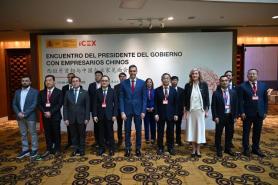
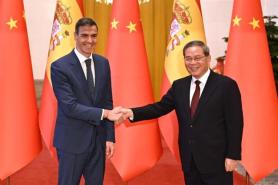
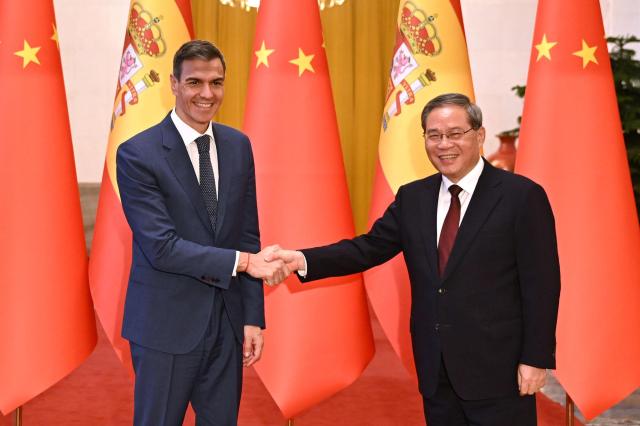
For Beijing, the stakes are high. Under Sánchez, Spain became a key entry point for Chinese companies in Europe and one of the friendliest voices toward China in the EU.
Sánchez visited China several times, most recently in April, when he met President Xi Jinping in Beijing. Spain also abstained in the 2024 EU vote on extra duties on Chinese-made electric cars, while France and Italy backed them.
Chinese money followed the warmer ties. China’s investment stock in Spain tripled over the past decade to 12 billion euros ($13.2 billion). Official Spanish data show China rose from outside the top 20 foreign investors to ninth place by the end of 2025.
Carmakers have led the way. Chery builds cars at a former Nissan plant in Barcelona, and battery giant Contemporary Amperex Technology Co. Limited (CATL) plans a plant in Zaragoza with Stellantis. Chinese electric carmaker BYD said last week that Spain is on its shortlist for a new European factory.
The PP sees China differently. It describes China as a “systemic rival,” a label also used by the EU. The party wants to limit Chinese involvement in defense, cybersecurity and infrastructure, Spanish daily El Español reported, citing sources close to the party.
“It is not about expelling them, but about controlling their expansion,” one source told the newspaper.
The first test could come in Galicia in northwestern Spain. Chinese state-owned carmaker SAIC Motor plans a factory near Ferrol, close to a naval base and the Navantia military shipyard, and Spanish defense officials have raised spying concerns. Final approval will fall to the next government.
Trade is another concern for the right. Spain bought about 50 billion euros ($55 billion) of goods from China last year, more than from any other country, while selling it only about 8 billion euros ($8.8 billion).
Beijing has tried to stay calm. Qu Xun, a senior Chinese diplomat in Madrid, told Reuters on Tuesday that China expects relations to remain stable whoever wins. He rejected the “systemic rival” label.
Many Chinese plans in Spain are still on paper. Only about a tenth of the Chinese investment announced since 2020 has actually arrived, giving a new government room to slow projects that have not yet started.
Feijóo still needs to be confirmed by parliament, likely with the support of Vox. If he succeeds, China may find that its gateway into Europe has become a checkpoint.
Tags: Spain, election, People’s Party, Alberto Núñez Feijóo, Pedro Sánchez, Vox, China, Xi Jinping, BYD, SAIC Motor, CATL, Chery, Stellantis, Navantia, El Español
Copyright ⓒ Aju Press All rights reserved.