SEOUL, October 7 (AJP) — Major global investment banks ratcheted up 2026 growth forecast for South Korea to an average of 3.5 percent in line with a hotter-than-expected chip boom, with J.P. Morgan raising its estimate to 4.0 percent.
The average projection from eight major investment banks rose from 3.3 percent at the end of August, according to data compiled by the Korea Center for International Finance (KCIF) as of the end of September.
The consensus has risen for six consecutive months from 2.4 percent at the end of April, while all eight institutions now expect South Korea to grow at least 3 percent this year.
J.P. Morgan raised its forecast to 4.0 percent from 3.8 percent, becoming the only institution in the group to project growth in the 4 percent range.
UBS made the largest revision among the institutions whose forecasts were raised, lifting its estimate to 3.5 percent from 2.8 percent, while Bank of America raised its projection to 3.6 percent from 3.1 percent and Citi to 3.8 percent from 3.7 percent.
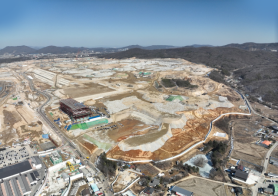
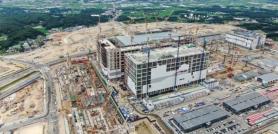
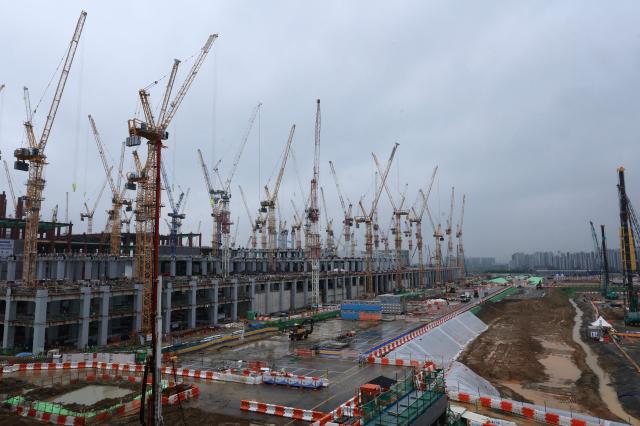
Separate public research from several of the banks has pointed to the global artificial intelligence investment boom and South Korea's position in the semiconductor supply chain as key supports for the economy.
Citi Research said in a September 25 global outlook that AI spending had become a major engine of global growth, with its effects increasingly visible in South Korea, Taiwan and China through manufacturing, technology exports and investment.
J.P. Morgan Private Bank has similarly highlighted South Korea as a major beneficiary of the AI investment cycle, saying in its mid-year Asia outlook that the country's export growth accelerated sharply in the first half on strong demand and tight supply for high-end memory products.
The bank said continued investment by cloud providers and hyperscalers in data centers and semiconductors could sustain demand for computing capacity and memory over the next one to two years.
Goldman Sachs Research has separately described a semiconductor memory supercycle, fueled by tight supply, hyperscaler demand and AI computing needs, as a major driver of South Korean corporate earnings.
UBS Asset Management also said in its September emerging-market assessment that sustained AI infrastructure spending and strong semiconductor earnings had supported North Asian markets, with South Korea and Taiwan leading the AI-linked rebound.
The upward revisions have extended into next year. Six of the eight investment banks raised their 2027 growth forecasts, lifting the average projection to 2.8 percent from 2.5 percent at the end of August.
That puts the consensus close to the Bank of Korea's (BOK) 2.9 percent forecast for 2027.
The BOK in August raised its growth forecasts to 3.3 percent for 2026 and 2.9 percent for 2027, saying the semiconductor boom had exceeded earlier expectations and its spillover effects were broadening.
The central bank said strong semiconductor exports and investment were increasingly being accompanied by improving income conditions and a recovery in consumption, while cautioning that the outlook remained subject to uncertainty over the semiconductor cycle and developments in the Middle East.
The OECD has taken a slightly stronger view of growth this year, raising its September forecast for South Korea to 3.7 percent on strong industrial production and export growth.
It expects growth to ease to 2.6 percent in 2027 as private consumption expands at a more moderate pace.
AJP Takeaways
- South Korea is seen growing an average 3.5 percent in 2026 by eight major global investment banks, up from 3.3 percent a month earlier.
- J.P. Morgan has the highest 2026 growth forecast at 4.0 percent, while UBS, Bank of America and Citi also raised their projections.
- Global investment banks have increasingly highlighted AI investment, semiconductor demand and technology exports as key supports for Korea’s growth outlook.
- The Bank of Korea expects the economy to grow 3.3 percent this year and 2.9 percent in 2027, while the IB average for next year has risen to 2.8 percent.
Copyright ⓒ Aju Press All rights reserved.