
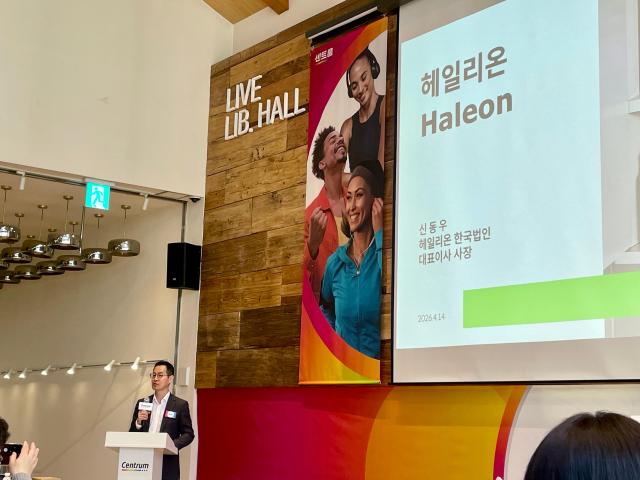
“Multivitamins have been shown to have positive effects beyond addressing nutrient gaps, including supporting brain health and slowing aging,” Haleon’s multivitamin brand Centrum said as it shared research accumulated over the past 35 years and outlined plans to expand Korea-specific strategies.
Park Min-seok, head of medical and academic affairs at Haleon Korea, said at the “Centrum Day” event held April 14 in Seoul’s Myeong-dong that multivitamin research is moving beyond deficiency prevention toward improving quality of life and extending healthy life expectancy.
“Multivitamin research is evolving from simply correcting deficiencies to improving quality of life and extending healthy life expectancy,” Park said. “Based on our global research capabilities, we will continue to expand optimal nutrition solutions for Koreans.”
Organizers said Centrum, described as one of the world’s most-studied multivitamin brands, has scientific evidence supported by large-scale human studies and long-term follow-up data.
Centrum said its research dates to 1985, beginning with studies of micronutrient deficiencies in China’s Linxian region, and includes long-term tracking of cancer incidence among U.S. male physicians in collaboration with the U.S. National Institutes of Health.
Park said the field is also expanding to broader social value, including improved energy levels, better quality of life and reduced social costs. He added that recent work is increasingly focused on “precision nutrition” and “healthy life expectancy,” incorporating indicators such as brain health, aging biomarkers and individual lifestyle factors.
Centrum also highlighted recent international findings. In an observational study of 614 adults in India last year, participants reported about a 44% improvement in energy levels after taking multivitamins, and the frequency of sick days fell by about 50%.
In a health-economics model study involving older adults in Taiwan, researchers suggested that if multivitamin use slows cognitive decline, dementia cases could fall over the next 10 years, with potential social cost savings of about 65 trillion won.
A Singapore study released early this year analyzed blood plasma from 662 middle-aged women and found low folate levels were linked to higher perceived stress, while B vitamins and vitamin D levels were associated with metabolic regulation.
In South Korea, the company said it will strengthen a tailored approach reflecting Koreans’ dietary patterns and nutritional status. Centrum said it has continued developing localized products through research aligned with Korean eating habits and dietary reference intakes, and that this research helped lead to products such as “Centrum One Day Pack.”
A Centrum official said the company will continue expanding Korea-specific data and solutions based on its global research capabilities.
Park Min-seok, head of medical and academic affairs at Haleon Korea, said at the “Centrum Day” event held April 14 in Seoul’s Myeong-dong that multivitamin research is moving beyond deficiency prevention toward improving quality of life and extending healthy life expectancy.
“Multivitamin research is evolving from simply correcting deficiencies to improving quality of life and extending healthy life expectancy,” Park said. “Based on our global research capabilities, we will continue to expand optimal nutrition solutions for Koreans.”
Organizers said Centrum, described as one of the world’s most-studied multivitamin brands, has scientific evidence supported by large-scale human studies and long-term follow-up data.
Centrum said its research dates to 1985, beginning with studies of micronutrient deficiencies in China’s Linxian region, and includes long-term tracking of cancer incidence among U.S. male physicians in collaboration with the U.S. National Institutes of Health.
Park said the field is also expanding to broader social value, including improved energy levels, better quality of life and reduced social costs. He added that recent work is increasingly focused on “precision nutrition” and “healthy life expectancy,” incorporating indicators such as brain health, aging biomarkers and individual lifestyle factors.
Centrum also highlighted recent international findings. In an observational study of 614 adults in India last year, participants reported about a 44% improvement in energy levels after taking multivitamins, and the frequency of sick days fell by about 50%.
In a health-economics model study involving older adults in Taiwan, researchers suggested that if multivitamin use slows cognitive decline, dementia cases could fall over the next 10 years, with potential social cost savings of about 65 trillion won.
A Singapore study released early this year analyzed blood plasma from 662 middle-aged women and found low folate levels were linked to higher perceived stress, while B vitamins and vitamin D levels were associated with metabolic regulation.
In South Korea, the company said it will strengthen a tailored approach reflecting Koreans’ dietary patterns and nutritional status. Centrum said it has continued developing localized products through research aligned with Korean eating habits and dietary reference intakes, and that this research helped lead to products such as “Centrum One Day Pack.”
A Centrum official said the company will continue expanding Korea-specific data and solutions based on its global research capabilities.
* This article has been translated by AI.
Copyright ⓒ Aju Press All rights reserved.