They vowed to step up inspections and scrutiny of illegal foreign exchange transactions by importers and exporters at an emergency meeting convened by Finance and Economy Minister Koo Yun-cheol, which was attended by key financial chiefs including Bank of Korea governor Shin Hyun-song, Financial Services Commission chairman Lee Eog-won, and Financial Supervisory Service governor Lee Chan-jin.
The warning came after two earlier verbal interventions failed to prevent further weakening of the currency.
Participants assessed that the won's exchange rate against the dollar rose sharply over the weekend, amid expectations that the Fed may raise interest rates.
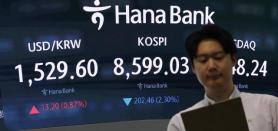
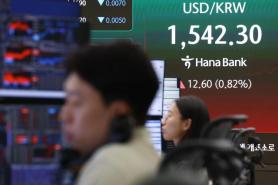
According to the ministry, the exchange rate climbed from around 1,539.1 won on Friday afternoon to 1,560.2 later in the day as the U.S. market opened.
Sunday's meeting followed a series of warnings from monetary and financial authorities. BOK governor Shin said during a press briefing late last month that the central bank would "not tolerate herd behavior in the exchange rate."
During a meeting earlier last week, Koo also issued a similar warning, vowing to "immediately take necessary measures" against any irregularities.
Despite these warnings, the rate crossed 1,560 won, while retail won-selling rates quoted by some currency exchange booths approached the 1,600 level.
Officials said the won's recent volatility was partly attributed to foreign investors cashing out and reshuffling their portfolios after a chip-driven rally in the domestic stock market.
The latest warning was stronger than previous ones, as the one in late May focused on countering market perceptions that the BOK governor would tolerate a weaker won, while last week's meeting delivered broader measures across agencies to stabilize the market.
By contrast, Sunday's meeting directly singles out speculative trading, offshore NDF activity, and possible market disruption.
The BOK and FSS agreed to improve the transparency of offshore non-deliverable forward transactions and to prepare measures to bring more of such trading into the domestic foreign exchange market.
Officials also said they would take stern action if violations are found. Potentially illegal "lead and lag" transactions by trade companies will also be subject to scrutiny. Such transactions involve importers accelerating payments or exporters excessively delaying the receipt of export proceeds to benefit from a rising exchange rate.
Koo said authorities will monitor market conditions under a 24-hour, high-level alert posture. He warned that market volatility could intensify again depending on the course of the prolonged conflict in the Middle East and upcoming U.S. inflation data.
But it remains to be seen whether the stronger warning will lead to inspections, tighter monitoring of offshore transactions, or additional stabilization measures.

Copyright ⓒ Aju Press All rights reserved.