
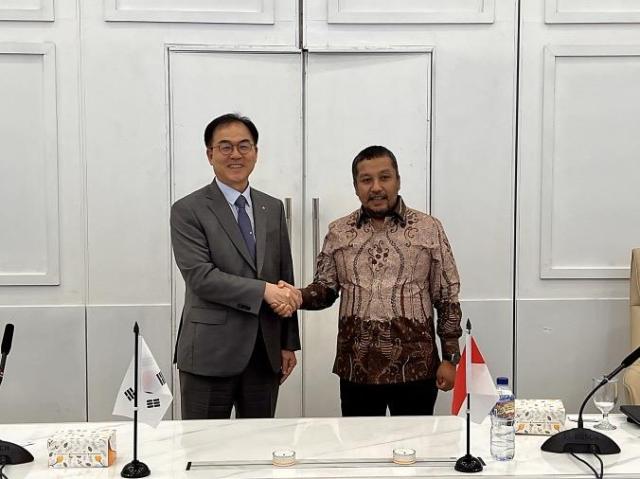
The Korea Energy Agency's official development assistance (ODA) initiatives are paving the way for the international expansion of Korea's renewable energy model and carbon reduction systems.
On June 11, Choi Jae-gwan, the agency's head, visited Jakarta, Indonesia, where he met with the Deputy Minister of the National Development Planning Agency (BAPPENAS) to discuss cooperation on permits and project approvals for new ODA initiatives. On June 12, he plans to visit an agricultural solar power facility at Bogor Agricultural University to assess the project's feasibility.
This visit aims to discuss new ODA projects launching this month, including the establishment of an electric two-wheeler charging system based on agricultural solar power and strengthening capabilities for verifying greenhouse gas emissions under Article 6 of the Paris Agreement. Last April, the Korea Energy Agency signed a memorandum of understanding (MOU) with BAPPENAS to accelerate the integration of renewable energy into Indonesia's energy transition and climate change efforts.
Specifically, the electric two-wheeler charging system project, which will receive 4.4 billion won (approximately $3.3 million) by 2028, combines agriculture, renewable energy, and electric mobility into an integrated business model. It aims to enhance access to clean energy in rural areas and establish a foundation for the adoption of electric two-wheelers.
The agency plans to adapt and expand its representative community-based renewable energy model, known as "Sunlight Income Village," to fit local conditions in Indonesia. This model allows residents to form cooperatives to operate solar power plants on idle land and share the profits, promoting energy transition and increasing rural incomes.
Given Indonesia's status as the world's fourth most populous country and the largest economy in Southeast Asia, the model is seen as suitable due to the significant disparities in energy access across its many islands. The International Energy Agency (IEA) has identified Indonesia as a key player in Southeast Asia's energy transition, noting rapid investments in solar and electric vehicle sectors.
Additionally, the project to strengthen capabilities for verifying greenhouse gas emissions under Article 6 of the Paris Agreement will involve an investment of 415 million won (approximately $315,000) by 2029. This initiative aims to establish a verification and certification system for emission reduction achievements based on the Internationally Transferred Mitigation Outcomes (ITMO) framework in Indonesia.
This effort goes beyond merely supporting renewable energy installations; it also expands the foundation for international reduction projects that Korea is pursuing. Article 6 of the Paris Agreement allows for the trading of greenhouse gas reduction achievements between countries, and Korea is working to expand overseas reduction projects to meet its 2030 Nationally Determined Contribution (NDC) targets.
Choi Jae-gwan stated, "I find it meaningful that new ODA projects are being pursued based on cooperation with Indonesia's BAPPENAS. Drawing on Korea's experience in promoting community-based renewable energy policies, we aim to enhance energy access in rural areas of Indonesia, increase residents' incomes, and contribute to sustainable development."
* This article has been translated by AI.
Copyright ⓒ Aju Press All rights reserved.