
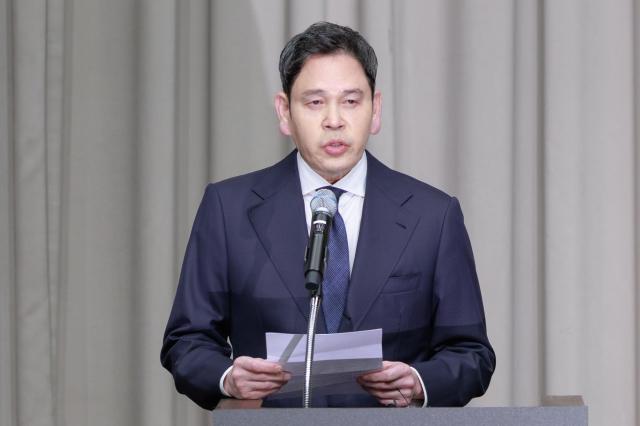
In response to the recent marketing controversy surrounding Starbucks Korea's so-called "Tank Day," Shinsegae Group has announced plans to conduct history awareness and social sensitivity training for all employees. This initiative will include management from Shinsegae Group, Starbucks headquarters staff, and store partners. It marks the first time since the launch of Starbucks Korea in 1999 that all stores will close early for such training.
This action goes beyond mere damage control; it prompts a reevaluation of how companies communicate with society. Notably, Chairman Jeong Yong-jin's decision to participate in the training alongside other executives reflects a responsible approach to management.
Corporate activities rely on consumer trust. For brands like Starbucks, which interact with countless consumers daily, the weight of social responsibility is even greater. Marketing is not just a means of selling products; it serves as a window into a company's values, philosophy, and perspective on society.
The essence of this controversy extends beyond a single event name. The larger issue lies in the failure to adequately consider historical significance and social context during the marketing planning and review process. While it is natural for companies to seek attention to engage the public, marketing that inadvertently touches on societal wounds and evokes historical pain must be critically examined.
Recently, companies have engaged in marketing competitions aimed at rapid dissemination and virality, particularly through social media. The use of provocative language, images, and memes has intensified the pressure to generate buzz. However, gaining attention and earning trust are fundamentally different challenges. While it may be possible to achieve momentary clicks and views, losing social resonance can severely damage brand value.
In this context, Shinsegae Group's decision to implement history awareness and social sensitivity training could be a crucial first step toward preventing future incidents. However, it is essential not to expect that a single training session will resolve all issues. The focus must shift toward changing organizational culture and decision-making structures. A multi-tiered review system should be established to assess potential historical and social controversies from the marketing planning stage, ensuring that the entire organization shares social responsibility, rather than leaving it to specific departments.
At the same time, it is important to guard against the escalation of this controversy into further social conflict. Some individuals have attempted to use this issue as a point of ideological contention, leading to excessive criticism and threats directed at Starbucks employees. Such actions do not contribute to resolving the problem. While criticism of misguided marketing is necessary, accountability should rest with decision-makers and the organizational system.
Businesses exist within society. Losing social trust makes it difficult for even the best products and services to survive in the long term. Conversely, acknowledging mistakes and making responsible improvements can serve as a foundation for regaining consumer trust. The key is whether the sincerity of the apology translates into meaningful action.
The Starbucks incident is not merely a case of marketing failure; it highlights the fact that historical awareness and social sensitivity have become vital components of corporate competitiveness. It is hoped that Shinsegae Group's training will not be a mere performative exercise but rather a starting point for transforming organizational culture and decision-making processes. This would represent the true meaning of their commitment to preventing future incidents.
* This article has been translated by AI.
Copyright ⓒ Aju Press All rights reserved.