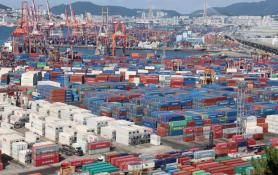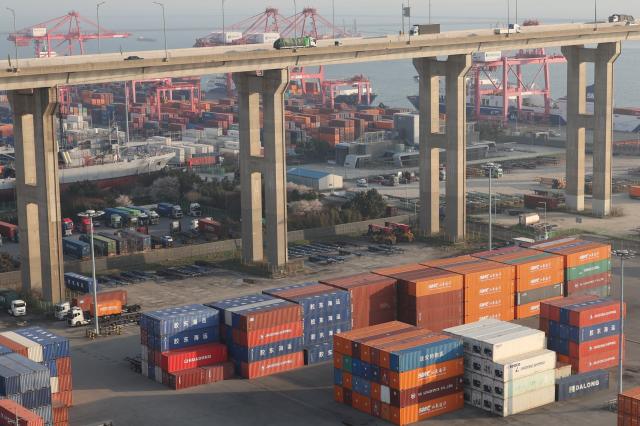
The won-denominated import price index fell 0.3 percent in May from a month earlier, according to preliminary export-import price data released by the Bank of Korea.
The decline followed a 2.1 percent drop in April after import prices had surged 18.0 percent in March when war in the energy-rich Gulf region sent crude oil prices sharply higher.
The central bank said lower prices for mining products, coal and petroleum products drove the latest decline.
Brent crude averaged $107.14 per barrel in May, down from $117.29 in April, while Dubai crude, a benchmark closely watched in South Korea, fell to $103.15 from $105.70 over the same period.
Import prices had risen only 0.4 percent in January and 1.5 percent in February before the conflict triggered a sharp spike in March.
Annual comparisons, however, showed price pressures remained elevated.
Import prices fell 1.2 percent year-on-year in January and rose 1.6 percent in February before accelerating to 20.4 percent in March, 20.5 percent in April and 24.8 percent in May.
Energy-related products continued to account for much of the increase.
Import prices for mining products rose 42.4 percent from a year earlier in May, while coal and petroleum products jumped 73.1 percent.
Raw material import prices fell 1.0 percent from April but remained 38.9 percent higher than a year earlier.
Intermediate goods prices were unchanged from April as gains in primary metal products offset lower prices for coal and petroleum products.
The data suggest that earlier increases in energy costs are still filtering through supply chains despite recent easing in global oil prices.
Export prices moved in the opposite direction.
The won-denominated export price index rose 0.3 percent from April and jumped 46.9 percent from a year earlier.
Export prices increased 4.0 percent in January and 2.5 percent in February before rising 17.0 percent in March, 7.5 percent in April and 0.3 percent in May.
Although the pace of monthly gains slowed in May, export prices continued to receive strong support from semiconductors.

Memory chips were the biggest contributor. DRAM prices surged 259.7 percent year-on-year, while NAND flash memory prices jumped 223.0 percent.
Export prices for coal and petroleum products fell 11.0 percent from April as oil prices eased, though they remained 88.6 percent higher than a year earlier.
The divergence between cooling import costs and resilient export prices helped improve South Korea's terms of trade.
The net barter terms of trade index rose 18.7 percent from a year earlier in May, while the income terms of trade index climbed 36.1 percent.
Export volumes increased 14.7 percent on year, led by semiconductors and other computer, electronic and optical products.
Import volumes rose 5.2 percent, supported by increased purchases of electronic products as well as machinery and equipment.
The May figures indicate that the energy shock that rattled South Korea's trade balance earlier this year has likely passed its peak, although price pressures remain elevated compared with a year ago.
Expectations for further easing have strengthened after the United States and Iran reached a framework agreement aimed at ending the conflict and restoring stability to global energy markets.
Oil prices have fallen back to the low-$80 range, returning to levels last seen in early March before the Gulf conflict escalated, though a persistently weak won continues to limit the relief, trading at around 1,515 per dollar compared with monthly averages of 1,490.11 in May and 1,487.39 in April.

Copyright ⓒ Aju Press All rights reserved.