
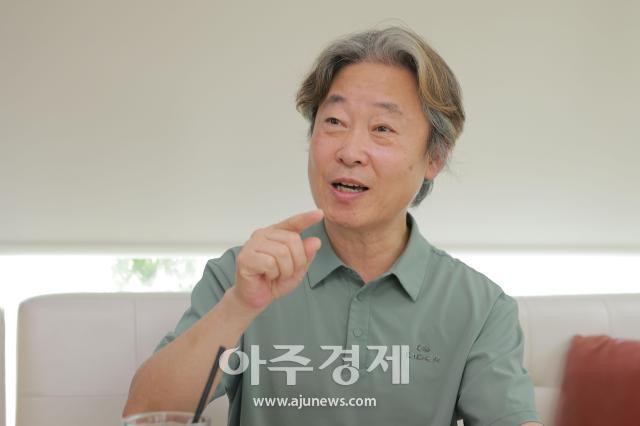
In an interview with Aju Economy, Kim stated, "The transition due to AI and robotics cannot be solved by simply adopting models from other countries. Labor and management must collaborate and research together to create a roadmap for the future."
◆ "Urgent Need for Labor-Management-Civil Dialogue on AI"
- Having experienced the 1998 Hyundai restructuring, what should labor policy prioritize during the current AI industrial transition?
"The situation is different now. In 1998, workers suffered due to the mistakes of the government and employers during a large-scale restructuring. However, the impending employment instability is similar. Having experienced this once, we must prepare more thoroughly for the future. If there are models from other countries for industrial transition, we can learn from them, but currently, there are none. Labor and management must work together to create a roadmap for the future."
- What institutional measures are necessary for employment stability during the industrial transition?
"The concerns of labor and management cannot be resolved solely through their discussions; social dialogue is essential. I understand there is skepticism about social dialogue due to the shocks from the 1998 IMF crisis, but it is absolutely necessary. It should not only be about creating immediate solutions but also about researching long-term futures and buffering points of conflict. Individual companies can find exits through labor-management advisory committees, while the entire industry should analyze and study crises through social dialogue."
- Recently, there has been a growing debate over performance pay among large corporations. How should this be viewed from a labor policy perspective?
"This is a delicate issue. When companies perform well and make profits, they receive applause, but there is a tendency to undervalue the contributions of workers who have dedicated their efforts. We must recognize the workers' share. However, performance pay is performance pay. We cannot use future costs as performance pay; we need to think about the future, not just 'let's earn as much as we can now.' Therefore, I believe employment stability funds and social solidarity funds are necessary."
- Are you concerned that performance pay is becoming effectively equivalent to wages?
"Yes. Performance should remain as performance pay. It should not progress beyond that. If performance pay becomes wage-like, will companies return wages during tough times? No. Having represented labor and served in public institutions, I believe that a one-sided approach is problematic. Balance is always important."
- There are calls to legislate that performance pay rates be determined at shareholder meetings rather than through labor negotiations.
"We need to consider whether this can be mandated legally, but performance pay should be properly awarded for certain achievements. However, a labor culture overly focused on money is not desirable. We need to shift to an organizational culture that values work and personal life. The achievements of large corporations should not only benefit the company but also consider surrounding related industries and share socially."
- Some view the demands for performance pay from large corporate unions as a 'well-fed struggle,' which ties into the dual structure of the labor market.
"If we scold them like that, the parties involved will not accept it. The company's performance has been achieved, and there is a share of effort in that performance. Instead of pushing them into a situation where they are socially criticized, we should find alternative ways to resolve it. Just because large corporate workers earn more does not mean they should be hated. From a national perspective, they also pay a lot of taxes. The important thing is to continue efforts to share."
- What is needed to alleviate the entrenched dual structure of the labor market?
"In Ulsan, even though subcontractors have relatively high income levels, there is a significant sense of relative deprivation. There is a feeling that Hyundai workers receive a lot of performance pay while we receive less. Since companies differ, it is difficult to enforce, but the primary company should create an environment that does not excessively lower the prices for subcontractors. We should support the creation of good companies and good labor unions. Viewing labor unions as social evils is never good."
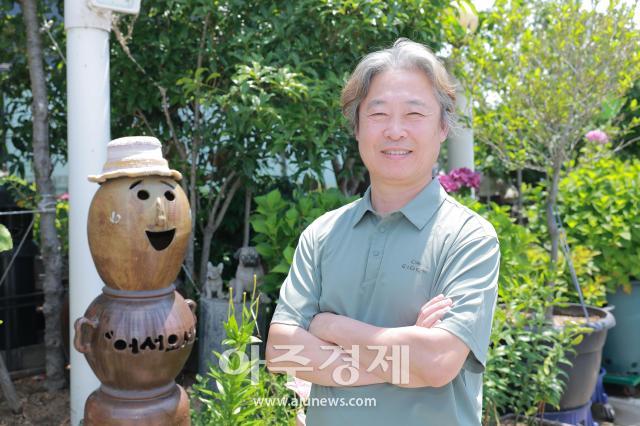
- Restoring social dialogue appears to be a key task for labor policy.
"Social dialogue is the most important. We cannot have a system where participation depends on what is offered or not offered. In fact, there was a mistake made at the outset. There are many wounds from past issues like the legalization of the teachers' union, the legalization of the Democratic Labor Union, and restructuring laws, but it is time to move beyond that. While it is important for labor-management-civil dialogue to address current issues, it must also play a role in continuously creating future policies."
- Should the Democratic Labor Union also participate in the social dialogue conducted by the Economic and Social Labor Committee?
"It seems that many representatives from various workplaces believe social dialogue is necessary, so the leader of the Democratic Labor Union must make a decision. Labor representatives should unravel their insights and concerns within that framework. If something is wrong, it is the representative's role to stop it. What changes if we just shout opposition from the sidelines?"
- The youth employment issue is serious. What do you think the existing labor movement has overlooked?
"We should not use youth as mere props. If the Democratic Labor Union takes youth issues seriously, it must create policies that reflect the voices of young people. The government should also do the same. A dedicated organization centered on youth is necessary. Young people should be empowered to choose agendas, conceptualize them, and collaborate with relevant organizations to develop policies."
- Are there any labor policy lessons from the labor-management relationship at Hyundai?
"The Hyundai labor union does not create extreme situations. Even during the harsh times of 1998, union members overcame challenges wisely, and now Hyundai has grown to a global top level. Both labor and management have a sense of loyalty to the company, and Chairman Euisun Chung has the ability to respect and understand employees, while the union also makes wise decisions amid a sense of crisis. This respect has been built through long-standing conflicts and wounds."
- How would you evaluate the labor policies of the Yoon Suk-yeol administration and Minister of Employment and Labor Kim Young-hoon over the past year?
"So far, I believe they have been doing very well. President Yoon seems to work tirelessly on detailed issues. Minister Kim is not shying away from difficult topics and is actively engaging on-site to resolve them. I have seen him diligently addressing disaster issues in Ulsan. However, there is a need for more focus on youth issues."
- Minister Kim recently sparked controversy by mentioning the need for social discussion on excess profits.
"Good ideas should be received positively. The issue of performance pay has become a social topic, and the minister must have significant concerns about it. It is not right to frame his reflections as decisions. If there are opposing views, they should be expressed adequately. If there are rational and scientific grounds, we should not hate them, even if we cannot support them. While positions may clash, it is important to find common ground."
- Where should future labor policies focus?
"It is entirely legitimate for both sides to express their positions. The key is a system that maintains balance. Institutions like labor-management advisory committees should support this and play a role in coordinating based on data and evidence. The core function of the labor-management-civil dialogue is to guide labor, management, and South Korea toward a direction where they can coexist."
* This article has been translated by AI.
Copyright ⓒ Aju Press All rights reserved.