
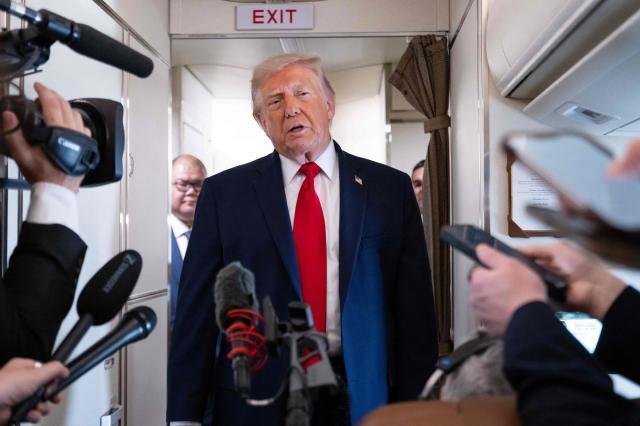
Speaking to reporters on June 17 in France during the G7 summit, Trump said, "If we don’t like it, we will bomb again." He reiterated that if Tehran does not adhere to the agreement, war could resume, asserting that the purpose of the agreement is to prevent Iran from acquiring nuclear weapons.
Trump criticized the 2015 Iran nuclear deal (JCPOA) signed during Barack Obama’s presidency, calling it a "pathway to nuclear weapons." In contrast, he described the current MOU as a mechanism to block that pathway, stating that the U.S. goal is to prevent Iran from developing or acquiring nuclear weapons.
According to a draft obtained by the Associated Press, the agreement includes a cessation of hostilities, resumption of navigation through the Strait of Hormuz, diplomatic resolution of Iran's nuclear issues, easing of sanctions, and permission for the use of frozen assets. It also stipulates that follow-up negotiations should occur within 60 days, with the possibility of extending the deadline if both sides agree.
Regarding the release of frozen assets, Trump remarked, "That’s not our money; that’s their money," adding that at some point it must be returned. However, he clarified that economic benefits such as sanctions relief and investment resumption would only be possible if Iran keeps its promises. He denied reports that the U.S. is pressuring Gulf states to contribute to a $300 billion reconstruction fund.
The economic burden of prolonged conflict appears to have influenced this agreement. Trump noted, "If conflicts continue, oil prices could skyrocket, and market instability could increase," emphasizing that he did not want an economic disaster. International oil prices fell on expectations of reopening the Strait of Hormuz but partially rebounded following his warning of potential military action.
On the issue of ballistic missiles, Trump adopted a more flexible stance, stating, "It’s unfair for Iran to be limited in missile possession while other countries have them." This suggests that while nuclear development is to be curtailed, missile issues could be addressed separately in follow-up negotiations.
The MOU serves as a starting point to halt military clashes between the U.S. and Iran, but negotiations surrounding verification of nuclear activities, timing of sanctions relief, release of frozen assets, reconstruction funds, and missile issues remain. Trump's public mention of the possibility of resuming military action in case of non-compliance indicates that tensions in the negotiation process are likely to persist.
* This article has been translated by AI.
Copyright ⓒ Aju Press All rights reserved.