
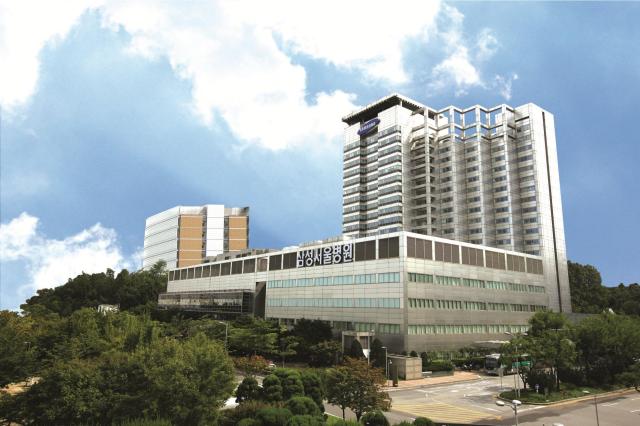
Samsung Medical Center has once again received international recognition for its focus on treating and researching complex and severe diseases.
On June 18, Samsung Medical Center announced that it was named the top hospital in three categories—cancer, respiratory care, and gastroenterology—by Newsweek in its '2026 Asia-Pacific Best Specialty Hospitals' rankings, released on June 17 (local time).
The evaluation was conducted by Newsweek in collaboration with the German research firm Statista Inc., which assessed the reputation of medical professionals across 11 Asia-Pacific countries, including South Korea, Japan, Australia, Taiwan, Singapore, and Thailand, as well as national medical certifications and patient-reported outcome measures (PROMs). The evaluation covered ten fields, including cancer, respiratory, gastroenterology, cardiology, endocrinology, neurology, orthopedics, pediatrics, cardiac surgery, and neurosurgery, with gastroenterology being a new addition this year.
Samsung Medical Center has been recognized as the top hospital in cancer and respiratory care for three consecutive years since 2024. Additionally, it achieved first place in the newly evaluated gastroenterology category, marking a significant milestone.
Park Seung-woo, president of Samsung Medical Center, stated, "Our focus on severe and complex diseases and our efforts to enhance the quality of research and treatment have led to this recognition. We will continue to face future challenges in healthcare to set new standards in medicine."
Previously, Samsung Medical Center was ranked third globally in the cancer category in Newsweek's specialty hospital rankings last year. Considering that the top two spots were held by U.S. cancer treatment centers, Memorial Sloan Kettering Cancer Center and MD Anderson Cancer Center, Samsung Medical Center is the highest-ranked general hospital in the world.
Samsung Medical Center opened Asia's largest cancer hospital in a single building in 2008. It was the first in the country to initiate CAR T-cell therapy and has consistently introduced cutting-edge cancer treatments, including precision medicine for patients with no standard treatment options.
According to the hospital, the five-year survival rate for all cancer patients treated at its cancer hospital is 75.4%, which is among the highest in the world.
In the respiratory care field, Samsung Medical Center has been ranked first in the Asia-Pacific region for three consecutive years. Last year, it was ranked 19th globally, the highest among domestic hospitals. The center excels in treating all respiratory diseases, including lung cancer, chronic obstructive pulmonary disease (COPD), non-tuberculous mycobacterial lung disease, interstitial lung disease, and post-lung transplant care.
In 2023, the hospital introduced dedicated surgical robots for lung cancer and established a specialized intensive care unit for esophageal cancer, enhancing the quality of care. It performs over 1,500 lung cancer surgeries annually, with more than 90% conducted using minimally invasive methods such as robotic and video-assisted thoracoscopic surgery. The mortality rate within 30 days post-surgery is approximately 0.1%. The survival rate for lung cancer patients is 65.7%, significantly higher than South Korea's 42.5% and the United States' 28.1%.
In the gastroenterology category, Samsung Medical Center achieved first place in its inaugural evaluation this year. The multidisciplinary approach includes treatment for esophageal, gastric, colorectal, liver, pancreatic, and gallbladder diseases.
In 2023, the hospital treated 22.2% of the 3,142 newly diagnosed esophageal cancer patients in South Korea. Among the 245 esophageal cancer surgeries performed in 2025, 219 (89.3%) were conducted using minimally invasive techniques such as robotic and video-assisted thoracoscopic surgery. The mortality rate within 30 days post-surgery and during hospitalization was 0%.
Additionally, the five-year relative survival rate for esophageal cancer patients is 62.5%, surpassing the averages of 43.5% in South Korea and 21.9% in the United States. Notably, the five-year relative survival rate for pancreatic cancer is 24.6%, higher than the domestic average of 17% and the U.S. average of 13.3%.
* This article has been translated by AI.
Copyright ⓒ Aju Press All rights reserved.