
Hasung C&I entered the IT market with a firm belief that information and communication technology would shape the future of industries, even before the 1997 IMF financial crisis. Over the past 30 years, the company has built and operated IT systems for public institutions such as the Ministry of Unification, the National Fire Agency, and the National Tax Service, establishing a nearly two-decade partnership with SK Group after being named a 'Happy Partner' in 2005.
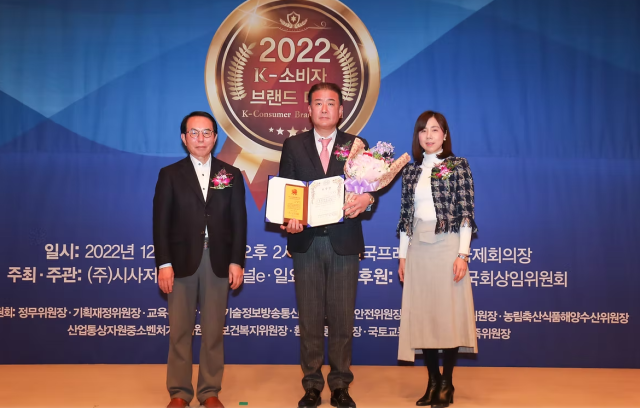
As of 2025, Hasung C&I has grown to a revenue of 13.5 billion won and employs over 150 staff. The company has successfully executed challenging public projects, including the Ministry of Unification's inter-Korean exchange cooperation system, earning an 'A' rating from SK Click ESG and receiving recognition from the National Assembly's standing committee for three consecutive years, which has bolstered its credibility in the market. Yoon Cheol-han, CEO of Hasung C&I, aims to position the company as a mid-sized IT firm with 'genuine execution capability' even as AI transforms the SI/SM industry.
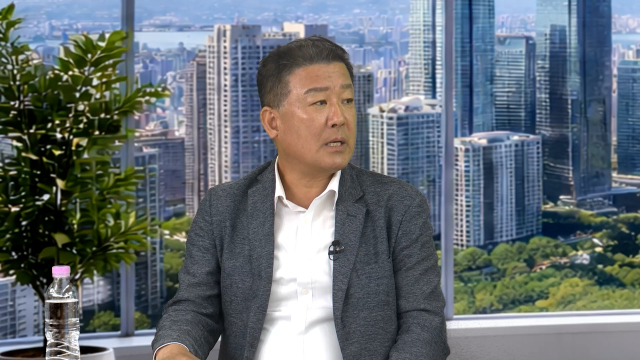
In an interview, Yoon shared insights about the company and its journey.
- Can you introduce Hasung C&I?
"Founded in 1997, our company has provided customized total IT services based on extensive project experience and proven technical personnel for nearly 30 years. We have been responsible for building and operating IT systems for public institutions (such as the Ministry of Unification, the National Fire Agency, and the National Tax Service) and SK Group. Being selected as a 'Happy Partner' of SK Group in 2005 allowed us to continue our business under a policy of mutual growth, achieving over 10 billion won in annual revenue and maintaining stable operating profits."
- What motivated the founding of the company, and what were the biggest challenges?
"Twenty-nine years ago, we were in a transitional period with the rise of PC communication and the early spread of the internet. The belief that information and communication technology and software would determine national competitiveness, along with a spirit of challenge to make the world more convenient through technology, were the core motivations for starting the company. However, just as we were getting on track at the end of 1997, the IMF financial crisis hit, leading many companies to bankruptcy and freezing IT investments. The initial market development and survival became significant barriers. We had to continuously retrain our workforce to keep up with rapid technological changes and innovate our business model, while also competing for talent against large corporations, which was a constant concern for me as a manager."
- What is the secret to maintaining partnerships with large companies like SK Group and the Ministry of Unification?
"I believe the key lies in our technical flexibility and flawless reliability, which satisfy the stringent demands for technological innovation and efficiency from SK, as well as the strict security and procedural transparency requirements from the Ministry of Unification. Particularly, since 2005, when SK Group's Chairman Chey Tae-won declared 'Happy Partner Management,' they have defined their partners as 'collaborators in creating happiness,' fostering a culture of coexistence. Since 2017, following 'Deep Change 2.0,' they have maintained and expanded support systems for partners focusing on finance, technology, and education for nearly 20 years."
- How does Hasung C&I differentiate itself from large SI companies?
"While large SIs provide massive, standardized infrastructures, we differentiate ourselves by offering more flexible and closely tailored professional services at reasonable costs, leveraging our proven technical expertise in public, finance, and telecommunications sectors. We analyze our clients' unique business processes to build customized systems, targeting niche markets that are too small for large SIs but too complex for typical small SIs. Our strong commitment to 'responsible management' ensures project continuity and rapid response to issues by deploying our own highly skilled engineers with extensive experience."
- What do you attribute to the longevity of a small IT company surviving for over 25 years?
"Starting with a capital of 200 million won and growing to a revenue of 13.5 billion won, the core reasons for our longevity can be summarized in four points. First, the long-term trust established with large corporations and public institutions. Second, our focus on our core business of system construction and stable maintenance. Third, our quality competitiveness solidified through flawless project execution, such as the Ministry of Unification's inter-Korean exchange cooperation system. Fourth, our commitment to sustainable transparent management, evidenced by achieving an 'A' rating from SK Click ESG and participating in Save the Children’s 'WESAVE' initiative. I believe our longevity stems from maintaining a mutually beneficial relationship with large corporations based on the technical credibility we have built in our core business while smartly embracing ESG and new technologies in line with the times."
- What prompted IT companies to take ESG management seriously?
"In the past, ESG was seen as the domain of large corporations, but for mid-sized and small IT companies like ours, which closely collaborate with large corporations and public institutions, it has become a crucial indicator for supply chain due diligence and trust-building. To align with major partners like SK Group, we established transparent governance and committed to environmental and social responsibility as a long-term survival strategy. I believe the genuine implementation of a sustainable management system, which instills pride in our employees and reassures stakeholders, has yielded positive results, rather than mere showmanship for awards."
- How have employees reacted to the company's social contribution activities?
"We engage in social contributions with a clear philosophy rather than one-time donations. Through Save the Children’s 'WESAVE,' we contribute to the UN SDGs goals of eradicating poverty and reducing inequality, while also supporting climate crisis response initiatives that align with climate action and land ecosystem preservation. Witnessing the company effecting real change for the future of the planet and children has fostered a deep sense of connection and loyalty among employees, who feel they are playing a role in creating a better world. We plan to expand our 'employee participation volunteer activities' to enable staff to provide tangible assistance to local communities."
- With the announcement of 'Vision 2026,' the company website has undergone a complete overhaul. What should Hasung C&I look like in 2026?
"We aim to be a company that proves genuine execution capability, breaking the limitations of small businesses rather than just talking about ESG. This overhaul is not merely about channel maintenance; it publicly declares our ESG management philosophy. We have fully disclosed three years of financial information (IR) and established an ethical management reporting channel to build a transparent management system. We are not settling for the practical limitations of shared offices; we believe that small actions, such as adopting a minimum unit of carbon neutrality, 'Micro RE100,' and converting corporate vehicles to eco-friendly mobility, are the true start of net-zero. In 2026, we will publish a 'Sustainable Management Report' that compiles these efforts, proving our achievements with data and establishing ourselves as the most trusted 'ESG model partner.'"
- There is much talk about AI changing the SI/SM industry. How is this felt on the ground?
"AI is deeply penetrating the coding, infrastructure management, and service planning stages, fundamentally altering the industry landscape. Simple, function-focused IT services are becoming obsolete, and only companies that redesign their businesses around AI will survive. However, I believe AI is not eliminating the IT industry but expanding the market. As a CEO, I see three immediate tasks for organizational survival. First, we must redesign our product and business model to be AI-driven, internalizing services that are difficult for general-purpose AI to replicate and accumulating unique operational data from clients to create competitive advantages. Second, we need to fully adopt an AI-based development environment, allowing developers to focus on architecture design and complex business logic instead of simple coding, transforming our organization into a lean one where a few key talents can move quickly using AI as a tool. Third, we must shift our evaluation criteria to focus on AI utilization capabilities while establishing security and verification systems to mitigate risks from source code leaks or AI hallucinations."
- How would you define Hasung C&I in ten years?
"I hope it becomes a company where employees manage the business directly, similar to Yuhan Corporation, while shareholders fulfill only their roles as investors."
- What advice would you give to young people entering the IT industry and fellow managers running small IT companies?
"To young people, I would say not to be swayed by technology trends but to trust in their fundamentals and attitude to solve problems thoroughly. Focusing on how to resolve issues rather than what tools to use will enable quick adaptation to new technologies. Now is the cheapest time to fail, so I encourage them to dive in without fear. To fellow managers, I would advise that in tough market conditions, we should return to the essence and sharpen our core competitiveness. Instead of competing on salary and benefits, we should attract talent through growth experiences. We should deeply penetrate niche markets where we can excel rather than trying to do everything well and actively engage with other industry leaders to support each other."

* This article has been translated by AI.
Copyright ⓒ Aju Press All rights reserved.