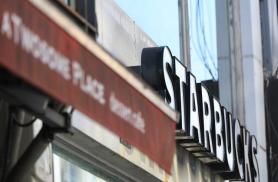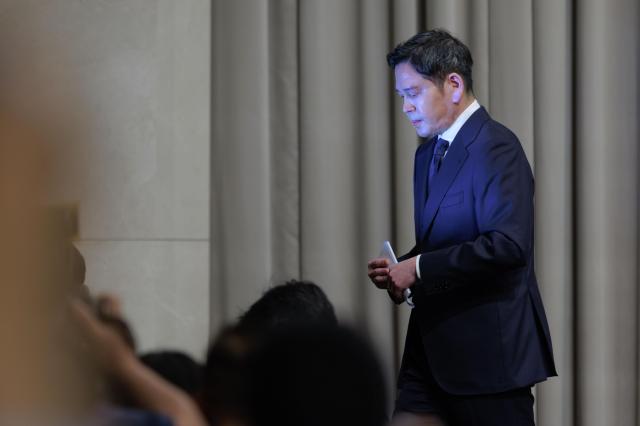
SEOUL, June 22 (AJP) -Contemporary South Korean history spanning the country's democracy movements from the 1960s to the 1980s has become mandatory study material across Starbucks Korea's more than 2,000 outlets, as well as for the C-suite of retail giant Shinsegae, including Chairman Chung Yong-jin, following last month's "Tank Day" controversy.
Chung and executives from companies under Shinsegae's E-Mart division will watch a two-hour recorded lecture Wednesday as the group moves to prevent similar marketing failures from recurring.
The training follows widespread criticism over a Starbucks Korea promotion timed to May 18, the anniversary of the 1980 Gwangju pro-democracy uprising. The campaign promoted tumblers branded as "tanks" and referred to the event as "Tank Day."
The promotion immediately triggered public outrage because tanks and military forces were deployed during the military crackdown on demonstrators in Gwangju, leaving hundreds dead or injured.
Starbucks Korea subsequently withdrew the campaign and issued a public apology, while Shinsegae dismissed the head of the coffee chain's Korean operator.
The video was recorded on June 17, when Oh Je-yeon, a history professor at Sungkyunkwan University, and Gu Jeong-woo, a sociology professor at the same university, delivered lectures at Shinsegae Namsan in Seoul.
Oh discussed four defining moments in South Korea's democratic history: the April 19 Revolution of 1960, the Busan-Masan pro-democracy protests of 1979, the Gwangju uprising of 1980 and the June Democratic Struggle of 1987.
He said distorting or denying those events undermines South Korea's national identity and urged companies to ground their decisions in an accurate understanding of history and universal values such as human rights and peace.
Gu examined past marketing controversies involving companies in South Korea and overseas.
He cited a culture of speed, pressure to generate revenue, weak approval procedures and homogeneous decision-making teams as recurring factors behind such failures. Decisions made from a narrow internal perspective, he added, often go unchallenged.
Gu welcomed Starbucks Korea's introduction of a social-sensitivity checklist but cautioned that it must be reviewed continuously.
"Society keeps changing," Gu said. "The checklist must also continue to evolve."
Starbucks Korea closed most of its more than 2,000 stores early Monday for mandatory employee training, marking its first nationwide early closure since entering South Korea in 1999.
Wednesday's session, however, will be reserved for executives from the E-Mart division overseen by Chung. Executives from the department store-led Shinsegae division, headed by Chairwoman Chung Yoo-kyung, are not expected to attend.
Shinsegae said it would also investigate how the promotion passed internal review procedures, disclose the findings and overhaul how its affiliates vet marketing content going forward.
A possible visit by Chung to Gwangju has yet to be decided. The group previously said he could visit the city or issue an additional public statement at an appropriate time.
Copyright ⓒ Aju Press All rights reserved.