
To achieve the housing supply goals set by the Lee Jae-myung administration, experts argue that relying solely on public-led policies is insufficient. They emphasize the need to restore private sector supply capabilities through regulatory improvements. A combination of increased public supply and revitalization of non-apartment and private housing supply is essential for stabilizing the housing market.
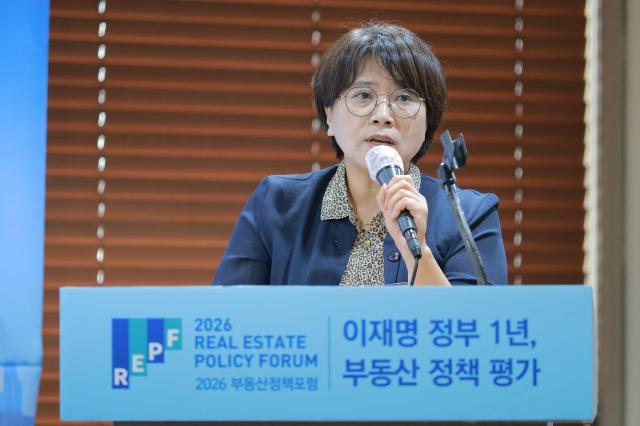
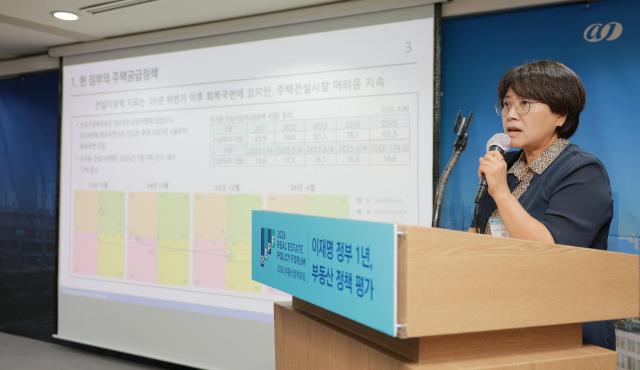
At the 2026 Real Estate Policy Forum held on June 24 at the Press Center in Seoul, Kim Deok-rye, head of the Housing Research Institute, presented on the topic of "Housing Supply of 1.35 Million Units and Innovations for Revitalizing the Private Sector."
Kim stated, "The private sector is responsible for 85% of housing supply, and over 90% in Seoul. While expanding public supply is important, without improving conditions for private supply, it will be difficult to resolve the supply shortage issue."
He noted that while the government is pushing for the supply of 1.35 million units in the metropolitan area and the rapid provision of 60,000 units in urban centers, actual supply performance has fallen short of expectations. Although construction activity has entered a recovery phase, residential construction output decreased by 12% in the first quarter compared to the same period last year, indicating that the housing construction market remains sluggish.
Kim believes that public-led supply alone has limitations in terms of location, speed, and responsiveness to demand. To meet the diverse housing needs in preferred urban areas, participation from the private sector and improvements in supply conditions are necessary.
He identified the stagnation of the non-apartment market as a key factor contributing to the supply shortage. The non-apartment market in Seoul has seen a sharp decline in supply due to the aftermath of rental fraud, regulations on multiple homeowners, and tightening financial and tax regulations. Multi-family homes and officetels, which have a rental household ratio of 80-90%, require investment demand for rental purposes, but the current supply base has weakened.
Kim emphasized, "Non-apartment housing is an important ladder for low-income individuals, youth, and elderly households who find it difficult to move into apartments. It is a market that can be supplied relatively quickly to meet market demand and is essential for stabilizing the housing market."
He also pointed out that the Seoul housing market cannot be viewed solely as an issue of speculation and demand suppression. The phenomenon of "superstar cities," where global companies and jobs concentrate, is causing a continuous increase in housing demand in Seoul. In a situation where demand is structurally rising, relying solely on supply restrictions will not stabilize the market.
Kim remarked, "Seoul has already entered the realm of a global superstar city. As good jobs, education, and commercial areas concentrate, housing demand continues to surge." He added, "There must be a continuous effort to secure residential space and provide housing across various price ranges."
To revitalize private supply, he argued that improvements in financial and tax regulations are necessary. He noted, "There are many cases where contracts are canceled and construction is delayed due to difficulties in securing final payments. It is essential to address financing challenges for housing construction and for actual homebuyers."
Kim stressed that normalizing the non-apartment and private supply requires a dual focus on financing for consumers and businesses. If sales and financing are obstructed, even with permits, it will be challenging to proceed to construction, which could lead to a shortage of move-in-ready units and instability in the rental market.
He concluded, "Public supply is important for stabilizing housing for low-income individuals, but in terms of speed and scale, the role of the private sector is ultimately essential. Both public and private sectors must work together to increase supply to stabilize the housing market."
* This article has been translated by AI.
Copyright ⓒ Aju Press All rights reserved.