
The market for the osteoporosis treatment Prolia (active ingredient denosumab) is rapidly restructuring following the expiration of its patent. With Celltrion Pharmaceutical, Samsung Bioepis, and HK inno.N entering the biosimilar market, competition is intensifying against the established dominance of Jongkundang and Amgen in the Prolia market.
According to market research firm IQVIA, the domestic osteoporosis treatment market was estimated to be around 360 billion won last year, with the denosumab segment accounting for approximately 160 billion won. Given its substantial size as a single-ingredient market, competition among biosimilar companies is heating up.
Prolia, developed by global pharmaceutical company Amgen, is administered via a subcutaneous injection every six months, promoting increased bone density and fracture prevention. In South Korea, Amgen Korea and Jongkundang have established a sales network, with Amgen focusing on general hospitals and Jongkundang targeting semi-general hospitals and clinics.
However, following the expiration of its patent in April last year, sales of the original drug have begun to decline. Jongkundang reported Prolia sales of about 30 billion won in the first quarter of this year, a 33.3% decrease compared to the same period last year. The introduction of biosimilars and additional price reductions have contributed to the weakening position of the original product.
Indeed, drug prices have been adjusted. According to Amgen Korea, the reduced price for Prolia has been in effect since the 1st of this month. An Amgen Korea representative stated, "Original biologics are subject to price reductions when biosimilars are listed for reimbursement. The first biosimilar was listed last year, leading to an adjustment to about 80% of the previous price, and with the recent listing of the third biosimilar, the price has been readjusted to about 70% of the original price."
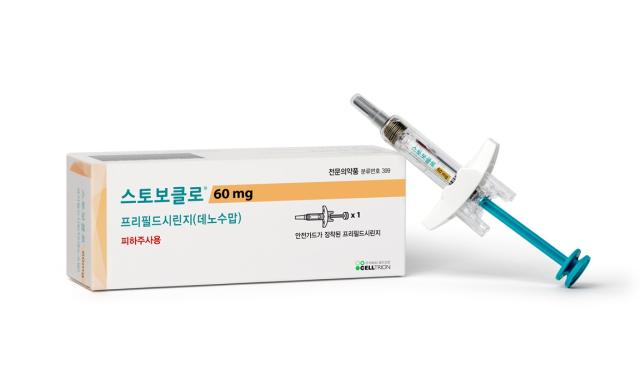
In contrast, biosimilar products are quickly expanding their market share. The first entrant was Celltrion's Stoboclo, which recorded sales of 11.8 billion won last year and generated 5.7 billion won in sales in the first quarter of this year. Since the fourth quarter of last year, quarterly sales have consistently exceeded 5 billion won, indicating rapid growth.
Daewoong Pharmaceutical's sales efforts have bolstered this market expansion. Celltrion Pharmaceutical and Daewoong Pharmaceutical have established a co-marketing system for Stoboclo, targeting both general hospitals and clinics. This marks the first instance of a Celltrion biosimilar being sold by a pharmaceutical company other than Celltrion Pharmaceutical. The two companies have adjusted the price of Stoboclo from 111,384 won to approximately 108,290 won to facilitate market growth.
Samsung Bioepis is also in pursuit with its biosimilar, Obodens. After its launch in the third quarter of last year, Obodens generated 2.6 billion won in sales and recorded 3.8 billion won in the first quarter of this year. Samsung Bioepis has partnered with Hanmi Pharmaceutical for the sales of Obodens, with Samsung Bioepis handling production and supply while both companies participate in domestic sales and marketing. This marks the first time Hanmi Pharmaceutical has sold a biosimilar developed by another company. The price remains at approximately 108,290 won.
A latecomer, HK inno.N, has also entered the competition with its biosimilar, Izambia, which has received approval. According to company representatives, Izambia is expected to launch within this month, promising to compete at the same price level as existing biosimilars.
Industry experts believe that the Prolia market is evolving beyond mere biosimilar competition into a battleground for the sales capabilities of major domestic pharmaceutical companies. As Jongkundang's established market faces challenges from Daewoong Pharmaceutical, Hanmi Pharmaceutical, and HK inno.N, the pace of market restructuring is accelerating.
An industry insider noted, "Denosumab has accumulated prescription experience, making the transition to biosimilars relatively less burdensome. The larger the product, the greater its market potential, leading to intensified competition."
* This article has been translated by AI.
Copyright ⓒ Aju Press All rights reserved.