
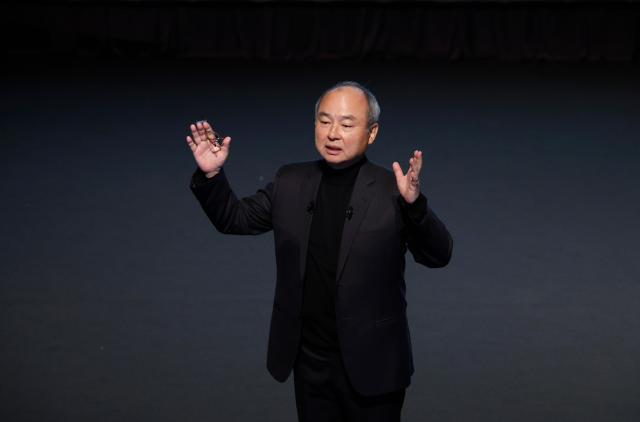
According to Nikkei Asia, during the annual shareholders' meeting on June 24, Son stated, "People may question whether AI is a bubble, just as they did with the internet. However, looking back over the past 30 years, major internet companies have experienced tremendous growth. Compared to that, the AI revolution has only just begun." He added, "To call this a bubble is a blasphemy against AI," emphasizing that the fundamental power of AI technology will expand significantly in the future.
At 68 years old, Son had initially considered transferring management rights in his 60s but effectively withdrew that succession plan, telling shareholders he has become more ambitious. He expressed a desire to work for another "10 to 15 years" to pursue ASI.
Son's remarks indicate SoftBank's intention to reestablish itself at the forefront of the global technology investment boom. The company has been aggressively investing in OpenAI, semiconductor design firm Arm, data centers, and robotics. After a period of volatility in the Vision Fund's returns that shook investor confidence, SoftBank recently recorded its highest profits ever for the fiscal year ending in March, buoyed by gains in its investment portfolio.
Son also set a goal to increase SoftBank's net asset value (NAV) to 1,000 trillion yen (approximately $9.5 trillion) within the next 16 years. As of Tuesday, SoftBank's NAV stood at about 74 trillion yen, a significant increase from approximately 3 trillion yen 16 years ago. To reach the 1,000 trillion yen target, the company would need to grow nearly 14 times its current value.
He identified four key areas for the ASI era: AI models, AI semiconductors, AI infrastructure, and physical AI, which includes robotics. At the center of the AI model strategy is OpenAI, in which SoftBank has pledged a $65 billion investment, while its semiconductor strategy is based on Arm.
Son noted that AI is moving beyond chatbots that generate text and images to a stage of "agent-type AI" that can reason and act independently. He predicted that demand, initially driven by graphics processing units (GPUs) during the early AI boom, will gradually shift, making Arm's central processing units (CPUs) increasingly important.
In line with this vision, Son emphasized the need to secure power and data center infrastructure. He stated that the Stargate joint venture with OpenAI and Oracle is progressing on schedule and that SoftBank aims to build infrastructure for other major cloud and AI companies.
Son also expressed strong confidence in the robotics business. In response to a shareholder question about the acquisition of ABB's robotics division announced last year, he claimed that robots at one of the group's factories have already begun mass-producing other robots, marking a world first.
Son likened SoftBank's AI strategy to the board game Othello, stating, "It's not important to control the center early on. What matters is to occupy the four corners." He concluded, "In this new era of superintelligence, we want to occupy those four corners, and if we do, we want to be number one in the world."
* This article has been translated by AI.
Copyright ⓒ Aju Press All rights reserved.