DJI Expands Empire with Dual-Camera Osmo Pocket 4P
by Oh JooseokPosted : June 29, 2026, 21:04Updated : June 29, 2026, 21:04
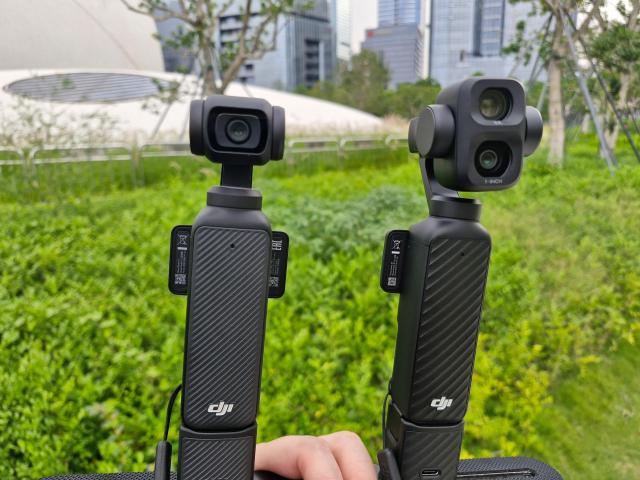
The Osmo Pocket 4P (right) and Osmo Pocket 3, photographed at Shenzhen Talent Park, China. The newly launched Pocket 4P features a dual camera system. [Photo by Oh Joo-seok]
Smartphone cameras have entered the era of multiple lenses, and now pocket-sized gimbals are following suit. Chinese drone manufacturer DJI has unveiled the next-generation Osmo Pocket 4P Pro, which incorporates a dual-camera system for the first time. This new model aims to enhance both portability and video quality, targeting the professional video production market.
On June 11, DJI showcased the Osmo Pocket 4P to domestic media at its headquarters in Shenzhen, China.
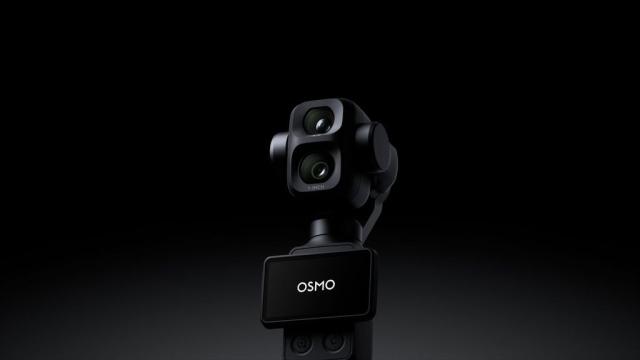
Image of the Osmo Pocket 4P. [Photo by DJI]
This product is a higher model released about two months after the introduction of the Osmo Pocket 4 in April. It features significantly enhanced camera performance, image quality, and post-editing capabilities to meet the demands of creators seeking more professional video production tools.
The most notable change is the introduction of a dual-camera system. Moving away from a single lens, the Osmo Pocket 4P now includes both wide-angle and telephoto lenses. Just as smartphone cameras have evolved from single to multi-lens systems, the Osmo Pocket has adopted this dual-camera approach. Instead of relying on digital zoom, which can degrade image quality, the device uses dedicated lenses for different focal lengths, expanding its shooting range.
The camera is also equipped with advanced artificial intelligence features. The ActiveTrack function automatically recognizes multiple subjects and tracks movement, maintaining focus on the subject's face and eyes. Additionally, it can automatically control the start and stop of recording based on the subject's actions, broadening its utility for vlogging and professional video production.
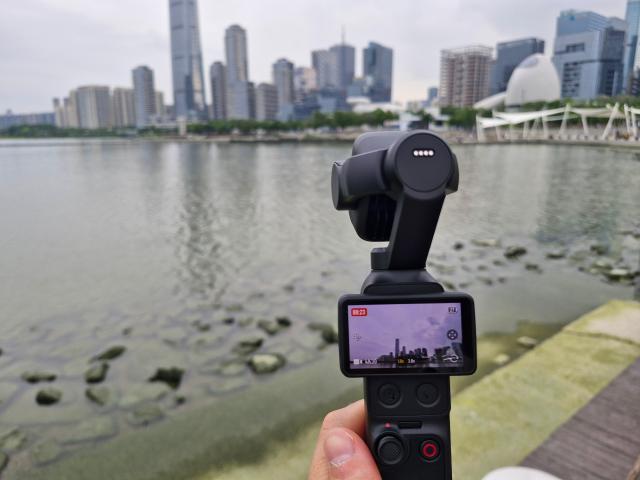
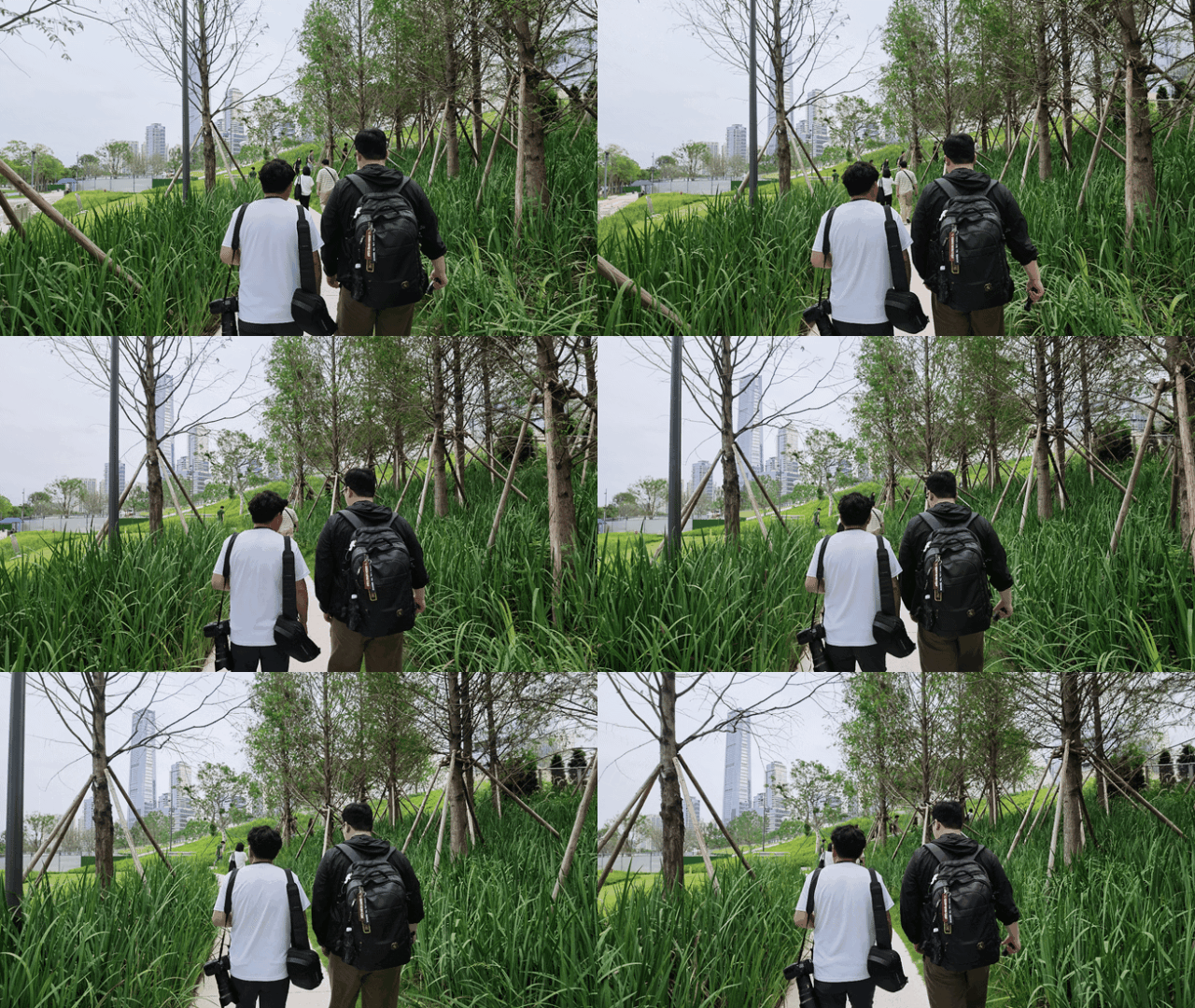
Using the Osmo Pocket 4P in Shenzhen Talent Park, China. [Photo by Oh Joo-seok]
On June 10, I had the opportunity to test the Osmo Pocket 4P Pro in Shenzhen Talent Park. The most impressive feature was the ActiveTrack. Even while filming a bus moving down the road, the gimbal smoothly followed the subject, keeping the focus stable. The tracking remained consistent when following a subject from behind, and the mechanical gimbal effectively minimized shake during walking or moving scenarios, allowing for smooth moving shots.
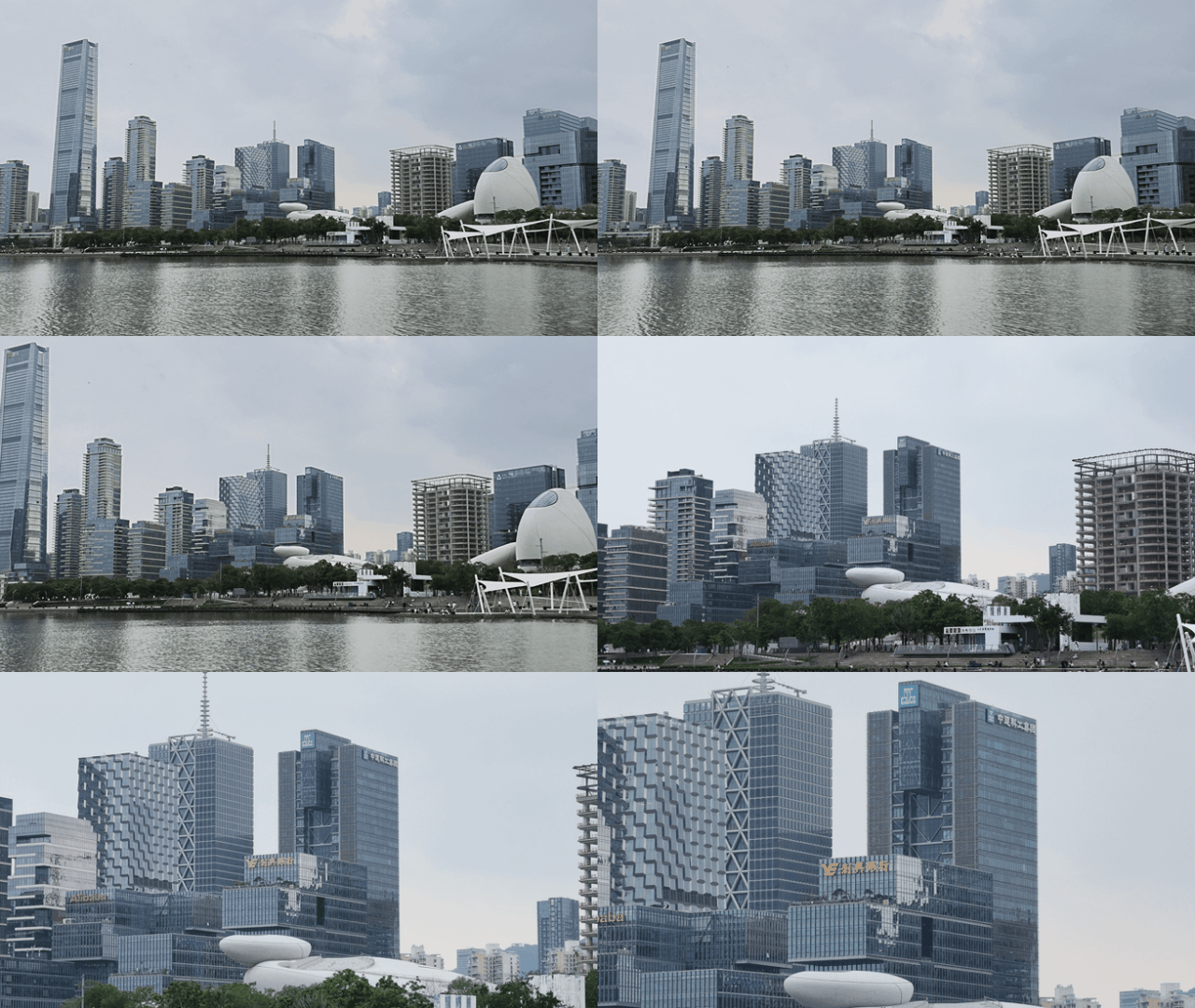
Zooming in against a building backdrop in Shenzhen's Central Business District. [Photo by Oh Joo-seok]
The performance of the dual cameras was particularly evident in the field. The 20mm wide-angle lens captured expansive views of the urban landscape in Shenzhen. Using the 60mm telephoto lens, I could clearly identify employees working in an office building across the street. The effective use of both cameras provided a wide field of view while ensuring smooth transitions during zooming.
No shake in the video even when following a subject from behind. [Photo by Oh Joo-seok]
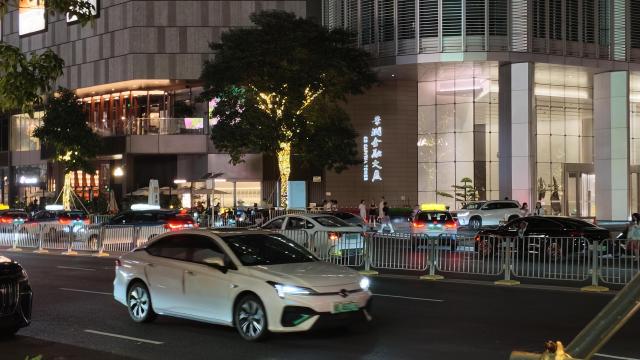
The image quality exceeded expectations, thanks to a newly designed 1-inch CMOS sensor that achieves a dynamic range of up to 17 stops. This design focuses on preserving detail in both bright and dark areas, even in backlighting, high contrast, and low-light environments, aiming for color representation comparable to professional cinema cameras. In actual night shooting, the results were sharp with minimal light bleed.
Night shot in Shenzhen's Central Business District. [Photo by Oh Joo-seok]
Features for video creators have also been significantly enhanced. The device supports ultra-high-speed slow-motion recording at up to 4K 240fps, 37-megapixel photo capture, and 4K live photo functionality. A new D-Log 2 color mode has been added to improve post-production versatility. With 103GB of internal storage and data transfer speeds of up to 800MB per second, the device enhances efficiency from shooting to editing.
A DJI representative stated, "The Pocket series is fundamentally a product that is close to a camera and camcorder. Our future direction is to provide more powerful video production tools for professional creators while creating an environment where anyone can easily shoot high-quality videos."