The plan, unveiled Friday at a public briefing at Gyeongsang National University in Jinju, South Gyeongsang Province, centers on three mega-projects: semiconductors, artificial intelligence data centers and physical AI, alongside support for shipbuilding, automobiles, aerospace, defense and energy.
Deputy Prime Minister and Finance Minister Koo Yun-cheol said the shift reflects a broader strategic recalibration.
"In this winner-take-all, hyper-competitive global order, the real battleground lies not in the oversaturated capital region but in the regions," Koo said, adding that the government would swiftly detail its "five growth poles, three special zones" engine strategy.
To back the investment drive, the government will introduce a new domestic production tax credit and consider granting SMRs national strategic technology status.
It also plans an investment firm for the southeastern region and new state-run industrial complexes, alongside deregulation through a proposed Yeongnam mega special zone.
Under the plan, Yeongnam is positioned as a hub for next-generation semiconductors and materials, parts and equipment, complementing chip production in the capital region and packaging operations in central Chungcheong Province.
About 2 gigawatts of AI data center capacity is planned for the region, including a 1-gigawatt facility in Ulsan — described as the country's first of that scale.
The government also aims to build a robotics innovation corridor linking Gumi, Pohang, Daegu and Changwon, with new research funding for actuators, sensors and other core robot components. It is targeting a top-three global ranking in robotics and top spot in physical AI within five years.
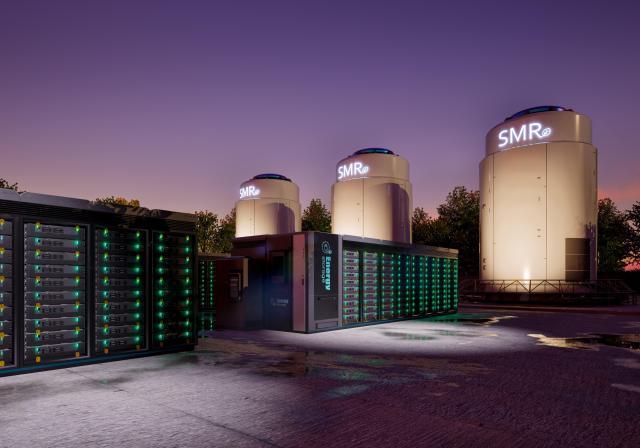
On energy, the plan includes construction of what officials called the world's first dedicated SMR production plant, along with investment in gas turbines and offshore wind, as part of a broader green energy transition effort.

Copyright ⓒ Aju Press All rights reserved.