
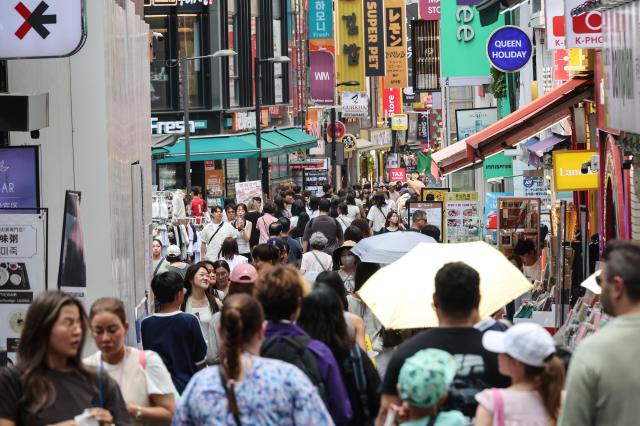
According to an analysis by Yonhap News based on data from the National Data Agency's national statistics portal and industrial activity trends, the average industrial production index from January to May this year rose by 2.7% compared to the same period last year. The production in the service sector increased by 4.2%, while the growth rate for accommodation and food services was only 0.9%. Accommodation services saw a 2.7% increase, but the restaurant and bar sector's growth was limited to just 0.6%.
A representative from the data agency noted, "The recent increase in foreign tourists, along with domestic consumption stimulus policies such as recovery coupons and support for high fuel prices, have contributed to the growth in service sector production. However, the decline in food consumption due to population decrease and changes in drinking and dining culture have restricted the growth of the restaurant and bar sector."
In contrast, high-value-added industries have shown growth rates nearing 10%. The financial and insurance sectors grew by 8.7%, while professional, scientific, and technical services saw a growth rate of 9.5%.
However, from January to May this year, production in the accommodation and food services sector has emerged from a decline. Previously, it recorded negative growth rates of -1.9% in 2024 and -2.5% last year.
Quarterly, after recording a -2.0% decline in the second quarter of 2023, the sector saw nine consecutive quarters of decline until the second quarter of last year (-1.9%), followed by a 1.4% increase in the third quarter of last year. The fourth quarter of last year saw a growth rate of 0.0%, and the first quarter of this year recorded a 0.3% increase.
The government believes that while the accommodation and food services sector has entered a recovery phase, rising inflation in the second half of the year could hinder the recovery of consumer sentiment.
Currently, the exchange rate of the won to the dollar is in the 1,500 range, which is expected to increase consumer prices with a lag. Additionally, seasonal factors such as high temperatures and heavy rainfall could lead to volatility in agricultural prices, affecting dining and grocery costs.
High interest rates are hitting small business owners hard. As of the end of the first quarter, the outstanding loans of self-employed individuals exceeded 1,100 trillion won, marking a record high. The amount of overdue loans for self-employed individuals reached 22.3 trillion won, with a delinquency rate surpassing 2%.
If benchmark interest rates continue to rise, the repayment burden for self-employed individuals will increase, potentially worsening financial stability indicators. According to national tax statistics, the number of business closures among operators who have been in business for more than five years reached an all-time high last year, with closures of restaurants in operation for over 20 years also reaching a peak.
The Bank of Korea emphasized in its financial stability report last month that the proportion of self-employed individuals in South Korea is higher than in major countries, making them a crucial part of the economy. Therefore, it is essential to assess financial soundness and potential risks from a financial stability perspective.
The Bank of Korea analyzed that self-employed loans accounted for 28.5% of total financial sector loans at the end of the first quarter. It also noted that financial stability risks in the self-employed sector are concentrated among small and micro businesses, older self-employed individuals, and vulnerable borrowers, indicating that they could be more significantly affected by interest rate conditions and changes in the service sector's economic climate.
* This article has been translated by AI.
Copyright ⓒ Aju Press All rights reserved.