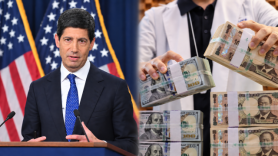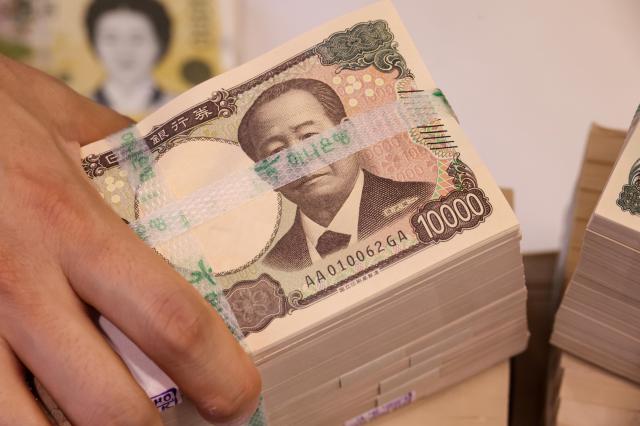
The won strengthened to 1,418 per dollar around 6 a.m., its strongest level since Oct. 20, 2025, before easing to around 1,435 by midday.
The Korean currency since mid-July has staged a sharp recovery from crisis-era levels near 1,500 per dollar, gaining more than 7 percent since late June. The catalyst came from SK hynix's $26.5 billion American depositary receipt listing on Nasdaq on July 10, which drew substantial foreign inflows.
Friday's overnight surge coincided with an equally abrupt rally in the Japanese yen, prompting traders to suspect coordinated dollar-selling intervention by South Korean and Japanese authorities.
The dollar tumbled from above 163 yen to the 157-yen range overnight before recovering to around 160 yen in Asian trading.
Reuters, citing market sources, reported that Japanese authorities bought yen and sold dollars in New York trading, while a separate Reuters report said South Korean authorities had also conducted a rare dollar-selling intervention.
Neither government confirmed the reports.
Seoul's Finance Ministry declined to comment on whether it had entered the market. Deputy Finance Minister Moon Ji-sung said South Korea remained in close communication with the United States and Japan on foreign-exchange developments.
The Bank of Korea did not immediately respond to AJP's request for comment on the won's sharp appreciation or whether authorities had intervened.
Lee Min-hyuk, an economist at KB Kookmin Bank, said the synchronized appreciation of the won and yen provided grounds for markets to suspect coordinated action.
"Korean authorities may have viewed the yen's rally as an opportunity to support the won while broader dollar weakness was already taking hold," he said.
The won later pared part of its gains as the yen also retreated.
The dollar recovered to around 160 yen, reducing one of the key forces supporting the Korean currency. Importers buying dollars for settlement and bargain hunting after the exchange rate briefly entered the 1,410 range also likely contributed to the rebound.
The U.S. dollar index, which tracks the greenback against six major currencies, remained below the psychologically important 100 level at 99.985, suggesting the won's pullback was not driven by broad-based dollar strength.
The currency move came ahead of the Bank of Japan's policy decision.
As widely expected, the BOJ kept its policy rate unchanged at 1.0 percent in an 8-1 vote after raising rates in June.
Board member Hajime Takata dissented, arguing for a quarter-point increase to 1.25 percent to address upside inflation risks stemming from commodity prices and overseas financial conditions.
While the dissent reinforced the BOJ's hawkish bias, markets viewed it as largely anticipated. Attention has now shifted to Governor Kazuo Ueda's press conference for clues on the timing of the central bank's next rate increase.
Reuters separately reported that South Korea had conducted a rare dollar-selling intervention, citing a market source familiar with the transaction.
Seoul’s finance ministry did not confirm whether it had entered the market.
Deputy Finance Minister Moon Ji-sung said South Korea remained in close communication with the United States and Japan on foreign-exchange issues.
The Bank of Korea did not immediately answer AJP’s questions about the cause of the won’s surge and whether authorities had intervened.
Min-hyuk Lee, an economist at KB Kookmin Bank, said the simultaneous appreciation of the won and yen provided grounds to suspect that authorities in both countries had acted together.
He said Korean authorities may have viewed the yen’s rally as an opportunity to support the won while broader dollar weakness was already taking hold.
Friday morning’s pullback in the won appeared to reflect a partial reversal of intervention-driven positions rather than a renewed broad-based surge in the dollar.
The yen surrendered part of its overnight advance as the dollar returned to around 160 yen, weakening one of the main forces that had pushed the won higher.
Importers seeking dollars for settlements and bargain buying after the exchange rate briefly fell into the 1,410s may also have contributed to the rebound.
The dollar index, which measures the greenback against six major currencies, remained below the 100 mark at 99.985, suggesting that the rise in dollar-won was not driven by a broad recovery in the U.S. currency.
The won is rebounding before the Bank of Japan announces its policy decision, making it difficult to link the move directly to the central bank’s pending rate decision.
The Bank of Japan decided to keep its policy rate unchanged at 1 percent in an 8-1 vote, as widely expected after raising borrowing costs in June.
Board member Hajime Takata dissents and proposes a quarter-point increase to 1.25 percent, citing upside risks from commodity prices and changes in overseas financial conditions.
The dissent provides a modestly hawkish signal but is unlikely to carry a large immediate market impact, as Takata’s opposition had been anticipated and the remaining eight members support a pause.
Attention now shifts to Governor Kazuo Ueda’s press conference for signals on whether the bank could bring forward its next increase.

Copyright ⓒ Aju Press All rights reserved.