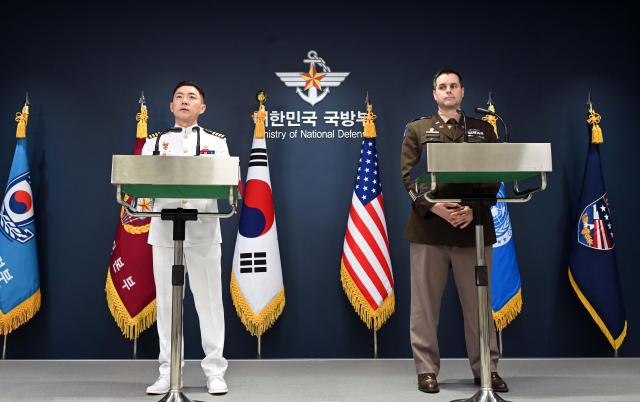
The Joint Chiefs of Staff and the South Korea-U.S. Combined Forces Command announced the schedule during a joint briefing Monday, describing UFS as a defensive exercise aimed at strengthening the allies’ combined defense posture.
About 18,000 South Korean troops will take part, roughly in line with previous years.
The allies said this year’s scenario incorporates lessons from recent wars and will test combined and joint all-domain operations, including responses to cyberattacks and drones. The exercise will also advance preparations for the conditions-based OPCON transition.
“It is a reality that North Korean military capabilities are changing after its forces were deployed to the war in Ukraine,” Ryan Donald, a public affairs officer for U.S. Forces Korea, said.
“The exercise includes responses to threats the North Korean military could pose, as well as cyber and drone attacks.”
The drills come as President Lee Jae Myung’s government seeks to complete verification of the future Combined Forces Command’s full operational capability (FOC) at the allies’ Security Consultative Meeting (SCM) this fall.
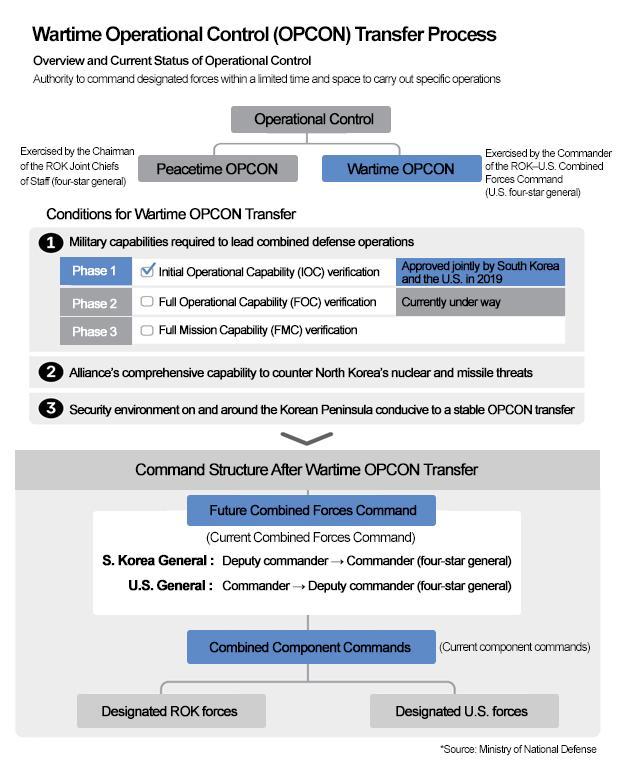
If the two defense chiefs approve the FOC assessment, Seoul and Washington could move closer to recommending a target year for the transfer to their presidents.
“If the standards are met, we believe it will be possible to make recommendations at the SCM on the FOC verification of the future Combined Forces Command and the timing of the transition,” JCS spokesperson Jang Do-young said.
But the renewed push is reviving a more fundamental question: whether the future Korean-led command has actually been tested under conditions resembling those it would face after OPCON transfer.
A person familiar with the transition process said the central issue is no longer whether South Korea should eventually regain wartime command, but whether a Korean four-star general leading the future Combined Forces Command would have the same assured access to U.S. intelligence, reinforcements and strategic assets during a crisis.
WATCHCON, or Watch Condition, refers to the allies’ intelligence and surveillance alert posture for monitoring North Korean military activity and signs of an imminent threat.
“After OPCON transfer, if the South Korean future combined commander orders a higher WATCHCON level during combined crisis management, is there a basis to receive the same level of U.S. assets as before?” the person said.
“What is the plan to guarantee U.S. strategic assets and reinforcement forces in a full-scale war after OPCON transfer?”
Under the current framework, the transfer depends on three broad conditions: South Korea’s ability to lead the allies’ combined defense, their capability to respond to North Korea’s nuclear and missile threats, and a stable security environment on the Korean Peninsula and in the region.
The hardest question increasingly lies with North Korea’s nuclear arsenal.
Critics argue that transferring OPCON without firmer guarantees of U.S. nuclear and strategic support could leave South Korea with greater command responsibility while remaining heavily dependent on Washington for the capabilities most critical in a major war.
That concern is unlikely to be resolved by this year’s UFS alone.
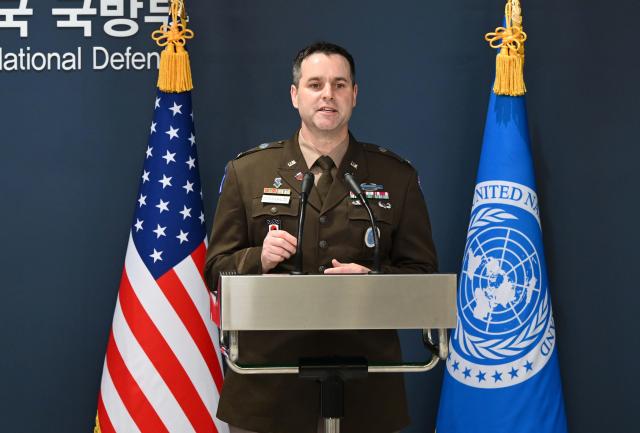
Jeong Kyung-woon, a research fellow at the Korean Association of Military Studies, said a realistic debate should focus less on setting a political timetable and more on how South Korea would counter North Korea’s nuclear threat and secure stronger U.S. extended deterrence.
“Given South Korea’s conventional military capability and economic strength, the first condition is not an impossible task,” Jeong said. “If South Korea makes the decision, it can be achieved within a reasonable period, and the risks to be accepted would not be excessive.”
The second and third conditions are far harder, he said, because both ultimately come back to North Korea’s nuclear capabilities.
“In the end, the second and third conditions are about the ability to respond to North Korea’s nuclear threat,” Jeong said. “The best option would be for South Korea to possess its own nuclear capability, but realistically that is difficult.”
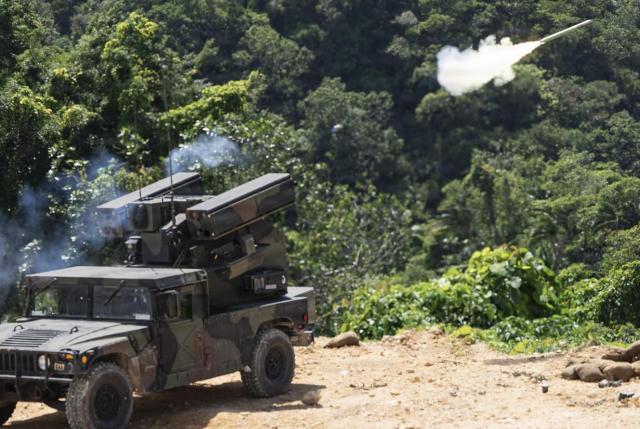
“Under the current circumstances, the key to meeting the OPCON transfer conditions will be how South Korea can receive a more advanced form of extended deterrence than what exists now,” Jeong said.
Those questions have gained urgency as shifting U.S. military priorities elsewhere in the world have demonstrated that American assets stationed on or assigned to the peninsula cannot necessarily be viewed in isolation.
During the prolonged Iran war, THAAD launchers deployed in Seongju were temporarily moved to Osan Air Base before returning.
USFK Commander Gen. Xavier Brunson told U.S. lawmakers that no THAAD system had left the Korean Peninsula, but said the command had sent “munitions” forward and repositioned assets to prepare those munitions for possible movement.
For critics of a rushed OPCON transfer, the episode illustrated the possibility that U.S. missile-defense munitions and other assets on the peninsula could be repositioned when broader American operational priorities change.
They argue that Seoul therefore needs clearer guarantees on what U.S. surveillance, missile-defense, reinforcement and strategic assets would be available during a full-scale conflict with North Korea — and under whose authority they would be deployed.
Questions over South Korea’s own early-warning capabilities have added another layer to the debate.
The South Korean military did not disclose details of North Korea’s June 25 weapons launches on the day they occurred, prompting questions over whether it had detected and properly classified the weapons in real time.
The Defense Ministry later said South Korea and the United States had detected and tracked multiple projectiles in real time.
Still, the episode highlighted the importance of early warning, weapons classification and intelligence-sharing procedures in any future command structure in which a South Korean general assumes wartime operational control.
The United Nations Command will also participate in UFS, with 12 member states, including the United States, expected to send about 70 additional personnel.
The Neutral Nations Supervisory Commission will observe the exercise to assess its compliance with the armistice agreement.

Copyright ⓒ Aju Press All rights reserved.