
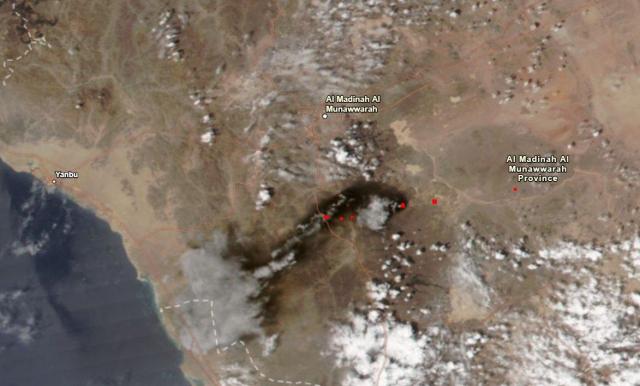
Brent crude rose $1.24 to $106.93 a barrel in early trading, while U.S. West Texas Intermediate gained $1.29 to $102.65, as traders weighed how long Saudi Arabia's East-West Pipeline could remain offline and whether alternative export routes could compensate for the disruption.
The strain is showing up even more dramatically in shipping costs.
The Baltic Exchange's benchmark Middle East Gulf-to-China route for very large crude carriers, or VLCCs, reached a time-charter-equivalent rate of about $862,150 a day on Sept. 10.
A separate Gulf of Oman-to-China VLCC route reached a record Worldscale 450, equivalent to roughly $11.50 per barrel.
For a typical VLCC carrying about 2 million barrels of crude, a freight rate of $11.50 per barrel translates into roughly $23 million for a single voyage. The additional burden does not stop there.
An executive at Emirates National Oil Co., or ENOC, said cargo insurance alone could add about $10 million, while war-risk premiums and other expenses could push total transit costs to between $10 million and $20 million as risks around Hormuz intensify.
The soaring transport bill significantly raises the delivered cost of Middle Eastern crude even before it reaches a refinery.
Saudi Arabia had already begun directing more barrels back through Hormuz before the pipeline shutdown.
Total Saudi crude exports rose to nearly 4 million barrels per day during the first 10 days of September, from around 3 million barrels per day in August, according to tanker-tracking data compiled by Bloomberg, Vortexa and Kpler.
Roughly 1 million barrels per day were shipped through Hormuz, with most of the remainder moving through the Red Sea port of Yanbu. Riyadh is now seeking to increase Hormuz shipments further.
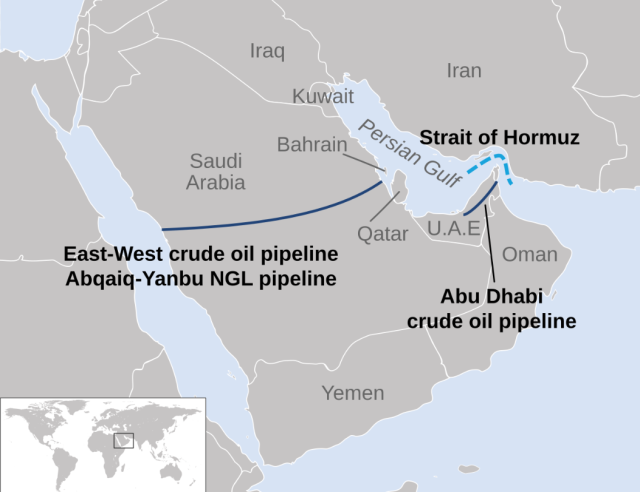
Drone attacks last week forced Saudi Arabia to shut the pipeline, and repairs are expected to take several weeks.
For South Korea, the outage adds a new risk to an oil supply chain already forced to adapt to months of disruption in the Middle East.
The government said Monday that domestic refiners have secured more than 90 percent of their crude needs for September and October based on year-earlier levels and that the Saudi pipeline shutdown is unlikely to cause an immediate supply shortage.
The Ministry of Trade, Industry and Resources nevertheless held an emergency meeting with refiners and shipping companies to review crude supplies, tanker movements and contingency measures.
The government has been preparing alternative transportation routes through the Suez Canal and Egypt's SUMED pipeline while seeking additional crude supplies from outside the Middle East.
It is also prepared to use its strategic oil reserve swap program if supply conditions deteriorate.
"The government will communicate closely with oil refiners and maritime shippers while closely monitoring supply conditions to prevent any inconvenience to the public," Vice Industry Minister Moon Shin-hak said Monday.
South Korea also maintains emergency crude inventories above the minimum level recommended by the International Energy Agency.
"We currently have no issues with our oil reserves. The volume of reserves we hold exceeds the level recommended by the International Energy Agency," an official at Korea National Oil Corp. said.
IEA members are required to hold emergency oil stocks equivalent to at least 90 days of the previous year's net imports, with the required amount calculated for each country based on its own net oil imports.
Still, the main Gulf shipping artery has not returned anywhere close to normal.
Kpler recorded just four commodity vessels transiting the Strait of Hormuz on Monday, down from 10 on Sunday and far below the roughly 125 large commercial vessels that crossed the waterway each day before the U.S.-Iran war began on Feb. 28.
Some vessels are believed to be sailing with their Automatic Identification System, or AIS, transponders switched off, meaning visible ship-tracking data may understate actual flows.
The result is an increasingly difficult squeeze: Saudi Arabia needs to push more crude through Hormuz after losing its principal bypass route, just as overall commercial traffic through the strait remains a fraction of prewar levels.
For South Korea, supplies through October may be largely secured. The bigger concern is what happens afterward if the Saudi pipeline remains impaired, Hormuz traffic fails to recover and higher freight and insurance costs carry into the winter demand season.
AJP Takeaways
- Saudi Arabia is pushing more crude through Hormuz after drone attacks shut its key East-West Pipeline bypass.
- Brent crude topped $106 a barrel as VLCC freight and war-risk insurance costs surged to record levels.
- South Korea says more than 90 percent of September-October crude needs are secured, limiting immediate supply concerns.
- Seoul is preparing reserve swaps, alternative routes and non-Middle Eastern supplies if disruptions extend into winter.

Copyright ⓒ Aju Press All rights reserved.
