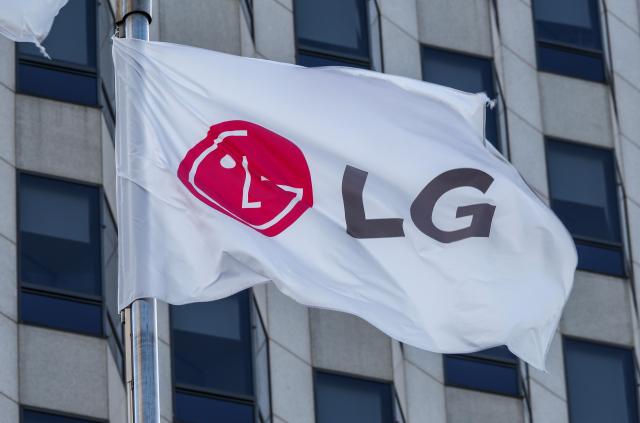
SEOUL, October 28 (AJP) -White-goods powerhouse LG Electronics is rebranding itself as a stalwart of AI data centers and automotive technology, and its latest earnings are a testament to that shift.
The company reported a 55.9 percent jump in operating profit for the first nine months of the year, while orders for its AI data center cooling solutions surpassed 3 trillion won ($2.3 billion) by the end of September, up from roughly 600 billion won in the first half.
Automotive electronics is already contributing substantial profits, while AI infrastructure and robotics offer new avenues for growth beyond the appliances and consumer electronics that built LG’s name.
Its Vehicle Solution division posted revenue of 2.83 trillion won and operating profit of 190.3 billion won, both third-quarter records, as existing orders translated into sales and demand for in-vehicle infotainment systems continued to grow.
The company is now looking beyond infotainment to high-performance computing systems for advanced driver assistance and autonomous driving, executives said during Wednesday’s earnings conference call.
Its Home Appliance Solution division generated revenue of 7.04 trillion won and operating profit of 259.2 billion won. The Media Entertainment Solution division recorded revenue of 5.02 trillion won and operating profit of 146.7 billion won.
The Eco Solution division, which oversees heating and cooling operations, posted revenue of 2.17 trillion won and operating profit of 87.2 billion won, with spending on emerging businesses weighing partly on profitability.
It is within that cooling business that LG Electronics is making one of its most ambitious moves into the AI economy.
The surge in orders was supported by a long-term cooling supply agreement for an AI data center project with a planned capacity of 5 gigawatts. Executives said the agreement would generate revenue over several years rather than through a one-off delivery.
To meet growing demand, LG Electronics is investing about 220 billion won in additional manufacturing capacity, including a new production facility in Virginia and new lines at its existing operations in Pyeongtaek and Changwon.
The company is also moving beyond conventional chillers into liquid cooling systems designed for increasingly powerful AI servers.
Executives said its coolant distribution units, with capacities of 600 kilowatts, 1 megawatt and 2.6 megawatts, had received Nvidia approval. The largest model also earned DSX Ready designation for Nvidia’s next-generation AI factory platform.
The longer-term ambition is to provide integrated cooling solutions covering system design, control and maintenance.
"Over the medium to long term we plan to expand our business beyond the supply of individual products to integrated cooling solutions," an LG Electronics executive said during the conference call.
The company expects higher-value products and services to deliver better profitability than its conventional heating, ventilation and air-conditioning operations, although it has not disclosed specific long-term revenue targets for the cooling business.
LG Electronics is pursuing a similar expansion in robotics, seeking to build a business spanning core components, finished robots, software and training data.
Its robotics data factory in Seoul’s Umyeon-dong neighborhood is scheduled to begin full operations in the fourth quarter, providing a base for training robots with data collected from real-world home and manufacturing environments.
Working with Nvidia, LG Electronics is developing simulation tools and world models — representations that help robots understand and anticipate their surroundings — as part of its push into physical AI. The company is combining real-world and synthetic data to improve robot performance.
Executives said LG would initially focus on manufacturing, logistics, research and public-sector applications, where commercial demand is expected to emerge first, before expanding into household humanoid robots around 2030.
The company is also considering selling robotics training data and developing datasets for outside customers, although improving its own robots remains the immediate priority.
The push into AI infrastructure and robotics comes as LG Electronics faces a less favorable outlook for its traditional consumer businesses.
Executives warned that rising memory chip and LCD panel prices, elevated shipping costs and uncertain consumer demand could weigh on profitability in the coming quarters.
LCD panel prices are expected to remain stable to slightly higher in the fourth quarter, with upward pressure intensifying in early 2027. Passing higher component costs on to consumers could prove particularly difficult in price-sensitive product segments.
LG Electronics plans to counter those pressures by diversifying suppliers, improving procurement efficiency and expanding premium product sales.
The company expects the recovery in global appliance and vehicle demand to remain limited in the fourth quarter, reinforcing its push into business-to-business operations and subscription services.
Third-quarter subscription revenue reached 760 billion won, up 8.6 percent from a year earlier, while B2B revenue rose 3.4 percent to 6.1 trillion won.
LG Electronics said it would cancel all 730,000 treasury shares repurchased this year during the fourth quarter and pursue an additional 100 billion won in shareholder returns next year.
For a company long associated with the appliances inside consumers’ homes, the results point to an expanding role in the infrastructure powering AI and the technology shaping future mobility.
The challenge is to turn those ambitions into sustained profits while preserving the earnings strength of its established businesses. LG Electronics shares closed Wednesday at 162,400 won, up 3.1 percent.

Copyright ⓒ Aju Press All rights reserved.