SEOUL, November 28 (AJP) - South Korea and India are accelerating economic and diplomatic engagement following their April summit, with businesses increasingly pursuing joint manufacturing, technology development and local investment beyond conventional trade.
South Korea's Ministry of Foreign Affairs held its sixth meeting with Korean companies operating in India on Wednesday, bringing together representatives from Hyundai Motor, Samsung Electronics, POSCO, Krafton, AFINIT and three other companies to discuss business expansion and challenges in the Indian market.
The meeting was also attended by officials from the Ministry of Trade, Industry and Resources' newly established division dedicated to economic cooperation with India.
During President Lee Jae Myung's state visit to India in April, Lee and Indian Prime Minister Narendra Modi reaffirmed their commitment to expanding bilateral trade to $50 billion by 2030, nearly double the $25.6 billion recorded in 2025.
Negotiations to upgrade the Comprehensive Economic Partnership Agreement (CEPA) resumed in May after a nearly two-year hiatus, followed by another round in August. The two countries also launched their first bilateral steel dialogue earlier this month to expand investment and technological cooperation.
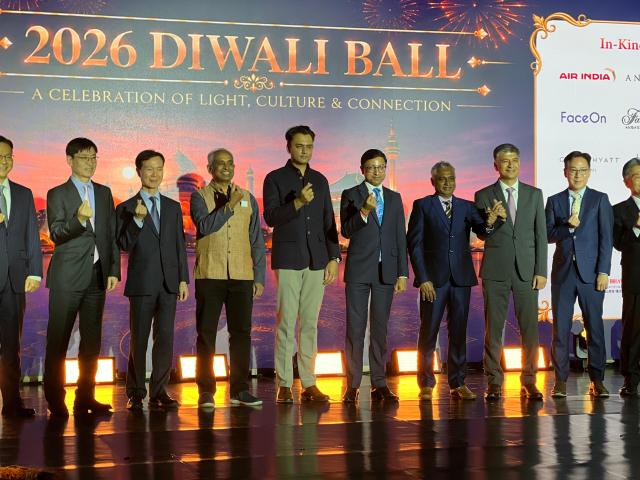
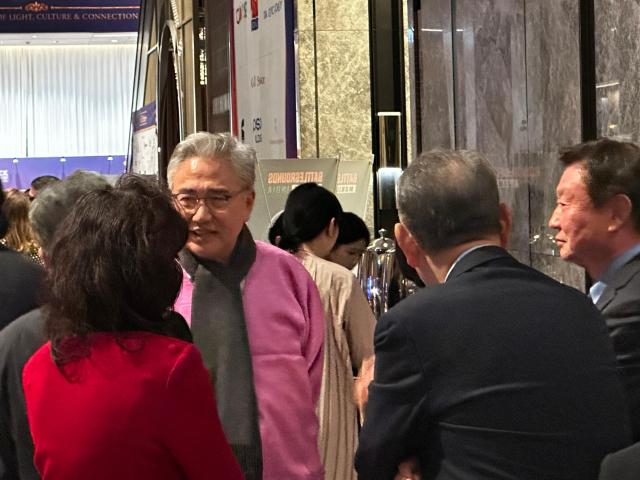
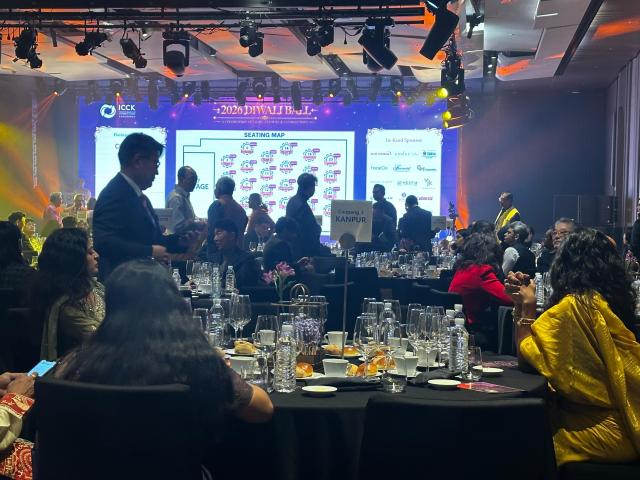
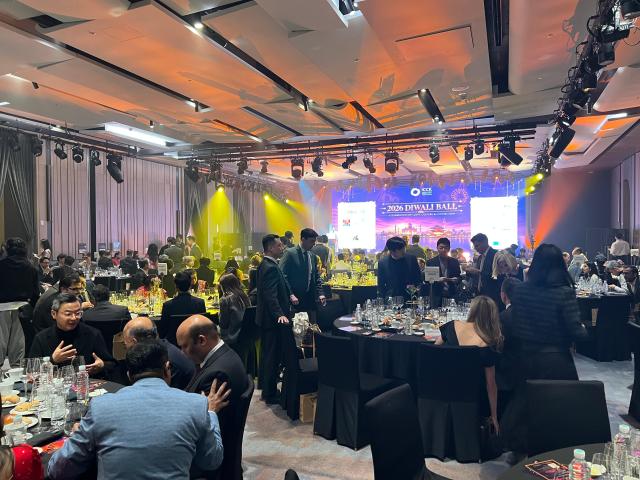
Against this backdrop, the Indian Chamber of Commerce in Korea (ICCK) held its inaugural Business Awards alongside its annual Diwali Ball at Fairmont Ambassador Seoul in Yeouido on Friday.
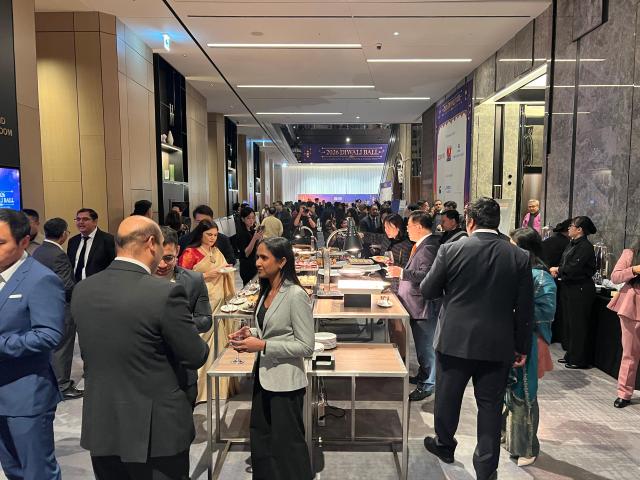
Supported by the Indian Embassy in Seoul, the event brought together business executives, entrepreneurs and diplomatic representatives to recognize companies contributing to bilateral economic relations across eight categories. The program included a media roundtable, an awards ceremony, business networking and cultural performances celebrating India's Festival of Lights.
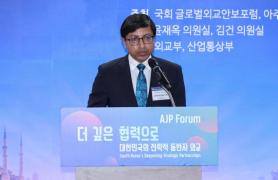
Indian Ambassador to South Korea Gourangalal Das highlighted the progress made since the April summit.
"In just about five or six months since the last summit meeting of our leaders, which happened in April, the number of Korean businesses present in India went up by about 10 percent," Das said.
"The trade figure again went up by about 10 percent. Of course, we are not very happy about that 10 percent. I think it should go up to 100 percent, and we have still a lot of work to do."
From selling to building in India
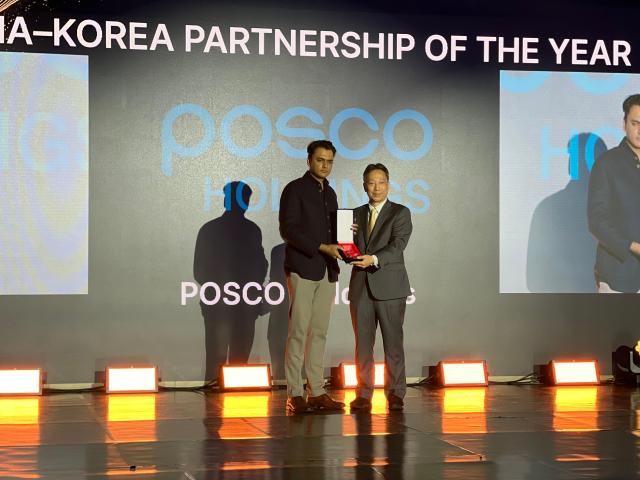
POSCO Holdings received the India-Korea Partnership of the Year award for its collaboration with Indian steelmaker JSW Steel.
The two companies signed a 50-50 joint venture agreement during Lee's state visit to build an integrated steelworks in India's eastern state of Odisha, with an initial annual crude steel production capacity of 6 million tons.
"POSCO's journey in India began some 20 years ago. This year, we took our next big step together with JSW Steel," a POSCO Holdings executive said during the ceremony.
Indichem, Lichtzen and Raamtel were jointly recognized in the Semiconductor & Advanced Manufacturing category for their contributions to cross-border supply chains and industrial technology cooperation.
Indichem, a joint venture between Korean and Indian chemical companies, sources chemical materials from India for purification and refinement in South Korea before supplying them to customers across Asia and the United States.
"As supply chains are becoming less dependent on China, we are in the process of establishing a new value chain connecting India and South Korea," an Indichem representative said during the media roundtable.
Lichtzen, a Korean industrial automation and optical technology specialist, has worked with Indian companies since 2015 and plans to establish a manufacturing facility and research and development center in Bengaluru next year.
The company sees opportunities in India's growing semiconductor back-end industry, particularly in assembly, testing and packaging processes that require ultraviolet and infrared technologies.
"South Korea has proven manufacturing capabilities, high-yield production know-how and an established ecosystem of specialized equipment, component and materials suppliers. India's strengths are its talent, market and policy commitment," Lichtzen's CEO said.
"We don't just want to sell to India. We want to build with India."
Opportunities and challenges for smaller businesses
While major Korean conglomerates have established a substantial presence in India, executives at the roundtable pointed to difficulties facing small and medium-sized enterprises (SMEs), particularly their limited knowledge of local demand and business practices.
Raamtel, an Indian defense electronics company with more than 18 years of experience working with Korean businesses, established a branch office in South Korea three years ago.
Its representative said Korean manufacturers possess advanced technologies but often remain unaware of the demand for their products in India.
"I have seen many companies in Korea that are surprised and ask, 'Oh, this product is also needed in India?' They underestimate Indian potential related to technology and product manufacturing. This needs to be changed," he said.
Manwani Group, which received the Trade & Investment Excellence award, has worked with Korean businesses for 13 years, facilitating joint ventures, mergers and acquisitions, and investment opportunities across industries including robotics, automation and semiconductors.
A representative of the group said smaller Korean companies entering India independently often lack the resources and networks available to large conglomerates.
"Sometimes, because of the cultural differences between India and Korea, there is a lot of overpromising that is not realistic. Bridging that gap is very important," he said.
ECDS, the recipient of the Sustainability, ESG & Battery Technology award, has established five joint ventures in India involving Korean technologies in areas including nanofiber filtration, biomass-based polymers, artificial intelligence and aviation-related workforce development.
Rajesh Bhardwaj, CEO of ECDS, said his company and its partners had met around 297 Korean businesses over the past four and a half years, observing that many smaller manufacturers remained inclined to follow major corporations into overseas markets.
"It was hard for us to convince them that at the SME level we can come together, not wait for the anchor company," Bhardwaj said.
The company aims to help Korean SMEs establish sustainable operations in India and pursue listings on Indian stock exchanges within three to five years.
Expanding into finance, education and healthcare
Cooperation between the two countries is also expanding into industries serving India's domestic consumers.
Korean startup VisualCamp received the Startup & Deep Tech Innovation award for its AI-powered eye-tracking technology, which uses standard smartphone cameras to assess students' reading abilities.
The company, now in its second year of doing business in India, has collected eye-tracking data from 500 students across six schools in Haryana and is conducting further trials to assess improvements in literacy.
"India is a large market, but languages, education environments, and purchasing behavior vary across regions and customer groups. A large population does not automatically guarantee revenue or business success," VisualCamp said in a written response to AJP.
AFINIT, formerly known as Balancehero, received the Digital Transformation & Technology award for its AI-powered financial platform TrueBalance, which provides financial services to underserved Indian consumers.
Founded in South Korea in 2014, the company has served more than 28 million customers and facilitated transactions exceeding 2 trillion won, according to figures presented at the ceremony. It has recently expanded its services beyond short-term loans to include insurance and credit card products.
"With UPI and its digital infrastructure, India has shown the world how technology can bring financial services to hundreds of millions of people," said an AFINIT executive, referring to India's Unified Payments Interface.
SD Biosensor received the Healthcare, Pharma & Biotechnology award for its contributions to diagnostic healthcare and medical technology.
The Korean diagnostic equipment maker is investing in manufacturing facilities in Haryana as part of its strategy to establish India as a global production base. Its products include diagnostic solutions for tuberculosis, malaria and dengue fever.
"For us, India is not just an important market, but also a strategic manufacturing base and a key part of our global growth," a company representative said.
Indian law firm Shardul Amarchand Mangaldas received a special recognition award for its legal advisory work on the POSCO-JSW Steel joint venture, as well as its involvement in LG Electronics' initial public offering in India and Kia's investment activities.
Cultural exchanges underpin business ties
Cultural cooperation has also become an increasingly important part of bilateral engagement.
Nami Island Arts and Education received recognition in the Education, EdTech & Cultural Exchange category for its efforts to bring together Indian and Korean artists, students and cultural institutions.
The organization began cultural exchanges with India in 2005 and has worked with the Indian Embassy since 2015 to organize Sarang, the Festival of India, alongside exhibitions and performances.
"While economic and business cooperation serves as a driving force for the shared prosperity of our two nations, art and culture have the power to foster mutual understanding and trust," its representative said.
Das also spoke of the growing popularity of Korean culture in India, recalling conversations with Indian businesspeople who had traveled to Seoul to attend Friday's celebrations.
"Diwali is celebrated in India, but why are you here to celebrate Diwali? The response I heard from some of them is that because of K-culture," Das said, expressing hope that Indian festivals would become more familiar to Korean audiences.
Joonha Yoo
Joonha Yoo is a bilingual journalist at AJU Press (AJP), covering music, culture, entertainment and Korea’s automotive industry.
Raised in Fort Collins, Colorado, he often writes from the scene, bringing firsthand detail to stories ranging
from BTS comeback concerts to unique cultural events that catch the world's eye.
Copyright ⓒ Aju Press All rights reserved.