
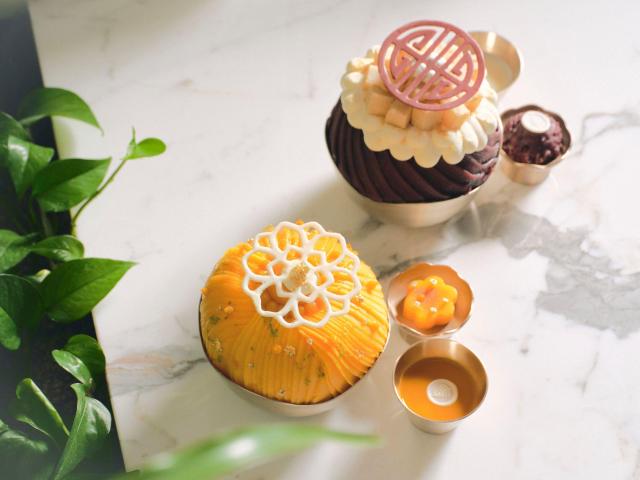
In South Korea, bingsu has become a luxury item, a social media prop and a marker of changing consumer habits. This summer, Four Seasons Hotel Seoul is selling its Jeju apple mango bingsu for 149,000 won, the highest price among major Seoul hotels. The Shilla Seoul charges 130,000 won for its signature apple mango bingsu at its lounge bar The Library, up 20,000 won from last year. At the other end of the market, budget cafe chain Ediya sells cup bingsu for around 4,500 won.
The gap between the cheapest and most expensive shaved ice desserts in Seoul now stands at roughly 37 times. The price gap is a Korean story, but it also opens a wider question about how East Asia eats the same summer dessert in different ways.
In Seoul, shaved ice can signal a hotel outing and a seasonal splurge. In Japan, kakigori still evokes summer festivals and childhood memory. In China, baobing and xuehuabing have become part of a fast-moving dessert culture shaped by street shops, toppings and social media.
When the Shilla Seoul first introduced its apple mango bingsu in 2011, it cost 27,000 won. Fifteen years later, the price has increased nearly fivefold. Despite weak consumer sentiment and a shaky economy, demand for luxury hotel bingsu has remained strong, buoyed by the "small luxury" trend among consumers in their 20s and 30s.
For Kim Hye-won, a 27-year-old marketing professional living in Seoul, the price hike makes sense — up to a point. She has tried The Shilla's apple mango bingsu before and plans to go back this year.
"Bingsu used to be something you made at home — shaving ice, freezing milk and throwing in whatever you had in the fridge," she said.
"Now it has become premium, with each place trying to differentiate itself. Even a dessert that once felt ordinary has turned into something quite luxurious."
But she draws the line well below the market's ceiling. Splitting the bill with friends, she said, makes a 130,000-won bingsu at The Shilla easier to justify as a shared experience.
"Going to a bar and ordering a few cocktails each can easily cost around 100,000 won," she said. "This feels more wholesome, tastier, and you get the feeling of being somewhere like The Shilla."
Prices approaching 150,000 won, however, are another matter.
"I haven't tried it, so I can't say for sure, but I find myself wondering whether it is really worth that much for a dessert made from milk and water," she said.
Not everyone is willing to cross even that lower threshold. Choi Jin-hyeok, a 31-year-old private tutor in Seoul, said he is aware of the hotel bingsu trend — his social media feeds fill up with photos of elaborate bowls every summer — but has no intention of spending that much.
"There is a certain price point that feels right to me," he said. "At Sulbing, around 10,000 won gets you something close to the bingsu we used to eat at home with our parents. You can get fruit toppings and all kinds of extras for 20,000 or 30,000 won. Paying five times that for something that is, at its core, a frozen dessert to cool you down — that is just not something I would do voluntarily."
The contrast between the two consumers reflects a broader split in the South Korean market. Hotels have responded by competing on ingredients, presentation and scarcity. Four Seasons Seoul's flagship bingsu features more than two whole Jeju apple mangoes piled on shaved organic milk ice, topped with a hollow mango sphere that releases mango-elderflower sauce when broken open. According to industry sources, about 85 percent of hotel bingsu customers are not hotel guests but visitors who make reservations specifically for the dessert.
In South Korea, bingsu has moved far beyond its older image as a simple summer snack. People are not only buying shaved ice, but also the hotel lounge, the photo, the shared outing and the sense of participating in a seasonal luxury trend.
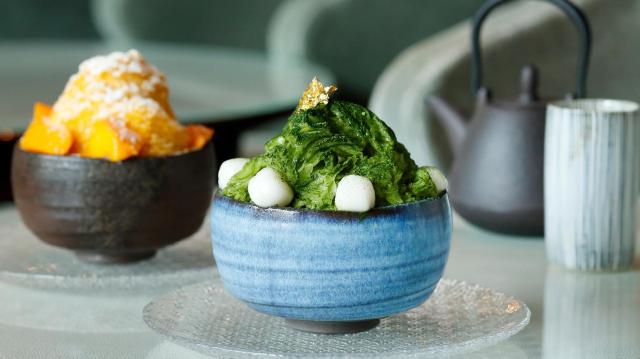
Japan's shaved ice culture follows a different logic. Kakigori dates back to the Heian period, when shaved ice was a luxury enjoyed by the aristocracy. Ice was a precious commodity, stored in insulated facilities and served with natural sweeteners. As ice production and distribution improved, the dessert gradually became more widely available, turning what had once been an elite indulgence into a popular summer treat.
That history still shapes modern kakigori. While high-end kakigori shops have emerged in cities such as Tokyo, the dessert remains strongly associated with summer festivals, neighborhood stalls and seasonal rituals. At matsuri, kakigori is sold alongside yakitori, yakisoba and other street foods — typically inexpensive, colorful and tied to the atmosphere of the season.
For many Japanese consumers, the value of kakigori lies less in luxury than in timing and memory: it is something eaten because summer has arrived.
A dessert that began as an aristocratic luxury has, over centuries, become part of everyday seasonal culture. Korea's bingsu has spent the past decade moving in the opposite direction, with part of the market turning an everyday dessert into a premium experience.
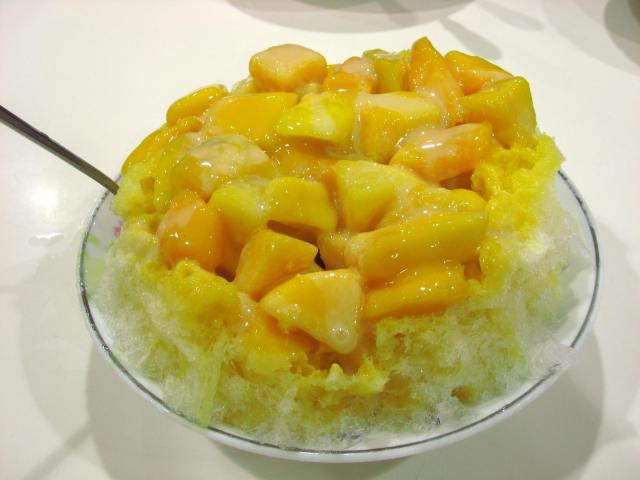
China's shaved ice culture connects older traditions with the speed and visual intensity of today's social media food culture. Baobing, literally "shaved ice" in Mandarin, has long referred to a simple dessert made by shaving ice and topping it with syrup, beans, fruit, jelly or condensed milk. Some food references trace Chinese shaved ice desserts back more than 1,000 years, though modern baobing is more commonly understood as an everyday summer refreshment than an elite delicacy.
Its appeal has traditionally rested on practicality and abundance: ice as a cooling base, topped with whatever was local, seasonal or inexpensive.
In recent years, traditional baobing has been joined by xuehuabing, or snow ice, in which frozen milk or fruit mixtures are shaved into thin, ribbon-like layers and finished with colorful toppings such as mango, taro balls, mochi and flavored sauces. Social media platforms, particularly Douyin and Xiaohongshu, have helped drive the trend, with visually striking bowls spreading quickly online and encouraging dessert shops to compete through color, texture and topping combinations.
The differences are not just about toppings or texture. They reflect the kind of summer each market has learned to sell.
South Korea has pushed shaved ice upward into the realm of premium experience. Japan has kept it anchored to seasonal ritual. China has turned it into an accessible visual dessert built for circulation.
The same ice, in other words, has become a different kind of summer story in each country.

Copyright ⓒ Aju Press All rights reserved.
