
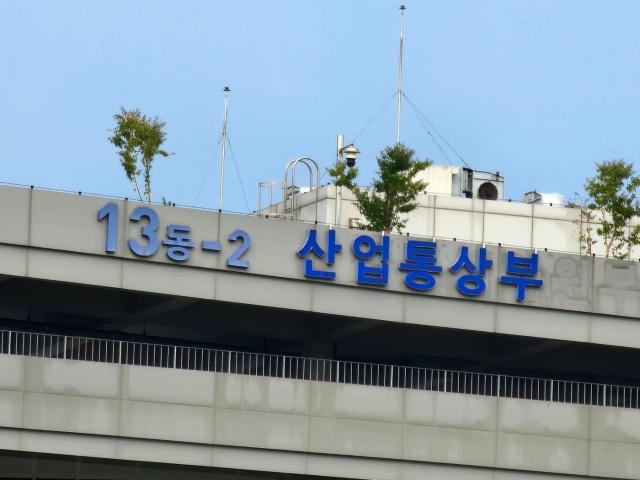
On June 16, the Ministry of Trade, Industry and Energy held the 57th Trade Promotion Committee meeting in Seoul, chaired by Ye Han-goo, head of the Trade Negotiation Headquarters. The meeting reviewed the status of major trade agreements and discussed responses to the U.S. Section 301 investigation.
During the meeting, the government discussed ongoing negotiations, including the Korea-Mongolia Comprehensive Economic Partnership Agreement (CEPA), follow-up negotiations on services and investment under the Korea-China Free Trade Agreement (FTA), and the Korea-Morocco CEPA.
The CEPA with Mongolia is considered strategically valuable for supply chain cooperation and entry into emerging markets, prompting the government to resume negotiations this month and push for a swift conclusion. The follow-up negotiations on services and investment under the Korea-China FTA aim for a resolution by the end of the year to open service markets and improve the investment environment.
The CEPA with Morocco was also a key agenda item. Morocco serves as a strategic hub connecting Europe, the Middle East, and Africa, and is one of the few African countries that has signed FTAs with major economies such as the U.S. and the European Union. The South Korean government plans to leverage this to expand the foundation for domestic companies entering the African market.
Additionally, the meeting addressed responses to the recent U.S. investigation under Section 301 concerning the prohibition of imports of goods produced with forced labor. The government shared updates on the investigation's progress and discussions with the U.S., while reviewing future response strategies.
Industry voices have grown louder, emphasizing the need to reduce reliance on major export markets and expand into emerging markets amid the tightening of U.S. trade regulations and the rise of protectionist sentiments. Consequently, the government is pursuing both the expansion of trade agreement networks and market diversification strategies.
Ye stated, "We plan to closely collaborate with relevant ministries to prioritize national interests, enhance our companies' competitiveness, and support market diversification. We will ensure that negotiations on major trade agreements proceed smoothly to expand our trade network and continue to respond to the U.S. Section 301 investigation while maintaining the balance of benefits under the existing Korea-U.S. tariff agreement."
* This article has been translated by AI.
Copyright ⓒ Aju Press All rights reserved.