
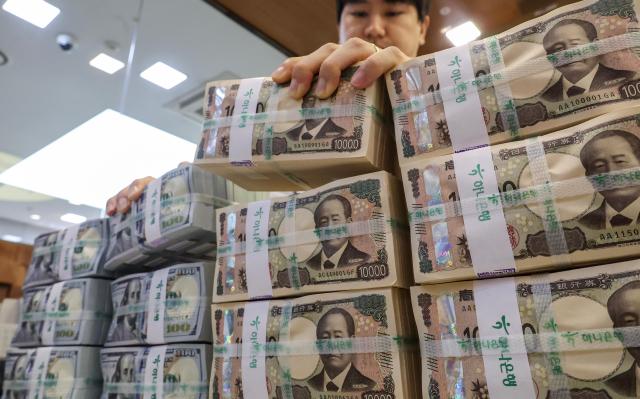
The sustained selling suggests global liquidity conditions—not domestic valuations alone—are increasingly dictating capital flows into Korean assets.
The Federal Reserve and the Bank of Japan will deliver back-to-back policy decisions over the next two days, placing the world's two reserve-currency central banks at the center of global markets. While both are widely expected to leave interest rates unchanged, investors are focused on whether Fed Chair Kevin Warsh and BOJ Governor Kazuo Ueda signal further tightening, a shift that could reshape capital flows across equities, bonds and currencies.
The Fed will announce its decision at 3 a.m. Thursday Korea time, followed by Warsh's press conference 30 minutes later, while the BOJ concludes its two-day policy meeting on Friday with updated economic forecasts.
Markets overwhelmingly expect both central banks to stand pat. The debate instead centers on how firmly each prepares investors for the next move.
Interest-rate futures assign roughly a 30 percent probability of a quarter-point Fed increase this week while placing higher odds on a move by September. Recent U.S. economic data have offered mixed signals. Consumer prices rose 3.5 percent from a year earlier in June, while core inflation slowed to 2.6 percent. The Fed's preferred core personal consumption expenditures price index remained elevated at 3.4 percent in May ahead of fresh PCE and second-quarter GDP data due later Thursday.
The labor market has softened without a sharp deterioration. Payrolls increased by 57,000 in June, unemployment held at 4.2 percent and the economy expanded at an annualized rate of 2.1 percent in the first quarter.
Fed policymakers also remain divided. Nine of 18 officials project another rate increase by year-end, eight expect no further change and one foresees a cut, although the median projection still implies roughly one additional quarter-point increase. With no updated Summary of Economic Projections or dot plot scheduled for this meeting, markets will rely largely on Warsh's assessment of inflation risks and the likelihood of tightening later this year.
The BOJ is likewise expected to leave its overnight policy rate unchanged after raising it to 1.0 percent in June, the highest level in more than three decades. Unlike the Fed, however, economists see broader consensus for additional tightening. A Reuters poll found 75 of 87 economists expect the policy rate to reach 1.25 percent by year-end.
Japan's core consumer inflation rose 1.6 percent in June but remained below the BOJ's 2 percent target for a fifth consecutive month. At the same time, the weak yen and higher import costs have kept concerns over renewed price pressures alive, while real household consumption fell 0.4 percent in May, underscoring the fragile state of domestic demand.
Ueda has repeatedly said the BOJ will continue raising rates if underlying inflation moves sustainably toward 2 percent. Because the central bank will publish updated growth and inflation forecasts alongside Friday's decision, investors will scrutinize any upward revisions or stronger emphasis on upside inflation risks that could reinforce expectations for another increase in October or December.
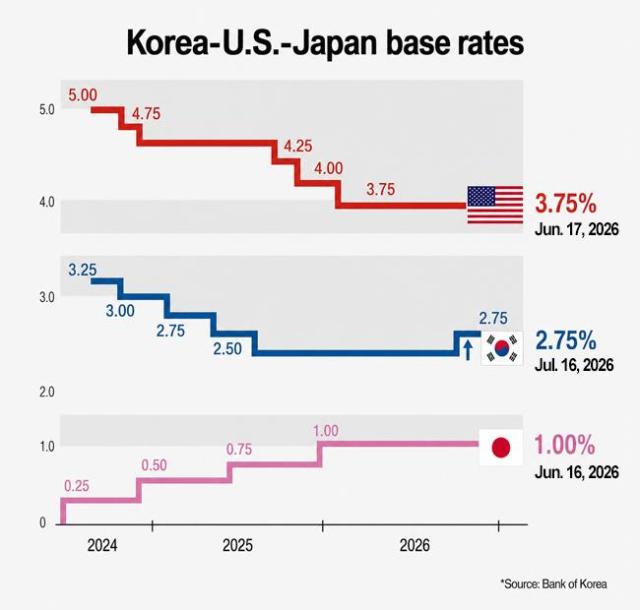
For more than a decade of near-zero or negative interest rates, global investors borrowed yen at minimal cost and deployed the proceeds into higher-yielding assets overseas, ranging from U.S. Treasuries and corporate bonds to emerging-market equities. South Korea, with its deep capital market, liquid government bonds and globally competitive export companies, became one of the destinations for such capital.
As the BOJ gradually raises interest rates while signaling further policy normalization, the economics of those trades are beginning to change. Higher Japanese borrowing costs reduce the return on leveraged overseas investments and encourage investors to trim exposure and repay yen borrowings.
The persistent foreign selling in Seoul is consistent with such a gradual reallocation of capital, although the exact share of Korean investments financed through yen borrowing cannot be quantified. The scale of the outflows nevertheless suggests South Korea has become one of the markets most exposed to the global repricing of liquidity as Japanese monetary policy slowly exits its ultra-loose era.
For global investors, however, the more immediate question is whether this week's policy guidance changes expectations for the dollar and the yen.
The U.S. dollar has strengthened ahead of the meetings, with the dollar index hovering near a one-month high around 101, while the yen remains close to a four-decade low at roughly 163 per dollar despite the BOJ's tightening cycle.
That distinguishes today's market from last August's turmoil.
A yen carry trade becomes unstable when the Japanese currency appreciates rapidly. Investors who borrowed in yen face rising repayment costs, forcing them to unwind leveraged positions by selling overseas assets and buying back the Japanese currency. Such feedback loops can accelerate declines across global equity markets.
Those dynamics amplified the turmoil in August 2024, when a sharp yen rally coincided with a 12.4 percent plunge in Japan's Nikkei 225 and an 8.8 percent drop in South Korea's Kospi.
Conditions are different today. Although the BOJ has begun tightening monetary policy, the yen remains historically weak despite higher Japanese interest rates. That suggests investors are reducing overseas exposure more gradually than during last year's abrupt deleveraging, when rapid yen appreciation became the catalyst for a broad carry-trade unwind.
Investors will therefore watch whether the Fed or BOJ triggers a sharper move in the dollar-yen exchange rate after their policy decisions. A sustained strengthening of the yen accompanied by simultaneous declines in Japanese, U.S. and emerging-market equities would point to a broader withdrawal of leveraged global capital.
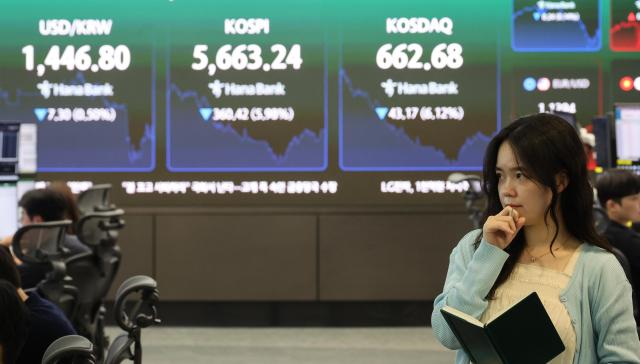
The won strengthened 13.7 won from the previous session to close at 1,448.8 per dollar at the 3:30 p.m. reference rate, as dollar selling related to SK hynix's American depositary receipt proceeds helped offset heavy foreign equity outflows and uncertainty ahead of the Fed meeting.
Government bonds also benefited from a flight toward safer assets. The three-year Treasury yield fell 4.3 basis points to 3.788 percent, while the 10-year yield declined 3.8 basis points to 4.258 percent as the equity sell-off boosted demand for bonds and the firmer won eased some concern over imported inflation.
For South Korea, the policy decisions themselves matter less than what they imply for the future cost of global capital. A more hawkish Federal Reserve would reinforce the dollar's yield advantage, while a more confident BOJ would further erode the economics of financing overseas investments with cheap yen. Together, those forces could prolong foreign outflows from Korean equities even without another bout of market panic.
The more immediate risk lies not in this week's expected policy holds but in the trajectory of the yen. If Japanese tightening eventually triggers sustained appreciation of the currency, the gradual portfolio adjustments now unfolding across Asian markets could evolve into a broader unwinding of carry trades. Until then, Seoul's persistent foreign selling appears more consistent with an orderly reallocation of global liquidity than with the disorderly deleveraging that rattled markets in August 2024.
Copyright ⓒ Aju Press All rights reserved.
