
SEOUL, September 03 (AJP) -U.S. Commerce Secretary Howard Lutnick reiterated that the Trump administration is preparing a new round of semiconductor tariffs designed to push foreign chipmakers to expand production in the United States.
“I think what you're going to see is targeted, thoughtful tariff policy that basically says if you build here, you don't pay, but if you don't build here, expect to pay to enter the greatest market in the world,” Lutnick told CNBC's Squawk Box on Wednesday.
“All of the companies know they're coming,” he added.
The remarks were a repeated warning of a broader semiconductor tariff plan that had been under discussion inside the administration.
Washington is said to be considering extending tariffs beyond imported chips to products containing them, including laptops, gaming consoles and data-center servers.
Trump has already imposed a 25 percent Section 232 tariff on certain advanced computing chips since Jan. 15, while exempting imports used in U.S. data centers and other applications deemed to support the domestic technology supply chain. The latest proposal would potentially expand that approach across a much wider range of semiconductor imports.
The policy could carry particular implications for South Korea's Samsung Electronics and SK hynix, which are expanding heavily in the United States but have so far stopped short of establishing dedicated advanced memory wafer production there.
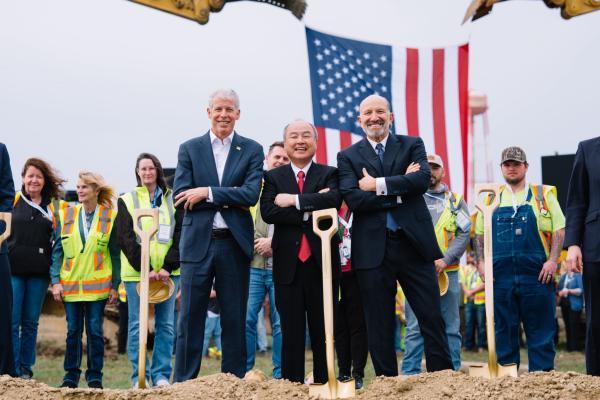
SK hynix last week broke ground on a more than $4 billion high-bandwidth memory facility in Indiana, where advanced HBM packaging and research will be conducted. The underlying memory wafers will continue to be produced in South Korea before being shipped to the U.S. plant for packaging.
Samsung is meanwhile preparing its Taylor, Texas semiconductor complex around leading-edge logic foundry production rather than a dedicated DRAM or NAND memory fab.
The distinction could become important if Washington ties tariff exemptions to the type and volume of chips actually manufactured on U.S. soil rather than companies' overall American investment.
South Korea secured a provision in its trade agreement with Washington stating that any future U.S. Section 232 semiconductor tariffs should give Korean products treatment “no less favorable” than that offered under a future agreement covering a comparable volume of semiconductor trade.
The tariff push also raises a potential conflict with Washington's effort to accelerate its AI industry, which remains heavily dependent on advanced chips and memory manufactured in Asia.
Samsung and SK hynix are behind nearly eight out of 10 high-bandwidth memory powering AI processors in data centers.
AJP Takeaways
· "Build in America or pay” — Lutnick again signaled that Washington is preparing broader semiconductor tariffs, with exemptions likely tied to U.S. production commitments.
· Samsung, SK hynix still face a memory gap — Both are investing heavily in the U.S., but neither currently produces advanced DRAM or HBM wafers there, leaving them exposed if tariff relief depends on where the chips themselves are fabricated.
· Korea has protection, but the details matter — Seoul secured “no less favorable” treatment under its trade deal with Washington, but the impact will depend on how the U.S. defines qualifying investment and domestic production.

Copyright ⓒ Aju Press All rights reserved.
