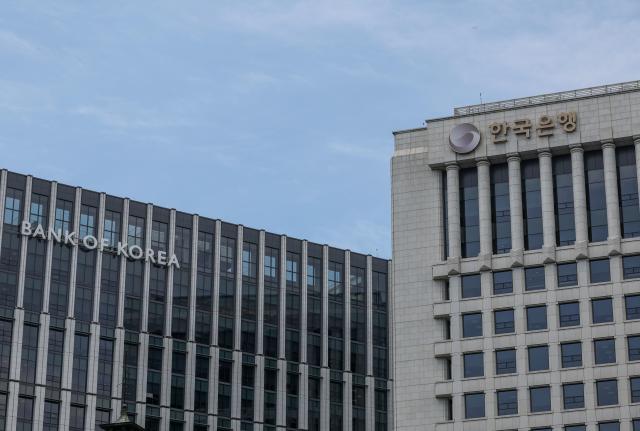
SEOUL, September 04 (AJP) - South Korea's current account surplus ranked second only to China's among major economies in the first half and will likely to keep up the rank rest of the year as July delivered the second-largest monthly surplus on record, the central bank said Friday.
The July surplus came to $42.08 billion, down from June's record $49.73 billion but above $40 billion for a second month, extending the surplus run to 39 consecutive months, preliminary Bank of Korea (BOK) data showed.
Yoo Seong-wook, head of the BOK's Financial Statistics Department, said Korea's first-half surplus of $191.01 billion trailed only China's and exceeded those of Germany, Japan and Taiwan.
Official data for the same period put China's surplus at $379.4 billion, Germany's at the equivalent of roughly $124 billion, Taiwan's at $121.03 billion and Japan's at about $110 billion.
The January-July surplus nearly quadrupled to $233.09 billion from $59.82 billion a year earlier and was already about 1.9 times the $123.05 billion recorded in all of 2025.
The BOK last week raised its 2026 current account surplus forecast to $450 billion from $250 billion, citing stronger semiconductor exports and a wider goods surplus.
Yoo said the annual surplus was likely to come broadly in line with the forecast if monthly surpluses averaged about $43.4 billion over the remaining five months, with the final outcome hinging largely on the semiconductor cycle.
He said the won's recent appreciation would have only a limited impact on exports because the increase was being driven mainly by structural AI-related demand for semiconductors rather than exchange-rate competitiveness.
The unresolved Middle East conflict remained another risk because higher prices for crude oil and other raw materials could increase Korea's import bill, Yoo said.

Yoo said exports and the goods surplus often decline from June to July because companies tend to concentrate shipments in June when managing their first-half export performance.
On a seasonally adjusted basis, the current account surplus declined 8.0 percent to $40.89 billion from $44.43 billion, compared with a 15.4 percent drop in the unadjusted figure.
Customs-cleared exports reached $98.96 billion as information technology shipments jumped 140.6 percent and non-IT exports increased 18.3 percent.
Semiconductor exports surged 176.3 percent to $41.17 billion, accounting for 41.6 percent of total customs-cleared exports.
Raw material imports increased 29.1 percent on higher purchases of crude oil, gas and coal, while capital goods imports rose 36.7 percent on increased purchases of semiconductors and chipmaking equipment.
Consumer goods imports fell 3.0 percent, marking their first decline in 15 months.
The services account deficit widened to $1.97 billion from $1.29 billion as the travel balance swung to a $340 million deficit from a $440 million surplus.
The BOK attributed the reversal to the peak summer travel season and increased outbound travel following the designation of Constitution Day as a temporary public holiday.
The primary income surplus increased to $4.35 billion from $3.27 billion as the dividend income surplus reached $3.83 billion.
Park Seong-gon, head of the BOK's Balance of Payments Team, attributed the increase mainly to higher dividend receipts following improved earnings at semiconductor companies' overseas sales subsidiaries.
The financial account recorded its second-largest net asset increase of $40.32 billion.
Foreign direct investment in Korea decreased by $780 million in July, reflecting reductions in intercompany trade credit and other transactions, according to the BOK.
Foreign portfolio investment in Korean securities increased by $8.17 billion as equity investment rose by $5.98 billion and debt investment gained $2.19 billion, although bond inflows slowed as arbitrage incentives narrowed.
Foreign equity investment turned positive for the first time in six months after falling by a record $31.61 billion in June.
Yoo said the rebound reflected SK hynix's American depositary receipt issuance and reduced selling of domestically issued shares, adding that more data were needed to determine whether the improvement would continue.
Despite the July rebound, foreign equity portfolio investment in Korea remained down a cumulative $100.30 billion in the first seven months.
A $19.72 billion increase in foreign investment in Korean debt securities partly offset the equity outflow, leaving total foreign portfolio investment in domestic securities down $80.58 billion over the period.
Korean residents increased their overseas equity investment to $12.33 billion from $7.53 billion in June, more than twice the foreign investment in Korean equities during July.
Overall portfolio investment recorded a $5.40 billion net asset increase, while other investment posted a $27.56 billion increase as loan assets rose and borrowing liabilities declined.
AJP Takeaways
- South Korea's current account surplus reached $42.08 billion in July, the second-largest monthly figure on record, while its $191.01 billion first-half surplus trailed only China's among major economies.
- The BOK expects the annual surplus to broadly meet its upgraded $450 billion forecast if monthly surpluses average about $43.4 billion over the remaining five months.
- The BOK expects the won's appreciation to have a limited export impact because AI-related semiconductor demand remains the dominant driver, although the chip cycle and raw material costs remain key risks.
- Foreign equity investment rebounded by $5.98 billion in July after six months of declines but remained down a cumulative $100.30 billion in the first seven months.

Copyright ⓒ Aju Press All rights reserved.