
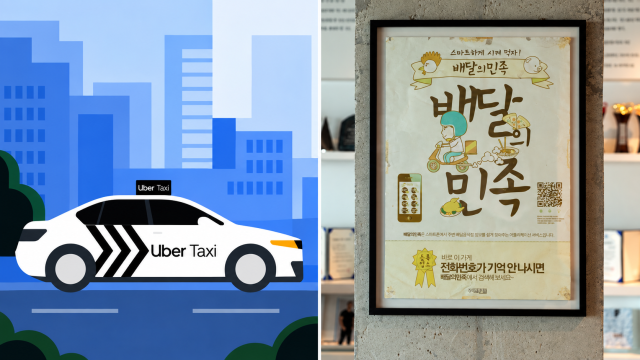
SEOUL, September 22 (AJP) - Uber’s bid to take control of Baemin, South Korea’s largest food delivery platform, for around $15 billion faces the first regulatory test with the Fair Trade Commission (FTC) launching a preliminary antitrust review of the proposed combination of taxi-hailing and delivery services.
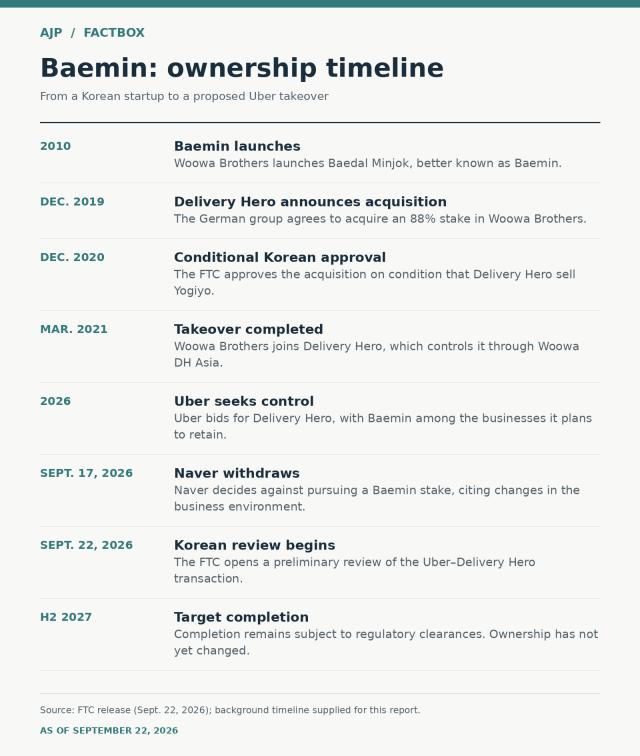
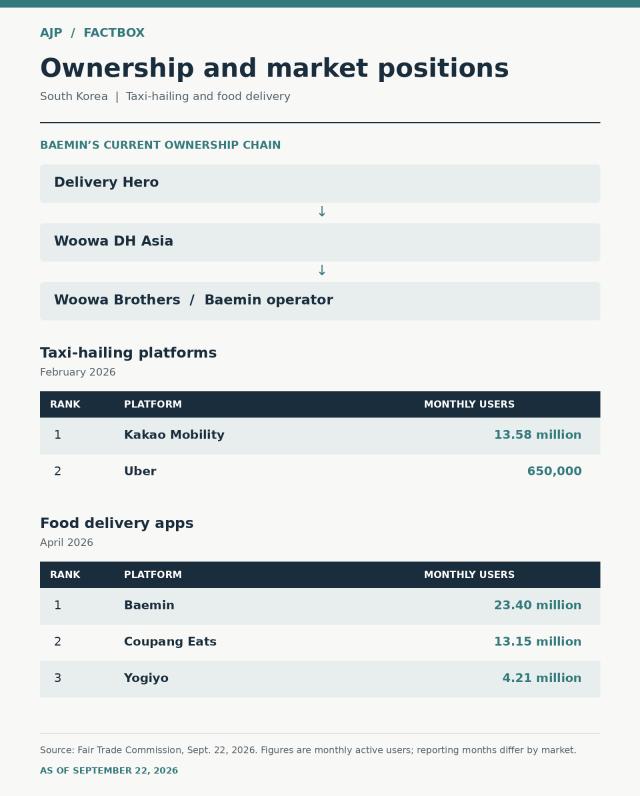
The regulator said Tuesday it had received Uber’s application for a review of its planned acquisition of Germany’s Delivery Hero, which indirectly controls Baemin operator Woowa Brothers through its subsidiary Woowa DH Asia.
The FTC said it would examine the effects on competition in both markets, rival businesses and the choices available to consumers and merchants.
The regulator classified the deal primarily as a conglomerate merger between businesses operating in different markets. It said Uber’s control of Baemin could lead to links between taxi-hailing and delivery services through memberships, advertising and promotions.
Uber has also identified increased use across its mobility and delivery platforms and expanded advertising and promotional services for merchants as key expected benefits of the takeover, the commission said.
The two businesses occupy markedly different positions in South Korea.
Uber Taxi had 650,000 monthly active users in February, ranking second behind Kakao Mobility’s 13.58 million, according to figures cited by the FTC. Baemin had 23.4 million monthly active users in April, ahead of Coupang Eats with 13.15 million and Yogiyo with 4.21 million.
Uber is seeking to acquire Delivery Hero through a cash tender offer of 41.50 euros per share, valuing the German company’s entire equity at about $14.8 billion. The acceptance period ends Nov. 5.
The offer requires Uber to secure at least 50 percent plus one share.
The FTC said completion is expected in the second half of 2027 after approvals from competition authorities in relevant jurisdictions.
Under the proposed transaction, Uber would retain Delivery Hero’s operations in 50 markets, including South Korea.
Businesses in 14 other markets would be sold separately to U.S. investment firm SSW Partners in a transaction conditional on the takeover closing.
Naver said Sept. 17 that it had decided against pursuing a stake in Baemin, citing changes in the business environment.
For Uber, the acquisition would open another route into a Korean market where earlier expansion efforts encountered setbacks.
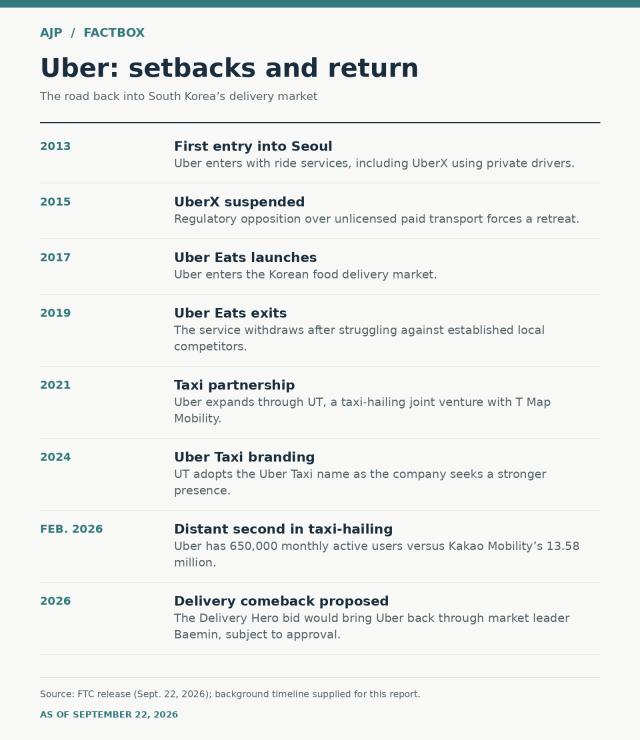
The company withdrew its UberX service in 2015 after regulatory opposition. Uber Eats entered South Korea in 2017 but pulled out in 2019 amid competition from established local delivery platforms.
Uber subsequently returned to taxi-hailing through a joint venture with T Map Mobility in 2021. Its global app gives overseas visitors a familiar way to book rides in South Korea, although its domestic user base remains far smaller than Kakao’s.
Buying Baemin would give Uber an established delivery business alongside its taxi service, creating opportunities to connect the two platforms that now form part of the FTC’s scrutiny.
Baemin’s previous change of ownership also required Korean antitrust approval. When Delivery Hero acquired the company, the FTC required the German group to sell its existing Korean delivery platform, Yogiyo.
The current preliminary review is a voluntary process allowing companies to seek an assessment before the formal merger notification period. Acquisitions through tender offers are generally subject to notification after the shares are acquired, the FTC said.
The commission said it would closely examine the transaction under the standards and procedures set out in South Korea’s competition law.

Copyright ⓒ Aju Press All rights reserved.
