

 Mencius and Xunzi: Are Humans Innately Good or Evil?
After Confucius's death, China entered a period of significant upheaval. The order of the Spring and Autumn period collapsed, and the Warring States period was marked by continuous conflict. Feudal lords competed for dominance, while the populace suffered from war and poverty. Amid this turmoil, people began to ponder how to stabilize the nation and create a humane society. In this context, Confucianism evolved from a philosophy of personal cultivation into a political philosophy for governing t
 Understanding Shinto: The Spirituality of Shrines and Festivals in Japan
Japan's Shinto tradition is deeply rooted in the sacredness of nature, with mountains, seas, forests, rivers, rocks, waterfalls, the sun, and the wind all believed to embody divine energy. To bring this sacredness into daily life, spaces were needed for remembrance, worship, and repeated encounters with the divine. These spaces are the shrines, which serve not merely as religious structures but as sites of Japanese spirituality connecting nature, humanity, ancestors, and the sacred.Upon entering
 The Spiritual Essence of Shinto: From Nature to National Ideology
Japan stands at the threshold of a significant exploration of Shinto. In previous articles, we examined how Shinto perceives nature as sacred and how the spirituality of nature has supported community life through shrines and festivals. The final question remains: How did a religion that revered nature evolve into a national ideology, and how did community spirituality intertwine with state power? This inquiry is not unique to Japan; it reflects a historical dilemma faced by all religions and se
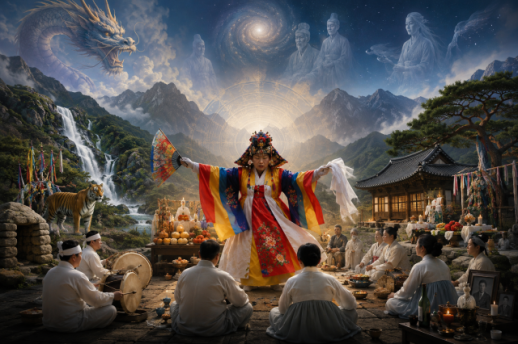 The Spiritual Roots of Korean Shamanism: Connecting Heaven and Humanity
Korean shamanism serves as an ancient spiritual path that connects heaven and earth, mountains and rivers, ancestors and descendants, as well as the living and the dead. It is not merely superstition; rather, it embodies the religious life of the Korean people, who have looked to the heavens, revered the mountains, honored their ancestors, comforted the troubled, and prayed for the well-being of their communities. The spirituality of Koreans has always been deeply intertwined with the heave
 How Google's Success Story in the AI Era is Transforming the World
In the 21st century, many would cite Apple, NVIDIA, and Microsoft as the greatest success stories in corporate history. However, a closer examination of their growth reveals a common philosophy: they prioritized people over technology and culture over individuals. This philosophy is systematically outlined in the book How Google Works.This book is not just a success story; it serves as a management textbook documenting how the internet revolution transformed the world and the principles that gui
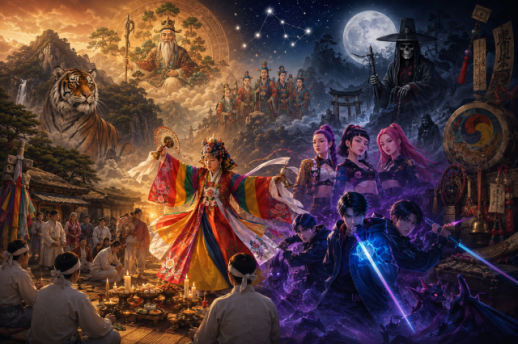 Exploring the Spiritual Depths of Korean Shamanism Through K-Pop Demon Hunters
Until just a few years ago, when the world thought of South Korea, it primarily associated the country with semiconductors, automobiles, and K-pop. However, interest has now expanded to include Korea's history, culture, and spirituality. The Korean Wave, or Hallyu, no longer solely represents pop music and dramas. A new era has emerged where the spiritual world and symbolic systems of Koreans, developed over thousands of years, are being introduced to global audiences through films, animations,
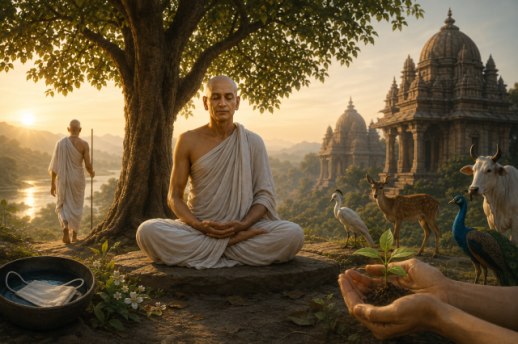 The Spiritual Legacy of Jainism: A Path to Nonviolence and Enlightenment
Human civilization has experienced pivotal eras, marked by the decline of one age and the emergence of another, often demanding new philosophies and religions. The 6th century BCE in India was such a transformative period. German philosopher Karl Jaspers later referred to this time as the 'Axial Age' of human spiritual history. In China, Confucius and Laozi contemplated new social orders, while prophets in the Middle East preached justice and faith. In Greece, philosophy began to transition from
 South Korea Faces Need for National Reconstruction Amid AI Revolution
South Korea is not living in ordinary times. Political disputes continue to rage between parties, and ideological debates are unending. However, the world is moving at a much faster pace. The generative AI revolution and the AI semiconductor revolution, described as the largest civilizational shift since the Industrial Revolution, have begun, rapidly changing the criteria that determine a nation's rise and fall. In this era, can we still discuss the future using the political grammar of
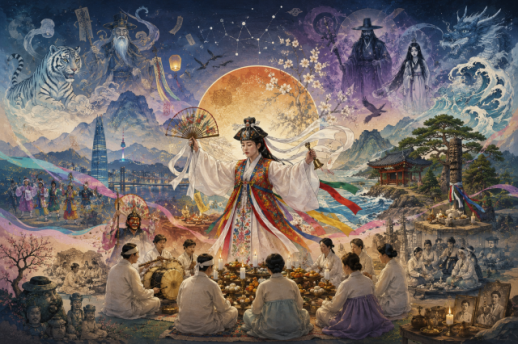 The Enduring Spirit of Korean Shamanism
Korean shamanism has not disappeared. For many years, it was not a state religion, lacked systematic scriptures, and was often dismissed as superstition under modernization. However, Korean shamanism has persistently survived. It remains in the mountain shrines, village shrines, the rhythms of shamanistic rituals, and the cultural practices of ancestral rites during the Lunar New Year and Chuseok. Although its name and forms have changed, shamanism continues to exist as an ancient spiritual lang
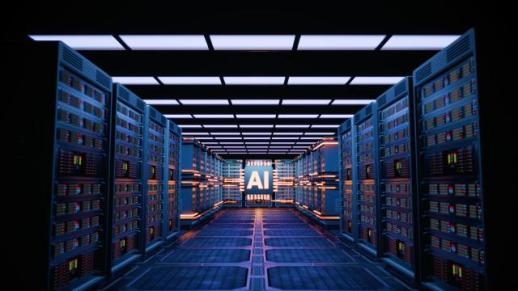 Hyperscalers: The New Power in the AI Era
The history of human civilization has always been shaped by those who control key infrastructure. The 19th century was defined by railroads and steam engines that completed the Industrial Revolution, while the 20th century saw oil and electricity drive the global economy. In the early 21st century, the internet and smartphones transformed lifestyles, and today, as generative AI takes center stage, we find ourselves in the midst of another monumental shift in civilization. At the heart of this tr