

 Consumer prices hit 26-month high as fuel prices soar
South Korea's consumer prices rose 3.1 percent in May from a year earlier, the Ministry of Statistics and Data said on Tuesday. Consumer prices, which serve as a key gauge of inflation, rose above 3 percent for the first time in 26 months since February 2024, fueled by sharp increases in petroleum and industrial product prices. An index measuring the prices of daily necessities also rose to 3.3 percent, the highest level since March 2024, suggesting that
 UPDATE: Korea's April factory output and spending retreat on Gulf energy shocks
The energy shocks from a months-long disruption of the Strait of Hormuz arising from Middle East conflicts have landed on South Korean shores, battering industrial activity, corporate investment, and consumer spending in April, official data showed Friday. Factory output fell 0.7 percent month-on-month, marking the first contraction since January, as the crucial refining sector was hit hard by
 Korea's April industrial activity and spending retreat on Gulf energy shocks
The energy shocks from months-long disruption of the Strait of Hormuz from the Middle East conflicts arrived on South Korean shores, battering industrial activity, corporate and consumer spending in April, data showed Friday. Factory output fell 0.7 percent from the previous month in April, the first contraction since January, as the refining sector was hit hard by the suspension of shipments from the Gulf, according to the Ministry of Statistics and Data.
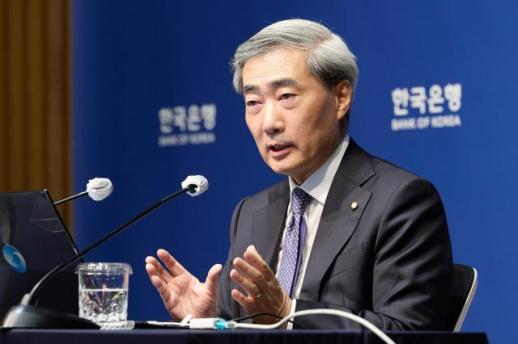 AJP Watch: BOK's strongest-yet hike signal rattles markets
After sitting on the benchmark at 2.50 percent for a full year, the Bank of Korea on Thursday issued the strongest-yet signal of a shift towards hikes of between 25 to 75 basis points, splashing cold waters on chip-blind stock frenzy. New Governor Shin Hyun-song, presiding over his first rate-setting meeting and media briefing, could hardly have been blunter about the direction ahead. "All the signs — price pressure, the growth
 BOK ups 2026 estimates for GDP growth to 2.6%, inflation to 2.7%
The Bank of Korea (BOK) expects the economy to grow 2.6 percent this year, which would be the strongest in four years, and inflation to rise at the fastest post-pandemic pace due to energy shocks from the prolonged Gulf crisis. The central bank on Thursday hiked its annual GDP growth projection from the previous 2.0 percent to 2.6 percent, marking the second consecutive upgrade following the BOK's move in February, when it revised the growth outlook upwa
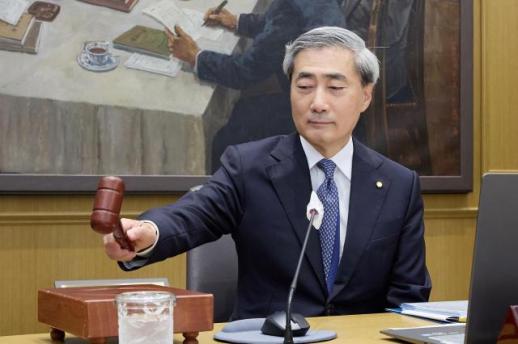 BOK holds rate steady for year, keeps July move in play
As widely expected, the Bank of Korea (BOK) on Thursday kept its benchmark interest rate unchanged at 2.5 percent for a full year, deferring a possible rate move to its next meeting in July as it judged the chip boom strong enough to offset the fallout from months-long Gulf disruptions and support stronger-than-expected economic growth. The first post-meeting briefing by new Governor Shin Hyun-song will be closely watched. The former BIS economist has
 Korea's May consumer sentiment sharply rebounds on strong exports and equities
South Korea’s consumer sentiment rebounded sharply in May, returning to optimistic territory after briefly slipping below the long-term average a month earlier, as robust exports and a record-setting stock rally outweighed concerns over prolonged Middle East tensions and rising energy prices, central bank data showed Friday. Sentiment about current economic conditions and future prospects improved even as inflation expectations hovered near 3 percent, re
 Seoul ups financial scrutiny on leverage ETFs amid frenzy
South Korea's Financial Supervisory Service (FSS) has unveiled a sweeping set of preemptive consumer protection measures targeting leverage exchange-traded funds, social media investment influencers, and corporate insurance agencies, as domestic stock market volatility continues to climb. FSS Governor Lee Chan-jin chaired the second Consumer Risk Response Committee meeting at the agency's Seoul headquarters on Tuesday, where attendees reviewed emergi
 Korea's household debt tips over $1.3 trillion Q1
South Korea’s household debt climbed to the brink of the symbolic 2,000 trillion won ($1.33 trillion) threshold as of March as tighter bank regulations failed to stop a fresh wave of housing-related borrowing that increasingly migrated to non-bank lenders. Outstanding household credit reached 1,993.1 trillion won at the end of March, up 14 trillion won, or 0.7 percent, from the previous quarter, according to preliminary data released by the Bank of Kore
 Financial authorities to tighten liquidity rules for securities firms
Financial regulators are going to tighten the rules for their assessment for how securities firms can raise cash quickly during a financial crisis, the Financial Services Commission (FSC) and the Financial Supervisory Service (FSS) said on Monday. The stricter rules, which used to apply only to big brokerages, will now cover all firms. They will also value assets such as stocks and funds at less than their full market value, since these can be difficult to sell